
Casino Site Revenue refers to how a digital casino platform turns user activity into income through a defined revenue model. In most cases, that means the platform keeps value through gaming margin, net gaming revenue after certain deductions, or platform-level revenue sharing, depending on whether it operates directly or provides the technology layer. Tech24’s broader guide to casino site architecture, payments, and platform operations supports this by describing casino sites as real-time systems built around transactions, account activity, and scalable platform management.
Key Takeaways
- Casino Site Revenue is the income structure behind a casino platform, not just a count of user transactions.
- Online models often rely on net gaming revenue, because it reflects what remains after deductions such as bonuses and some processing costs.
- Revenue model choice depends on platform role, such as affiliate, white-label operator, full operator, or technology provider.
- Sustainable revenue is closely tied to retention, acquisition cost, contribution margin, and payback period, not revenue alone.
- In a technology-focused analysis, revenue is shaped by platform design, payment flow, compliance burden, and operational structure.
Definition
Casino Site Revenue is the income a casino platform generates through its chosen operating model, usually by retaining a portion of gaming activity, charging platform-related fees, or participating in revenue sharing.
What it means / How it works
At a narrow level, the revenue model answers one question: what part of platform activity becomes retained income. In online gambling operations, one common measure is net gaming revenue, which starts from gross gaming results and subtracts items such as bonuses and, in some cases, payment-related costs. That makes it more useful than gross figures when the goal is to understand what the platform actually keeps.
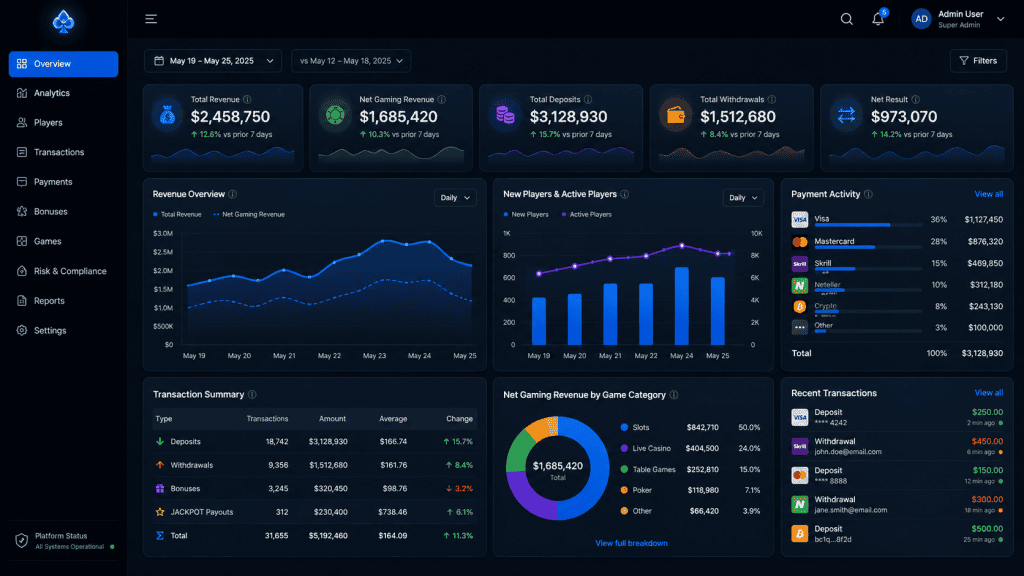
The exact structure depends on the business setup. GameVenture separates the market into three broad models: affiliate, white-label, and full operator. In the affiliate model, revenue comes from commission on referred users rather than direct platform operations. In white-label structures, the operator keeps part of gaming revenue after provider cuts and operating deductions. In the full operator model, the platform keeps the full revenue stream minus operating costs, but also carries the full technical and compliance burden.
There is also a B2B platform angle. Casino Business Strategy notes that technology providers may use revenue-share structures instead of operating the casino directly, taking a percentage of operator revenue in exchange for infrastructure and platform services. That is important for Tech24’s niche because it frames casino revenue as a platform-economics question, not only a gambling-operations question.
Why it matters
Revenue model structure matters because the same top-line activity can produce very different economic outcomes depending on deductions, acquisition cost, and operational complexity. Casino Business Strategy notes that online operations often focus on NGR because it better reflects what remains after bonuses and other variable costs, while SDLC Corp emphasizes contribution margin, payback period, and LTV:CAC as core indicators of whether revenue is actually sustainable.
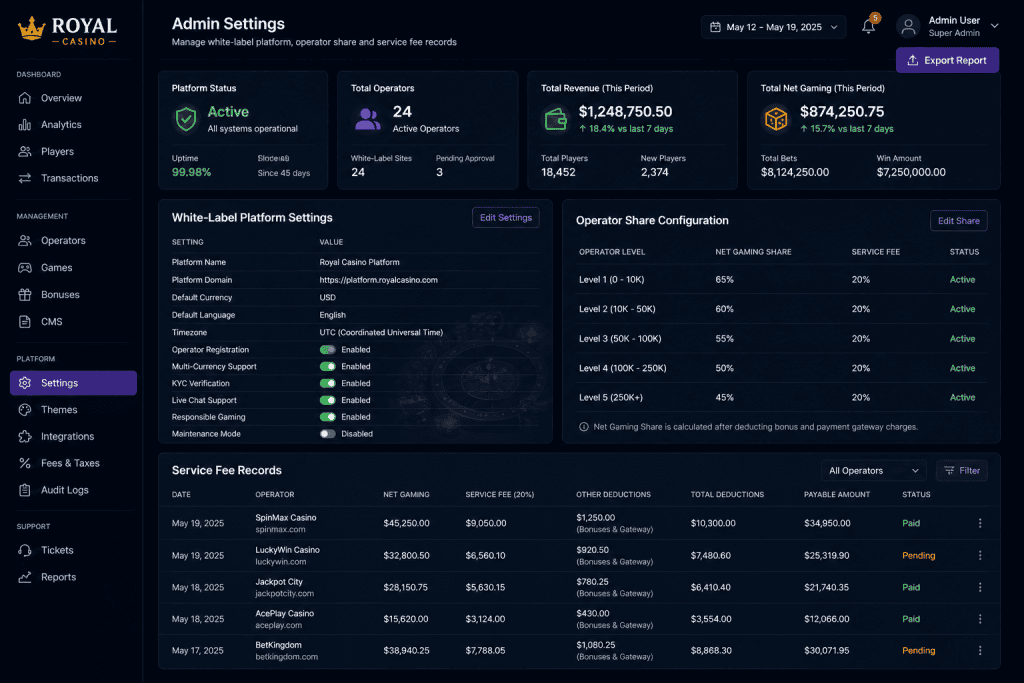
It also matters because platform economics are tied to system design. Tech24’s pillar explains that casino sites combine transactions, session management, compliance controls, and uptime demands in one environment. That means revenue cannot be separated cleanly from infrastructure, payments, monitoring, and maintenance. Revenue model analysis is therefore also an analysis of platform structure.
Light Support Block
| Revenue structure | How income is retained | What defines the model |
|---|---|---|
| Affiliate model | Commission from referred users | Traffic is monetized without running the platform directly. |
| White-label model | Share of gaming revenue after provider and operating deductions | Brand is controlled by the operator, while infrastructure is partly outsourced. |
| Full operator model | Revenue retained directly, minus full operating cost | Highest control, highest complexity, and highest direct exposure. |
| B2B revenue share | Percentage of operator revenue for providing technology or services | Common when the company supplies infrastructure rather than gambling operations. |
Common mistakes / misconceptions
One common mistake is treating gross revenue and retained revenue as the same thing. The cited revenue-model sources distinguish clearly between gross figures and net figures, especially where bonuses, payment costs, or platform-provider deductions reduce what is actually kept.
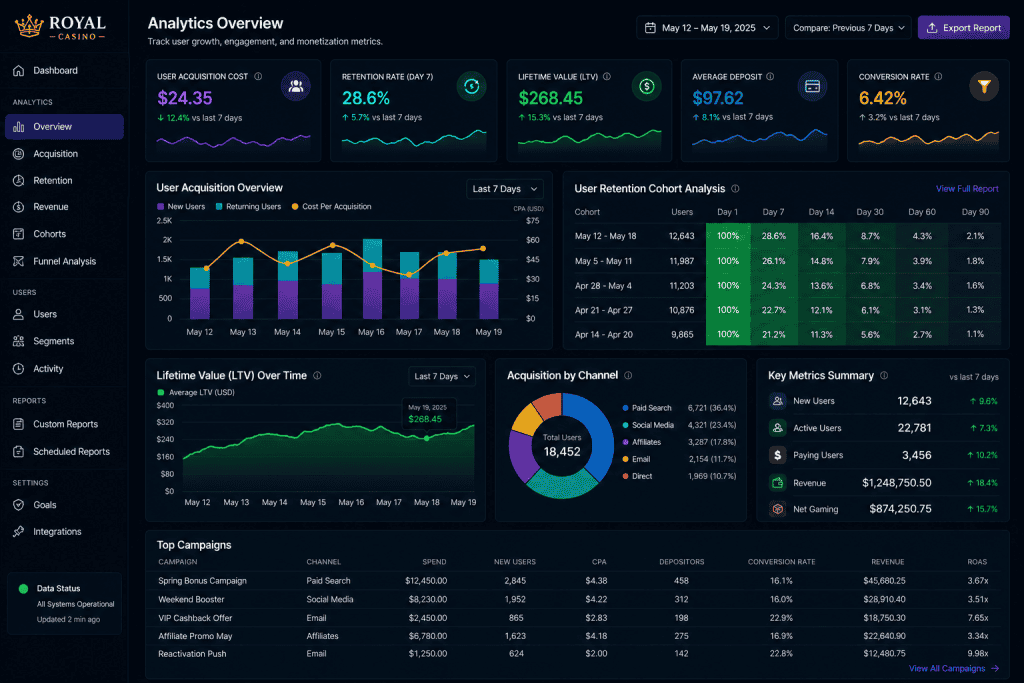
Another misconception is that higher revenue automatically means a stronger model. SDLC Corp’s KPI framework shows that acquisition cost, contribution margin, and payback period are necessary to judge whether revenue is economically useful or simply expensive to generate.
A third mistake is assuming one revenue structure fits every platform. Multiple sources argue that model choice depends on resources, risk tolerance, licensing position, and whether the business is acting as an operator or a technology provider.
Examples
A white-label casino platform may generate gross gaming activity, then retain only the portion left after provider cuts, payment fees, and bonus-related deductions. GameVenture gives this as a core example of how revenue can look strong at the top line but narrow after operating realities are applied.
A B2B casino technology provider may not rely on direct gaming margin at all. Instead, it may earn through a negotiated share of operator revenue for supplying platform infrastructure and services.
A revenue model with fast user growth may still be weak if acquisition cost is too high relative to retention and lifetime value. SDLC Corp highlights LTV:CAC, contribution margin, and payback period as the clearer test of sustainability.
FAQ
What is Casino Site Revenue in simple terms?
It is the way a casino platform turns activity into retained income, whether through gaming margin, net revenue after deductions, or platform-level revenue sharing.
Is Casino Site Revenue the same as profit?
No. Revenue describes incoming value under the model, while profit depends on what remains after operating, acquisition, support, payment, and other costs are removed.
Why is net gaming revenue often emphasized?
Because it is closer to what the operator actually keeps after deductions, making it more useful than gross figures for evaluating the economic reality of the platform.
Resources
- GameVenture. Casino Revenue Models That Actually Work in 2025
- SDLC Corp. Casino Game Financial Model Guide, Revenue, KPIs & Forecasting
- Casino Business Strategy. Casino Revenue Models Comparison: Which Structure Actually Makes Money
- RevStream Consulting. Casino Revenue Models That Actually Work: Ultimate Guide 2024
- IGaming Business Model. Casino Revenue Models Explained