
In the world of cryptocurrency, few events create as much curiosity, debate, and anticipation as Litecoin Halving. For beginners, the term may sound technical or even intimidating, but the idea behind it is surprisingly simple. Litecoin Halving is a built-in event that reduces the rewards miners receive for adding new blocks to the Litecoin network. That single change affects supply, miner behavior, and even how traders and long-term holders think about value.
Understanding Litecoin Halving matters because it sits at the crossroads of technology and market psychology. It is not just a date on a crypto calendar. It is a moment that can influence scarcity, public attention, and expectations across the wider Blockchain space. Whether you are a casual reader, a trader, or someone studying digital assets, learning how Litecoin Halving works can help you better understand why this event continues to draw attention every four years.
What is Litecoin Halving

Litecoin Halving is a scheduled event in the Litecoin protocol where the block reward given to miners is cut by 50%. In simple terms, miners do the work of validating transactions and securing the network, and in return they receive newly created Litecoin. During Litecoin Halving, that reward is reduced, which slows the rate at which new coins enter circulation.
You can think of Litecoin Halving as Litecoin’s built-in supply control system. It is similar to the reward reduction model used by Bitcoin, and it helps ensure that Litecoin remains scarce over time instead of flooding the market with unlimited new coins. Other ways people describe this event include Litecoin reward reduction, LTC halving event, or Litecoin mining reward cut, but Litecoin Halving remains the most widely used term.
Breaking Down Litecoin Halving
At its core, Litecoin Halving is about balance. The Litecoin network was designed with a maximum supply of 84 million coins, so there had to be a system that gradually releases those coins instead of making them all available at once. That is where halving comes in.
Every 840,000 blocks, the Litecoin protocol automatically cuts mining rewards in half. No committee votes on it. No company decides whether it should happen. It is written into the code. That predictability is one of the reasons many people respect Litecoin Halving. The rules are visible, and the schedule is known in advance.
Here is the simple chain reaction. Before a halving, miners receive a certain amount of LTC for each valid block. After the halving, they receive half that amount. The most recent event in August 2023 reduced rewards from 12.5 LTC to 6.25 LTC. The next Litecoin Halving is projected for August 2027, when the reward is expected to fall again to 3.125 LTC per block.
Why does this matter so much? First, it reduces inflation. Fewer new coins entering circulation means supply grows more slowly. Second, it can change miner economics. Miners with expensive electricity or outdated hardware may struggle after a reward cut. Third, it influences public perception. In the Crypto Market, events tied to scarcity often create speculation, optimism, and short-term volatility.
A good everyday analogy is gold mining. Imagine a gold field that becomes harder and slower to mine over time. The amount of new gold entering the market shrinks, so what already exists may become more valuable if demand stays steady. Litecoin Halving creates a similar scarcity effect in digital form.
Another reason people watch Litecoin Halving closely is because markets often react before the event actually happens. Traders begin discussing future supply changes months in advance. Analysts compare previous cycles. Social media fills with predictions. By the time the halving arrives, part of the excitement may already be priced in, but the conversation itself becomes a major market force.
History of Litecoin Halving
Litecoin launched in 2011 as a faster and lighter alternative to early cryptocurrencies. Since then, Litecoin Halving has become one of the network’s most important recurring milestones. Each event has marked a shift in miner rewards and reminded the market that Litecoin follows a fixed monetary schedule.
| Year | Block Height | Block Reward (LTC) | Notes |
|---|---|---|---|
| 2011 | Genesis | 50 LTC | Litecoin launch |
| 2015 | 840,000 | 25 LTC | First halving |
| 2019 | 1,680,000 | 12.5 LTC | Second halving |
| 2023 | 2,520,000 | 6.25 LTC | Third halving |
| 2027 | 3,360,000 | 3.125 LTC | Projected next halving |
Types of Litecoin Halving
When people talk about Litecoin Halving, they are usually referring to the same mechanism, but the event can be understood through different practical angles.
Scheduled Halving
This is the standard protocol event that happens every 840,000 blocks. It is fully automated and predictable.
Market Cycle Halving
This refers to how the market reacts before, during, and after the reward cut. Traders often connect Litecoin Halving to price expectations, media attention, and momentum.
Miner Adjustment Halving
This view focuses on mining operations. After Litecoin Halving, miners reassess costs, hardware efficiency, and profitability.
| Type | Description |
|---|---|
| Scheduled Halving | The coded reward reduction event |
| Market Cycle Halving | The investor and trader reaction around the event |
| Miner Adjustment Halving | The operational effect on mining profitability |
How does Litecoin Halving work?
The process behind Litecoin is mechanical and transparent. Miners validate transactions and group them into blocks. Every new block adds fresh Litecoin to circulation as a reward. Once the network reaches another 840,000-block milestone, the reward is automatically reduced by half. That means the supply schedule becomes tighter over time. Before August 2023, miners earned 12.5 LTC per block. After that event, they earned 6.25 LTC. After the next Litecoin, the reward is expected to fall to 3.125 LTC. This cycle continues until the full supply cap is eventually reached.
Pros & Cons
Before looking at real-world applications, it helps to weigh the strengths and trade-offs of Litecoin Halving.
| Pros | Cons |
|---|---|
| Predictable and transparent supply model | Reduced miner profitability |
| Supports scarcity and long-term value logic | Smaller miners may exit the network |
| Encourages efficient mining practices | Can increase short-term volatility |
| Reinforces trust in fixed issuance rules | Market hype can create unrealistic expectations |
Uses of Litecoin Halving
For investors and traders
Litecoin is not just a technical concept. It has practical value for different groups across the digital asset ecosystem.
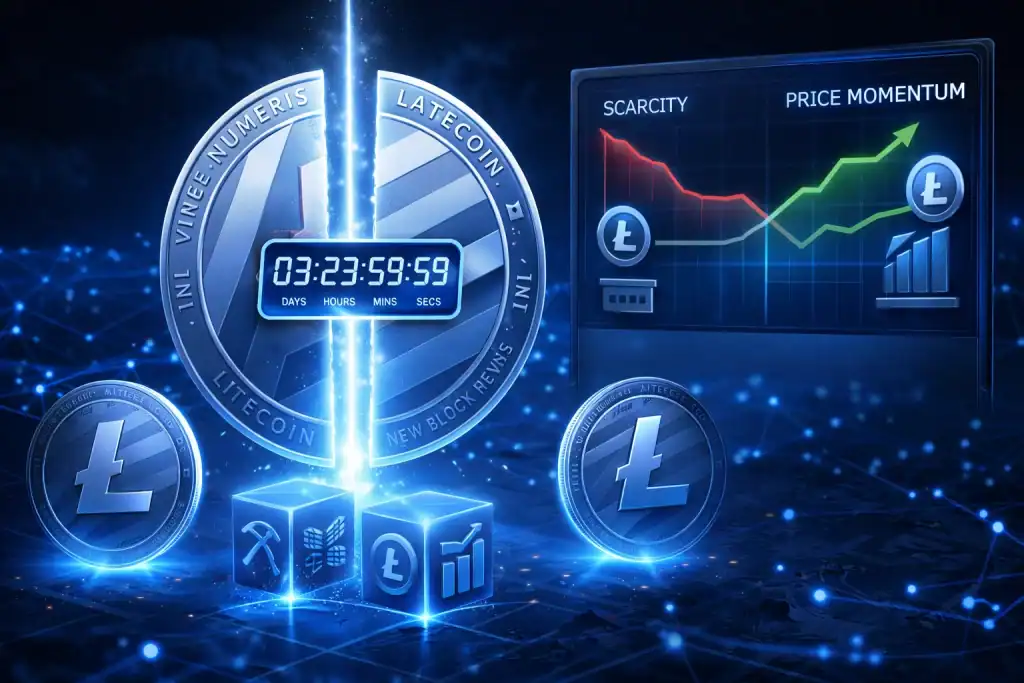
For traders, Litecoin is often treated as a major calendar event. It becomes part of market analysis, timing strategies, and sentiment tracking. Some use it to study scarcity narratives, while others view it as a signal to watch the Coin Market more closely. Long-term holders may also connect Litecoin Halving to broader Investment thinking, especially when evaluating supply-driven assets.
For miners
Mining operators use Litecoin to review profitability. A reward cut can instantly change the economics of mining, forcing decisions around hardware upgrades, electricity costs, and operational efficiency. For large miners, the event is part of long-term planning. For smaller operators, it can be a make-or-break moment.
For analysts and educators
Analysts use Litecoin as a case study in tokenomics, market cycles, and supply discipline. Educators often explain it to show how protocol design influences economics. Because the event is predictable, it offers a clean example of how coded rules shape market behavior. It also helps newcomers understand why scarcity matters in digital assets.
Conclusion
Litecoin Halving is one of the clearest examples of how code can shape economics. It reduces mining rewards, slows new supply, and reinforces Litecoin’s scarcity model over time. While it does not always guarantee price increases, it is consistently affects miner strategy, investor attention, and market narratives. That is why the event remains so important. If you understand the concept, you understand one of the biggest forces behind Litecoin’s long-term structure, market role, and future expectations.
Resources
- CoinCodex: Litecoin Halving Dates: When Is the Next LTC Halving?
- Crypto Angels: Litecoin Halving History: Dates and Impact Explained
- Token Metrics : What is Litecoin Halving and its Impact?
- Switchere: What is Litecoin Halving? Why it Matters and What to Expect
- Prestmit: Litecoin Halving Explained: When Is The Next Litecoin Halving?