
If you’re diving into the world of cryptocurrency, then you’ve probably stumbled upon the term ICOS, short for Initial Coin Offerings. These digital fundraising events have turned heads, opened wallets, and sparked debates across the crypto market. As a pivotal part of the blockchain ecosystem, understanding ICOS isn’t just optional, it’s essential for anyone interested in decentralized finance, crypto investment, or even launching a blockchain project. Whether you’re a curious beginner or a seasoned trader, this guide will walk you through everything you need to know in an easy, engaging tone. Let’s explore how ICOS are reshaping the future of the coin market and what that means for your crypto journey.
What is ICOS?
An Initial Coin Offering (ICO) is a fundraising mechanism in the cryptocurrency sphere where startups sell their underlying crypto tokens in exchange for fiat currency or established cryptocurrencies like Bitcoin. Often compared to Initial Public Offerings (IPOs) in traditional markets, ICOS help developers finance the development of blockchain-based projects.
Synonyms you might encounter include token sales, token generation events (TGEs), or crowd sales. Regardless of the term used, the core idea remains the same: projects raise capital by offering investors unique digital tokens. These tokens can later be used within the ecosystem or traded on exchanges.
What makes ICOS especially appealing is their accessibility. In many cases, they allow early supporters to back a project long before it becomes widely known. For startups, this creates a direct path to funding without depending entirely on banks, venture capital firms, or traditional gatekeepers. For participants, it offers a chance to be part of innovation from the ground up. Still, that openness is exactly why understanding the structure and risks behind ICOS is so important before investing.
Breaking Down ICOS
At their core, ICOS are relatively straightforward but can get complex depending on their structure. A startup will usually publish a whitepaper, a document outlining the project’s goals, technical details, token economics, and roadmap. Interested parties, typically early adopters or crypto enthusiasts, purchase the new tokens in hopes the project succeeds and their value rises.
Key Components:
Whitepaper: This is the project’s blueprint. It includes business models, technology, token distribution, and funding goals.
Smart Contracts: Used on platforms like Ethereum, these automate the sale of tokens and distribute them to contributors.
Tokenomics: This outlines the token’s utility, supply cap, and how it’s distributed.
Soft Cap and Hard Cap: Minimum and maximum fundraising goals respectively.
KYC/AML Procedures: Legal compliance measures that ensure the legitimacy of participants.
Another important element is community trust. Many successful ICOS build momentum by maintaining transparent communication through social media, community forums, and regular development updates. Investors often look beyond the whitepaper and evaluate the founding team, advisory board, and overall project credibility. A well-structured ICO is not just about raising funds, it is also about proving the project has a realistic use case, a capable team, and a long-term plan for growth.
History of ICOS
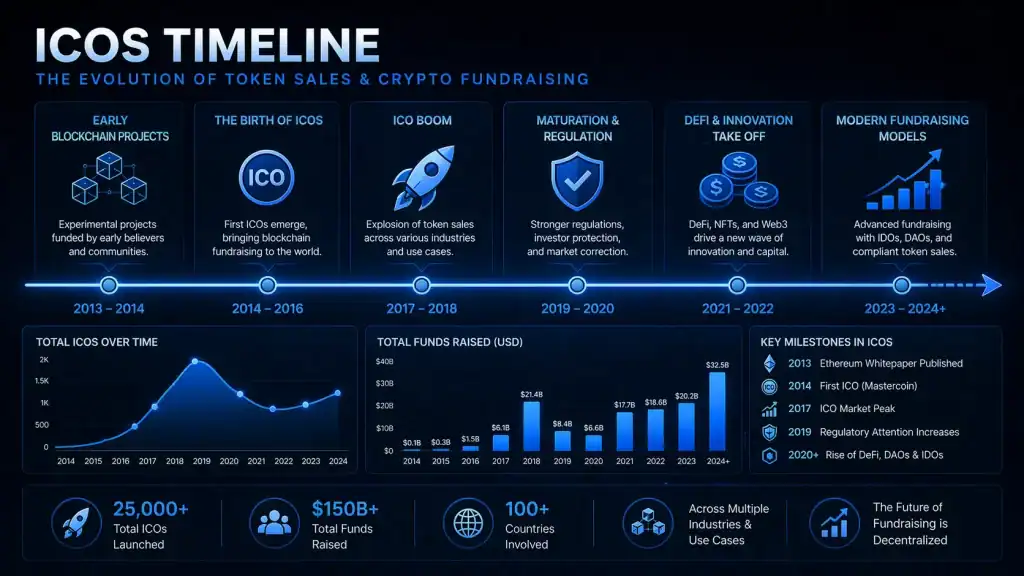
ICOS have a storied and dramatic history in the crypto world.
| ICO Type | Access Level | Purpose | Regulation |
|---|---|---|---|
| Private | Restricted | Early Funding | Often Unregulated |
| Public | Open | Mass Funding | Limited Oversight |
| Presale | Mixed | Pre-launch Capital | Minimal |
| Security | Open/Private | Investment Asset | Highly Regulated |
| Utility | Open | Platform Access | Light Regulation |
Their history is a blend of innovation and controversy. At their height, they were hailed as revolutionary. But unchecked, they became a hotbed for fraud, forcing regulators to act.
Even so, ICOS played a major role in popularizing blockchain-based fundraising. They showed that decentralized communities could support ideas at a global scale, often faster than traditional finance models. This legacy still influences how modern crypto fundraising works today.
Types of ICOS
There are several different variations of ICOS. Each has unique characteristics depending on how they’re launched and who can participate.
Private ICO
Only select investors are invited, often institutional players or known venture capitalists.
Public ICO
Open to the general public, anyone can participate. This was the original ICO model.
Presale ICO
Tokens are sold before the official launch, often at discounted rates, to fund marketing and tech development.
Security ICO
Tokens are classified as securities and must comply with financial regulations.
Utility ICO
Tokens provide access to a product or service and are not considered securities.
| ICO Type | Access Level | Purpose | Regulation |
|---|---|---|---|
| Private | Restricted | Early Funding | Often Unregulated |
| Public | Open | Mass Funding | Limited Oversight |
| Presale | Mixed | Pre-launch Capital | Minimal |
| Security | Open/Private | Investment Asset | Highly Regulated |
| Utility | Open | Platform Access | Light Regulation |
Understanding these categories can help investors decide which opportunities fit their goals and risk tolerance. A utility-focused project may appeal to users who want access to a platform, while a security-based model may attract those seeking a more regulated investment framework.
How does ICOS work?
An ICO starts with a clear plan. A company drafts a whitepaper and promotes it through crypto forums, social media, and sometimes mainstream press. Interested investors send crypto funds, often Bitcoin or Ethereum, to a specified address, and in return, receive the new project’s tokens.
This process is powered by blockchain technology, making transactions transparent and immutable. Smart contracts automate the token distribution, ensuring fairness and eliminating the need for intermediaries.
In practice, the process often includes several stages. A project may begin with private fundraising, move into a presale, and then open a public token sale. During this time, the team may set contribution limits, token pricing tiers, and vesting schedules for early participants. Once the ICO ends, the project typically focuses on product development, exchange listings, and community expansion. For investors, knowing what happens after the token sale is just as important as understanding the launch itself.
Pros & Cons of ICOS
Every financial innovation brings benefits and drawbacks. ICOS are no exception.
| Pros | Cons |
|---|---|
| Access to early-stage projects | High risk of scams |
| Decentralized fundraising | Regulatory uncertainty |
| Global participation | Volatile token value |
| Potential for high returns | Lack of investor protection |
Despite the risks, savvy investors with proper research can find promising opportunities.
The key is due diligence. Instead of relying on hype alone, investors should review the project’s roadmap, token utility, leadership team, and legal positioning. A promising ICO should have more than flashy marketing, it should offer a clear problem-solving purpose and a believable path to adoption.
Uses of ICOS

ICOS aren’t just limited to creating tokens. Their uses are broad and can be found across multiple sectors within the crypto landscape.
Startup Funding
New blockchain projects use ICOS to raise money without relying on banks or venture capital.
Decentralized Applications
Many dApps use ICOS to fund development and incentivize users.
Gaming
In-game assets and currencies are often launched via ICOS, giving players ownership and stake in the ecosystem.
DeFi Platforms
Decentralized Finance projects often start with token sales to bootstrap liquidity.
Charitable Causes
Blockchain for good? Yes! Some projects use ICOS to fund social impact initiatives.
These diverse applications show just how embedded ICOS have become in the fabric of the crypto world. As the industry evolves, the role of ICOS may continue to shift, but their influence remains clear. They opened the door to borderless fundraising, community-driven growth, and entirely new ways of financing digital innovation. For anyone exploring crypto, understanding ICOS provides valuable insight into how blockchain projects begin, scale, and compete in a fast-moving market.