
Bitget Exchange has become one of the most talked-about names in the cryptocurrency trading category, especially for users who want more than a basic buy-and-sell platform. In a fast-moving market where prices can swing before your coffee gets cold, traders need tools that feel clear, flexible, and reliable. That is where this platform stands out.
At its core, Bitget Exchange gives users access to spot trading, futures trading, copy trading, and Web3-related services. It is especially relevant for beginners who want to learn from experienced traders and for active users who need advanced trading options in one place. Understanding how the platform works can help traders make smarter choices, manage risk better, and avoid jumping into crypto decisions blindly.
What is Bitget Exchange
Bitget Exchange is a global cryptocurrency trading platform that allows users to buy, sell, trade, and manage digital assets. It is commonly known simply as Bitget and is recognized for services such as spot trading, futures trading, copy trading, and crypto market tools. The platform was founded in 2018 and has grown into a major exchange with products designed for both beginners and experienced traders. The Block describes Bitget as a cryptocurrency exchange that became especially known for derivatives and copy trading after its launch.
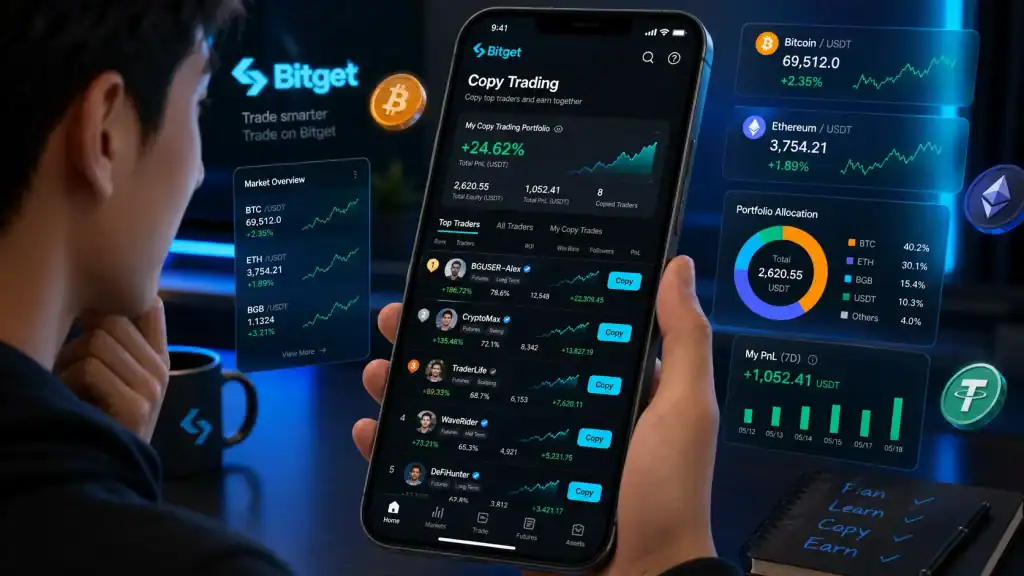
Breaking Down Bitget Exchange
To understand Bitget Exchange, imagine a trading workspace with several desks. One desk is for simple buying and selling. Another is for advanced futures trading. A third desk lets beginners watch skilled traders and automatically copy their moves. Instead of opening several platforms, users can manage many of these activities from one account.
The first major component of Bitget Exchange is spot trading. This is the simplest form of crypto trading. A user buys a coin at the current market price and holds it, sells it, or swaps it later. For someone entering the Crypto Market, spot trading is often the easiest place to begin because the process is straightforward and does not require leverage.
The second component is futures trading. Futures allow traders to speculate on price movement without simply holding the asset in the same way as spot trading. This can create more opportunities, but it also comes with higher risk. A wrong move with leverage can lead to fast losses, so futures trading should be approached with discipline, planning, and risk controls.
The third and most recognizable feature is copy trading. Bitget Exchange promotes copy trading as a way for users to follow experienced traders. Instead of manually building every strategy from scratch, users can review trader performance and choose whether to mirror selected trades. Bitget’s own copy trading page highlights spot copy trading, futures copy trading, bot copy trading, and access to elite traders.
This does not mean copy trading guarantees profit. It simply gives users a learning shortcut and a more guided trading experience. I like to think of it like watching a skilled driver handle a winding road. You can learn from their rhythm, but you still need to know where the brakes are.
Another key part of Bitget Exchange is security transparency. Bitget publishes proof of reserves and says it holds 100% of user assets in reserves, with Merkle tree verification and monthly reserve updates. For users who care about platform trust, this matters because it gives them more visibility into whether customer assets are backed.
The platform also sits inside the wider Blockchain economy. Users may interact with major assets, trading pairs, market tools, and Web3 services. As with any crypto platform, the smartest approach is to combine curiosity with caution. Traders should study fees, security settings, withdrawal rules, and product risks before placing serious capital on the line.
History of Bitget Exchange
Bitget Exchange was founded in 2018 and initially gained attention for crypto derivatives and advanced trading tools. In 2020, it launched copy trading, which became one of its flagship services. The Block notes that Bitget later expanded through a protection fund, football-related partnerships, crypto loans, and Web3 initiatives.
| 2018 | Bitget was established as a cryptocurrency exchange. |
| 2020 | Copy trading became one of its major product features. |
| 2022 | The platform announced a protection fund and global marketing partnerships. |
| 2023 | Bitget expanded further into Web3 and wallet-related services. |
| 2024 | Leadership changes and continued platform development strengthened its market profile. |
Types of Bitget Exchange
Spot Trading
Spot trading on Bitget Exchange allows users to buy and sell crypto assets at current market prices. This type is best for users who prefer direct ownership of digital assets and want a simpler trading experience. It can be suitable for people building a long-term portfolio or testing crypto trading without advanced products.
Futures Trading
Futures trading gives users access to contracts based on future price movement. This is often used by active traders who want to speculate, hedge, or trade with leverage. Because leverage can magnify both profits and losses, this type is better suited for users who understand chart analysis, liquidation risk, and position sizing.
Copy Trading
Copy trading is one of the most popular features of Bitget Exchange. It lets users follow selected traders and mirror their trades automatically. This can help beginners observe real strategies while reducing the time needed to make every decision manually. However, users should still review performance history, risk levels, and trading style before following anyone.
| Type | Best For | Main Benefit |
|---|---|---|
| Spot Trading | Beginners and long-term holders | Simple buying and selling |
| Futures Trading | Active and advanced traders | Flexible market speculation |
| Copy Trading | Learners and time-saving users | Ability to follow experienced traders |
How does Bitget Exchange work?
Bitget Exchange works by giving users access to a trading account where they can deposit funds, select markets, and choose trading products. A user can start with spot trading, move into futures, or explore copy trading after reviewing professional trader profiles. The platform also provides tools for market tracking, order placement, and account management. TradingBrokers describes Bitget as offering spot, futures, and copy trading with a user-friendly interface and features for both beginner and advanced traders.
Pros & Cons
Before using Bitget Exchange, it helps to look at the strengths and limitations side by side. No trading platform is perfect, and the best choice depends on the user’s goals, country, experience level, and risk tolerance.
| Pros | Cons |
|---|---|
| Strong copy trading features for beginners and busy traders | Advanced tools may feel overwhelming at first |
| Spot and futures trading in one platform | Futures trading carries higher risk |
| Proof-of-reserves transparency | Availability can vary by region |
| Wide range of crypto services | Users still need strong personal security habits |
| Useful for learning market strategies | Copy trading does not guarantee profit |
Uses of Bitget Exchange
Bitget Exchange is used in several practical ways by crypto traders, investors, and market learners. Its biggest value is that it gives users multiple trading paths depending on their comfort level.
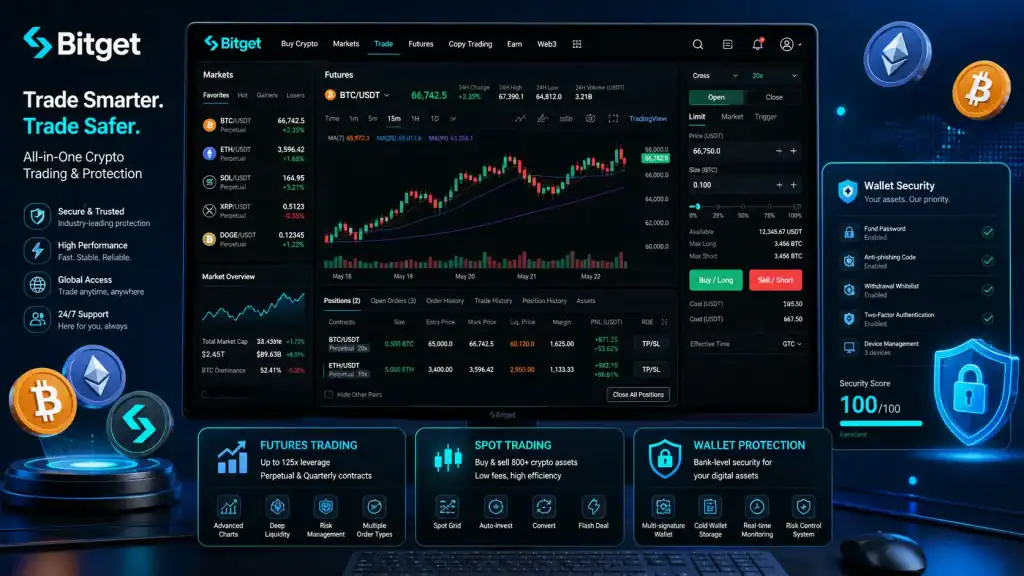
Crypto Trading
The most direct use of Bitget Exchange is crypto trading. Users can trade popular assets, explore different markets, and respond to price movement. For people who follow Bitcoin, Ethereum, and other digital assets, the platform can function as a daily trading hub. This is useful for users who want access to price charts, order books, and account tools in one place.
Copy Trading and Learning
Another major use of Bitget Exchange is learning through copy trading. Beginners often struggle because crypto charts can look like a storm of candles, wicks, and sudden reversals. Copy trading gives them a way to observe experienced traders in action. It can teach users how strategies behave during calm markets, sharp rallies, or sudden drops.
That said, copying another trader should not replace personal education. Users should still learn basic risk management, stop-loss planning, and position sizing. A copied trade can still lose money, especially during volatile conditions.
Futures and Market Speculation
Active traders use Bitget Exchange for futures trading when they want to speculate on price direction. This can be attractive during fast-moving market conditions, but it requires emotional discipline. Leverage can make a winning trade feel powerful, but it can also punish poor timing quickly. For this reason, futures trading is best treated as a serious strategy, not a game.
Portfolio Access and Investment Planning
Some users treat Bitget Exchange as part of their broader Investment workflow. They may use it to enter positions, monitor prices, rebalance holdings, or compare crypto opportunities. It can also support users who want exposure to different assets across the wider Coin Market. The key is to avoid making decisions based only on hype. A good trader combines platform tools with research, patience, and clear limits.
Brand Partnerships and Market Visibility
Bitget Exchange has also gained attention through partnerships and public visibility. CryptoPotato reported that Bitget became the first-ever sleeve sponsor of Juventus, while The Block noted its partnership with Lionel Messi before the 2022 World Cup. These partnerships helped push the brand beyond crypto-native circles and into mainstream sports audiences.
Resources
- Cointelegraph. Bitget Exchange – Trade Crypto with Copy Trading and Low Fees.
- CryptoPotato. Bitget Cryptocurrency Exchange: Extensive Guide & Review.
- IMI Blockchain. Bitget Review: Unveiling Pros, Cons, and Features in 2024.
- The Block. What is Bitget?
- TradingBrokers.com. Bitget Review.