
Bitcoin Volatility is back in the spotlight, and this time it feels less like random chaos and more like a sign that crypto is growing up. In March 2025, Bitcoin’s sharp price swings shook traders, pulled institutions deeper into the Crypto Market, and reminded investors why digital assets can feel thrilling and terrifying in the same hour. For everyday fans, analysts, and industry professionals, Bitcoin Volatility now matters because it is not just a risk to avoid. It is becoming a market force to understand, measure, and even use.
What Happened
Bitcoin Volatility surged in March 2025 as the market moved through one of its most dramatic periods in nearly a year. Forbes reported that a Bitcoin volatility measure approached its highest level in close to twelve months, while Cryptonomist also noted that March brought one of Bitcoin’s strongest fluctuation periods of the past year. The key number many traders watched was 30-day annualized volatility, which reportedly climbed to 71.28% on March 24, 2025.
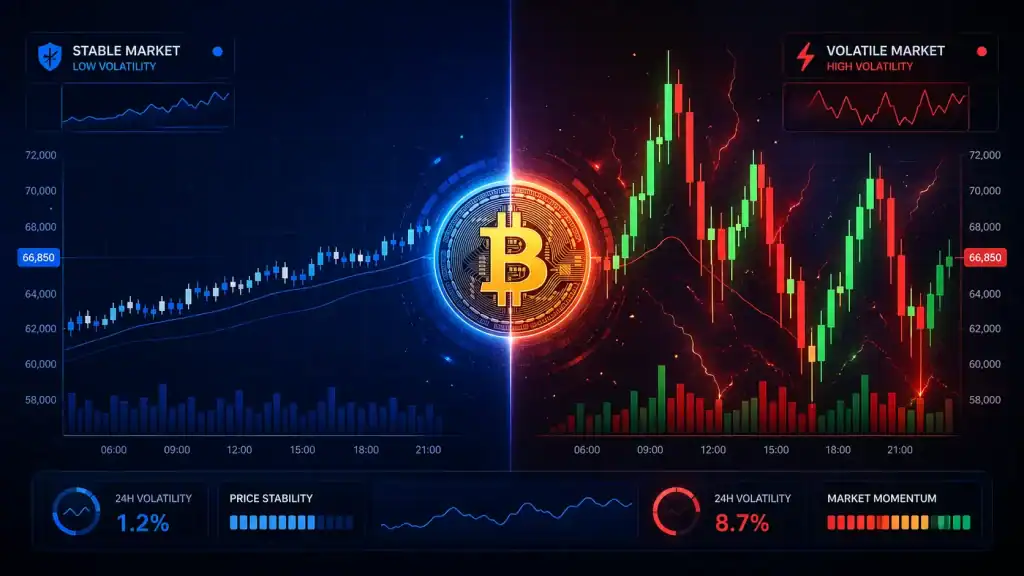
That may sound technical, but here is the human version: prices were moving fast enough to make even experienced investors pause before clicking “buy” or “sell.” A quiet morning could turn into a wild afternoon. A confident long position could become a margin call before dinner.
The biggest twist was not only the movement itself. It was how the market responded. Grayscale launched two new Bitcoin-focused ETFs, the Grayscale Bitcoin Covered Call ETF and the Grayscale Bitcoin Premium Income ETF, designed to generate income from Bitcoin-linked volatility through covered call strategies.
In plain English, Bitcoin Volatility became something institutions could package, trade, and monetize. That is a major mindset shift. For years, Bitcoin Volatility was treated as the monster under the bed. In 2025, it started looking more like a tool on the desk. The Blockchain industry has always been comfortable with rapid change, but this moment showed how fast crypto finance is learning to turn uncertainty into structured products.
When and Where
The action built through March 2025, with the sharpest attention landing around March 24, when volatility readings reached their most intense level in nearly a year. The news spread globally through major exchanges, ETF coverage, crypto media, and social platforms.
Bitcoin Volatility was not limited to one trading venue or one region. Because Bitcoin trades around the clock, the storm never really slept. Late U.S. hours, early Asia sessions, and European market openings all became part of the same nonstop story.
Who is Involved
The main players behind this Bitcoin Volatility moment included institutional asset managers, ETF issuers, retail traders, hedge funds, market makers, and highly leveraged futures traders.
Grayscale stood out because its new ETFs signaled that large financial firms are no longer simply tolerating Bitcoin’s price swings. They are building products around them. Retail traders also played a big role. Many watched liquidation maps, funding rates, and social posts in real time, trying to guess where the next big move might land.
Why It Matters

Bitcoin Volatility matters because it changes how investors think about opportunity and danger. When Bitcoin moves sharply in a short window, it can create strong profits for some traders and painful losses for others. That emotional contrast is why the topic grabs attention every cycle.
For long-term holders, Bitcoin Volatility can feel like turbulence on a plane. You may still believe in the destination, but the shaking tests your nerves. For active traders, it can feel like surfing during a storm: exciting, powerful, and unforgiving if you misread the wave.
This is especially important for anyone tracking the Coin Market, because Bitcoin often sets the mood for the wider digital asset space. When Bitcoin Volatility rises, altcoins can become even more sensitive. Liquidity thins, leverage gets exposed, and sudden moves can cascade across the market.
The launch of volatility-linked income products also suggests the market is maturing. In traditional finance, volatility is measured, modeled, hedged, and traded. Crypto is now moving in the same direction. That does not make Bitcoin safe or predictable, but it does mean investors have more tools than before.
Still, tools only help when people use them wisely. A liquidation heatmap can show where forced selling or buying may cluster, but it cannot promise the future. CoinGlass describes liquidation heatmaps as tools that help estimate price ranges where large-scale liquidation events may occur.
Stop-loss orders can protect capital, but tight stops may get swept during noisy moves. Leverage can multiply gains, but in a high Bitcoin Volatility environment, it can also erase an account quickly. The practical lesson is simple: do not treat volatility like a surprise guest. Build your plan as if it is already sitting at the table.
Quotes or Statements
Grayscale’s April 2025 launch materials described the new ETFs as two different approaches to systematic covered call writing. CryptoSlate reported that the funds were designed to turn Bitcoin’s volatility into regular cash flow, while CoinDesk described them as products offering income through Bitcoin’s characteristic volatility.
A common trader reaction summed up the mood: Bitcoin Volatility is not just noise anymore; it is becoming a strategy. That does not mean every investor should chase it. It means every investor should respect it.
Imagine Bitcoin as a sports car on a mountain road. The engine is powerful, the view is incredible, and the turns come fast. Bitcoin Volatility is the speed and sharpness of those turns. You do not need to fear the car, but you do need brakes, a map, and both hands on the wheel.
For investors, those “brakes” include position sizing, lower leverage, stop-loss planning, and emotional discipline. The “map” includes volatility indexes, liquidation heatmaps, macro news, ETF flows, and on-chain data. The “hands on the wheel” are your rules: when to enter, when to exit, and when to do nothing.
Bitcoin Volatility can reward patience as much as bravery. Sometimes the smartest trade is not a trade at all. Sometimes the winning move is zooming out, letting the noise settle, and remembering why you entered the market in the first place.
Conclusion
Bitcoin Volatility in March 2025 showed that crypto is entering a sharper, more sophisticated phase. Price swings remain intense, but the market response is changing. Institutions are creating products around volatility, traders are relying on better data, and investors are learning that movement itself can carry value.
The next chapter will likely bring more ETFs, smarter analytics, and deeper debate about risk. For anyone watching Bitcoin, the message is clear: Bitcoin Volatility is not going away. Used carefully, it can become part of a stronger Investment strategy instead of a reason to panic.
Resources
- Forbes. Bitcoin Volatility Measure Approached Highest In A Year In March
- Cryptonomist. Bitcoin in March: The Volatility Reached the Highest Levels in a Year
- CryptoSlate. Grayscale Unveils 2 New ETFs Turning Bitcoin Volatility Into Income
- YouTube. Benjamin Cowen on March Bitcoin Moves
- Twitter. @BitcoinSapiens’s Chart Post