
Casino Site Maintenance is the ongoing technical work required to keep a casino platform stable, secure, and usable after launch. In practice, maintenance cost is driven by software updates, security patching, monitoring, bug fixes, infrastructure upkeep, support workflows, and work needed to prevent more expensive failures later. Tech24’s broader explanation of casino site architecture, security, and operational reliability supports this view by describing casino sites as high-traffic systems that require continuous uptime, monitoring, updates, and adaptable infrastructure.
Key Takeaways
- Casino Site Maintenance means the recurring work needed to keep the platform functioning reliably over time.
- Maintenance cost is shaped by update frequency, system complexity, monitoring needs, support load, and the balance between planned and reactive work.
- Planned maintenance is usually more predictable than emergency repair work, and reactive maintenance can raise cost significantly.
- Maintenance is not limited to fixing visible issues. It also includes preventive checks, tracking performance, and keeping infrastructure dependable.
- In an Economic Analysis context, maintenance matters because it is a continuing operating burden, not a one-time launch expense.
Definition
Casino Site Maintenance is the ongoing technical upkeep of a casino platform, including updates, fixes, monitoring, and preventive work that support stability, security, and performance.
What it means / How it works
Maintenance cost is best understood as a recurring operating category rather than a single repair event. For a casino site, that recurring work can include patching software, maintaining integrations, reviewing logs, monitoring uptime, resolving bugs, and updating systems so the platform continues to function under traffic and transaction load. Tech24 describes casino sites as real-time, high-traffic web applications with continuous uptime expectations, which implies that upkeep is part of normal operation, not an occasional add-on.
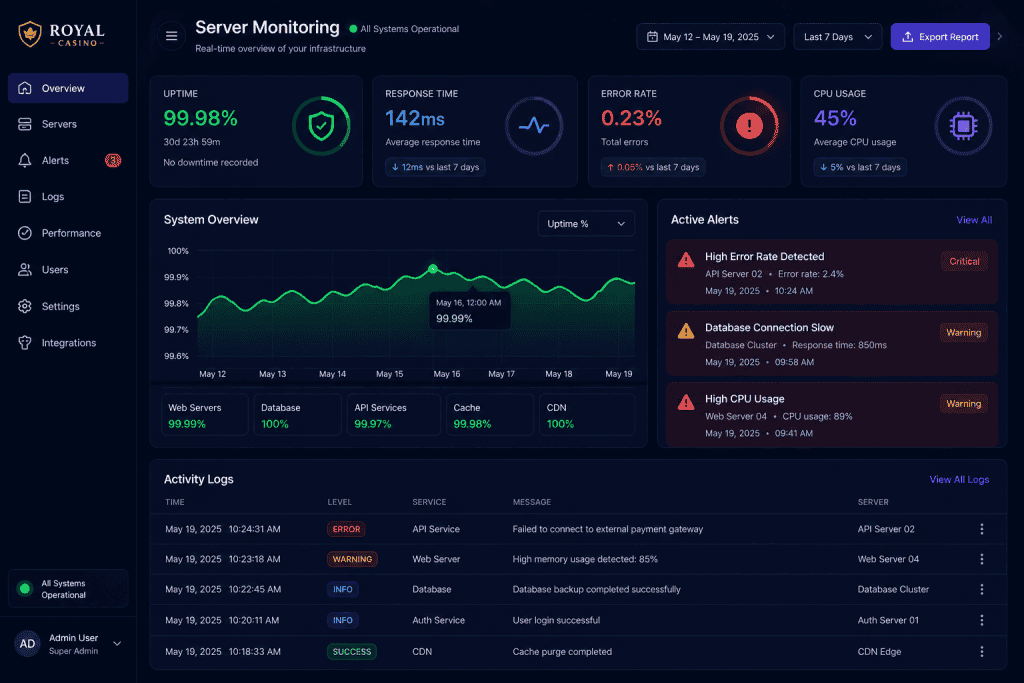
A useful way to think about maintenance cost is to separate planned work from unplanned work. One source recommends segmenting maintenance into preventive, corrective, and predictive categories so spending can be tracked more clearly. Another notes that scheduled maintenance supports more predictable operations, while emergency repairs can cost much more than planned repairs.
The same logic applies even when some reference material comes from broader casino or resort operations rather than website operations. Those sources still help illustrate the cost structure: maintenance becomes more expensive when teams defer upkeep, respond only after failures, or operate without clear performance metrics.
Why it matters
Casino Site Maintenance cost matters because casino platforms are not static websites. Tech24’s pillar describes them as systems that handle account management, session activity, payments, compliance-related controls, and continuous availability. That means upkeep directly affects platform reliability and user trust.
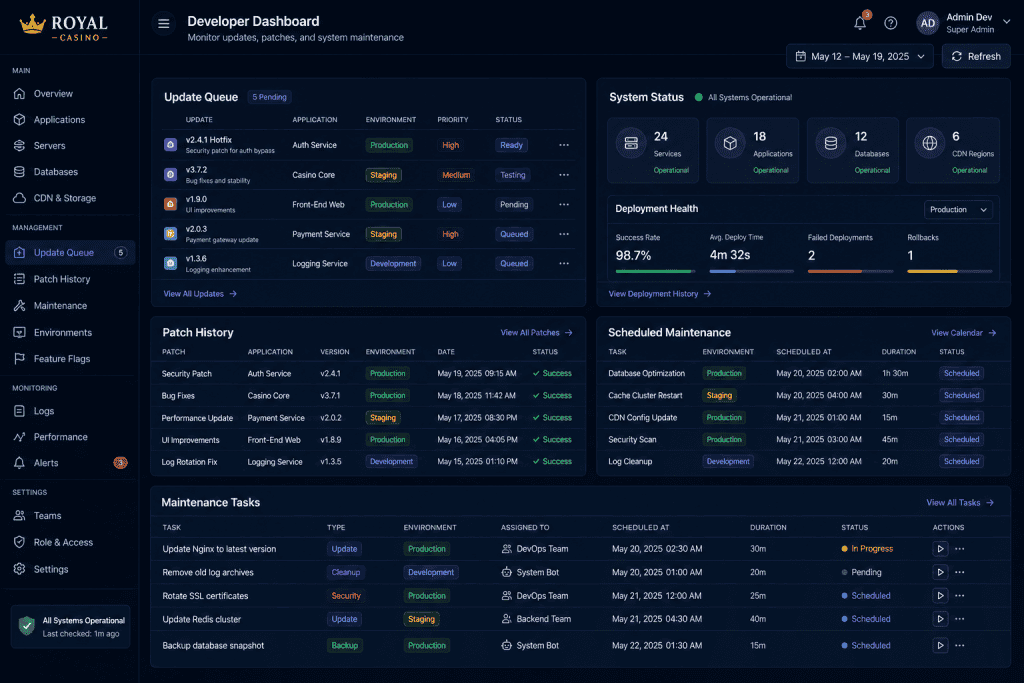
It also matters because reactive maintenance tends to be less efficient than planned maintenance. Oxmaint states that digital maintenance systems can reduce costs through better labor efficiency and reports that emergency repairs can cost roughly three times as much as planned repairs in a casino-property setting. While that figure comes from physical operations, the underlying point remains relevant for digital systems: delayed upkeep usually makes cost less predictable and disruption more likely.
From an economic-analysis perspective, maintenance is important because it behaves like a continuing operational drain. BusinessPlan Templates and FinancialModelslab both present maintenance as a recurring expense that must be budgeted consistently, even when revenue changes. Those examples are property-based, but they still reinforce the broader cost principle: maintenance is an ongoing requirement, not an optional extra.
Light Support Block
| Cost driver | What it means | Why it affects maintenance cost |
|---|---|---|
| Planned updates | Scheduled fixes, patches, and upkeep | Makes spending more predictable and reduces emergency work. |
| Reactive repairs | Work done after failures or incidents | Often increases disruption and raises total cost. |
| Monitoring and metrics | Logs, uptime checks, MTBF, MTTR, anomaly review | Helps teams detect issues earlier and manage resources better. |
| System complexity | More integrations, services, and dependencies | Increases the amount of ongoing upkeep required. This is an inference from Tech24’s description of layered, real-time platform architecture. |
Common mistakes / misconceptions
One common mistake is assuming maintenance cost only means repair cost. The sources point to a broader definition that includes preventive work, monitoring, scheduling, and performance tracking.
Another misconception is that maintenance is mainly a launch-stage concern. In reality, the cited materials treat it as a recurring operational requirement that continues after deployment.
A third mistake is thinking cost can be lowered simply by delaying maintenance. FinancialModelslab warns against cutting preventive maintenance, and Oxmaint argues that reactive maintenance can become substantially more expensive than planned upkeep.
Examples
Casino site maintenance may need recurring maintenance for software patches, session-handling fixes, and monitoring adjustments so that uptime and account functions remain stable. That example follows directly from Tech24’s description of the platform’s architecture and continuous operational demands.
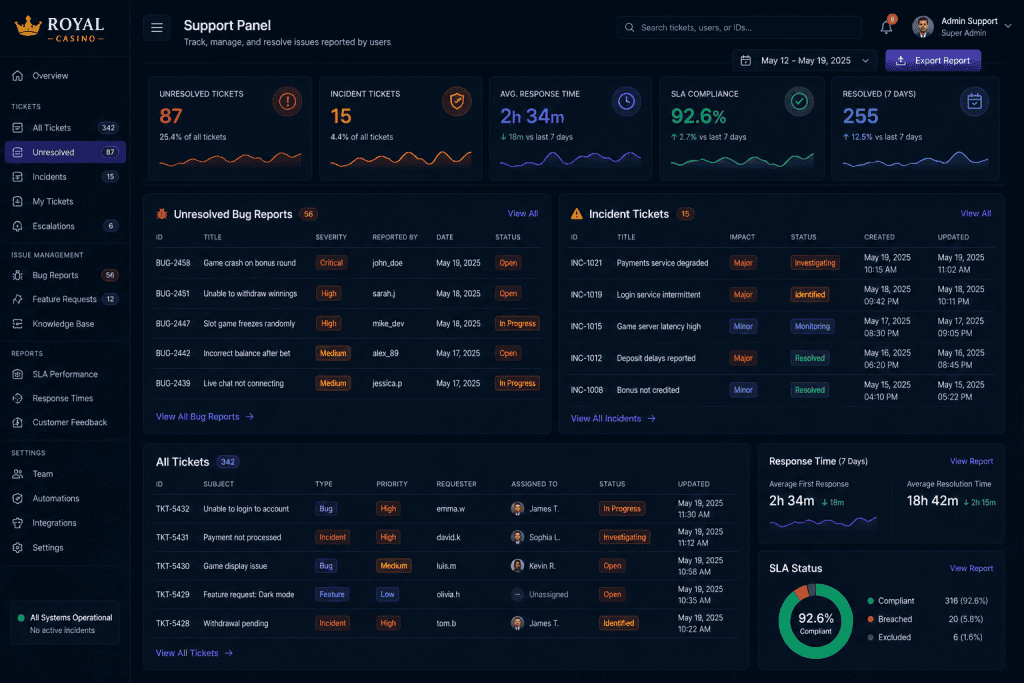
A team may segment maintenance spending into preventive, corrective, and predictive categories to understand where budget pressure is coming from. DataCalculus presents this kind of segmentation as useful for evaluating maintenance trends.
A platform that delays routine updates may later face costlier emergency intervention, higher downtime risk, or more support load. Oxmaint and FinancialModelslab both support the broader principle that deferred maintenance tends to increase cost and instability.
FAQ
What is Casino Site Maintenance in simple terms?
It is the ongoing work needed to keep a casino platform updated, stable, secure, and functioning properly after launch.
What usually increases maintenance cost?
Frequent fixes, reactive repairs, limited planning, heavy monitoring needs, and more complex systems can all raise maintenance cost over time.
Is maintenance cost the same as development cost?
No. Development cost is associated with building or expanding the platform, while maintenance cost is the recurring expense of keeping it operational and reliable over time. This distinction is supported by the sources’ treatment of maintenance as an ongoing operating expense.
Resources
- DataCalculus. Casino Financial Analyst: Maintenance Cost Insights
- Business Plan Templates. Gambling Destination Costs, 5-Year Revenue and EBITDA 2026
- FinancialModelslab. Casino Resort Running Costs: $23M Monthly Fixed Expenses
- Oxmaint. Seasonal Maintenance Playbooks for Resorts: KPI Framework for Casino Properties
- Online Casino Market. Average Cost of Slot Machine Maintenance in a Casino