
Trust Wallet is one of the most widely used cryptocurrency wallets, especially among users who prefer mobile-first solutions. Known for its ease of use and broad asset support, it has become a popular choice for beginners and experienced crypto users alike. As digital assets continue to grow in popularity, wallets play an important role in how users store, manage, and interact with cryptocurrencies.
The rise of decentralized finance and NFTs has increased the need for wallets that do more than just store coins. Users now expect wallets to connect easily with decentralized applications, support multiple blockchains, and remain accessible without sacrificing security. Trust Wallet positions itself as an all-in-one solution that aims to meet these expectations while keeping the user experience simple.
This review explores what Trust Wallet is, how it works, its key features, and what users should consider before relying on it for managing digital assets.
What is Trust Wallet?
Trust Wallet is a non-custodial cryptocurrency wallet that allows users to store, send, receive, and manage digital assets. Being non-custodial means users retain full control over their private keys.
Unlike centralized exchanges that hold assets on behalf of users, it gives individuals direct ownership of their funds. This approach aligns with the core philosophy of cryptocurrency, where control and responsibility rest with the user rather than a third party.
Trust Wallet supports a wide range of cryptocurrencies and tokens across multiple blockchains. It is primarily designed as a mobile wallet, making it accessible and convenient for users who want to manage assets on the go.
Key Features of Trust Wallet
Here is the information presented in a table format:
| Feature | Description |
|---|---|
| Multi-Currency Support | Over 4.5 million digital assets, including Bitcoin (BTC), Ethereum (ETH), Binance Coin (BNB), and altcoins. |
| Decentralized & Non-Custodial | Users have complete control over their private keys. |
| Built-in DApp Browser | Access decentralized applications directly from the wallet. |
| Staking & Passive Income | Supports staking for multiple cryptocurrencies, enabling users to earn rewards. |
| NFT Support | Buy, sell, and store NFTs seamlessly. |
| Integrated Swap & Exchange | Trade crypto assets directly within the app. |
| High-Level Security | End-to-end encryption with biometric authentication. |
In-Depth Review of Trust Wallet
User Experience & Interface
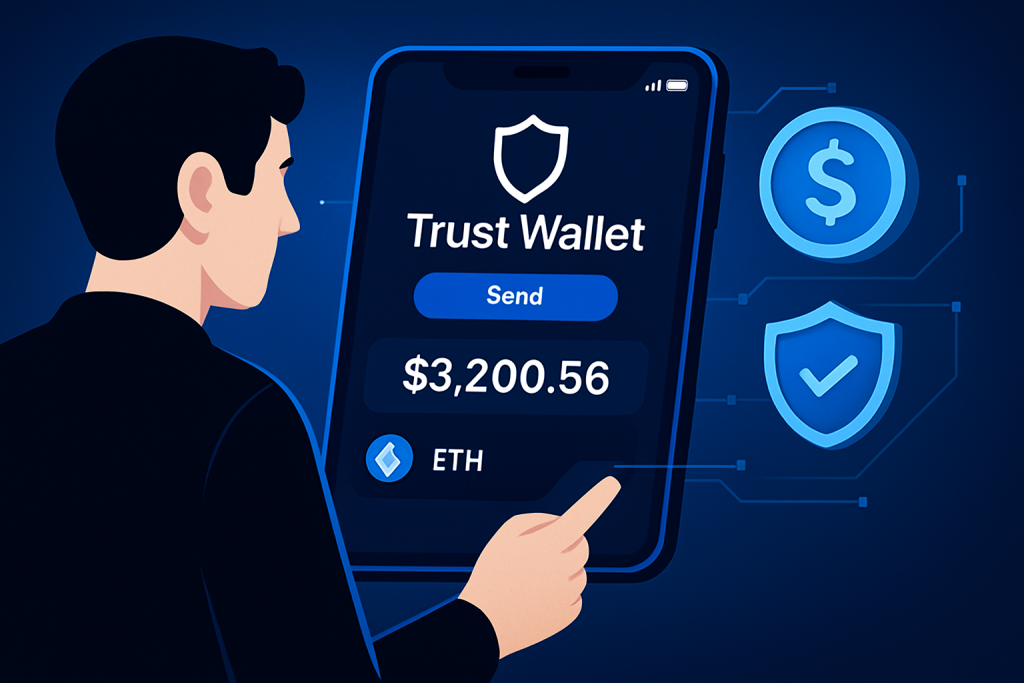
Trust Wallet offers a clean, intuitive interface that caters to both beginners and advanced users. The simple navigation makes it easy to manage multiple assets, execute transactions, and explore DeFi applications.
The wallet supports dark mode, providing a sleek and modern aesthetic for users who prefer a more subdued look. Setting up a new wallet takes less than a minute, requiring users to securely store their 12-word recovery phrase for account restoration.
Security & Privacy
Security is a top concern in the crypto market, and it prioritizes user safety through:
| Feature | Description |
|---|---|
| Private Key Control | Unlike custodial wallets, it ensures users retain full control over their funds. |
| Encryption & Biometrics | Features AES-256 encryption, fingerprint authentication, and passcode lock. |
| Open-Source & Transparent | The code is publicly available, allowing security experts to audit vulnerabilities. |
| No KYC Required | Users remain anonymous while managing their assets. |
While these features provide a solid security foundation, the lack of two-factor authentication (2FA) might be a downside for some users.
Supported Cryptocurrencies & Blockchain Compatibility
Trust Wallet supports a vast range of cryptocurrencies and blockchains, making it one of the best crypto wallets for diverse portfolios. It offers:
- Bitcoin (BTC) & Ethereum (ETH)
- Binance Smart Chain (BSC) & Polygon (MATIC)
- Solana (SOL), Cardano (ADA), Polkadot (DOT)
- Meme Coins (DOGE, SHIB, PEPE) & Stablecoins (USDT, USDC)
- NFTs on Ethereum, Binance Smart Chain, and Solana
With support for over 70 blockchains, Trust Wallet outshines many competitors in crypto wallet comparison discussions.
Staking & Earning Rewards
One of its most attractive features is crypto staking. Users can earn passive income by staking assets like:
- BNB (Binance Coin)
- Tezos (XTZ)
- Cosmos (ATOM)
- Tron (TRX)
- Algorand (ALGO)
By simply holding assets, users can earn up to 20% APY, making it an excellent choice for those looking to grow their portfolio.
Pros and Cons
Pros
- Supports a wide range of cryptocurrencies and blockchains
- Full user control over private keys
- No registration or KYC requirements
- Integrated staking, swapping, and DApp browsing
- Strong encryption and biometric authentication
Cons
- No desktop version available (mobile-only)
- Lacks 2FA security feature
- Limited customer support options
Trust Wallet’s simplicity is a major advantage, but it may not suit everyone. Users seeking maximum security through offline storage may prefer hardware wallets. The Wallet is better positioned as a convenient hot wallet for daily use rather than long-term cold storage.
Is Trust Wallet Safe?
Yes, it is a safe mobile crypto wallet with high-level security features, including:
- Private key encryption
- Biometric authentication
- Non-custodial storage
- Regular security audits
However, users must store their recovery phrase securely since losing it means losing access to funds permanently.
Trust Wallet vs. Other Crypto Wallets
When comparing to other mobile wallets, here’s how it stacks up:
| Feature | Trust Wallet | MetaMask | Coinbase Wallet |
|---|---|---|---|
| Multi-Asset Support | 4.5M+ Cryptos | Limited | 100+ Coins |
| NFT Support | Yes | Yes | Yes |
| Staking | Yes | No | Limited |
| Private Key Control | Yes | Yes | No (Custodial) |
| Security Features | Encryption, Biometrics | Seed Phrase | Biometric Lock |
It offers better asset support and staking options than MetaMask and more privacy than Coinbase Wallet.
Conclusion
Trust Wallet stands out as one of the best mobile crypto wallets in 2024 due to its wide asset support, security, and built-in DeFi functionalities. While it lacks 2FA and a desktop version, its non-custodial nature, staking rewards, and NFT compatibility make it a top choice for crypto investors.
Looking ahead, Trust Wallet may expand its DeFi integrations and security measures, ensuring its relevance in the ever-evolving blockchain ecosystem.
FAQ
Is Trust Wallet safe for storing Bitcoin and other cryptocurrencies?
Yes, it is safe due to its non-custodial nature, encryption, and private key security. However, users must securely store their recovery phrase.
Can I use Trust Wallet for staking?
Yes, it supports staking for multiple cryptocurrencies, allowing users to earn passive income with competitive APY rates.
Does Trust Wallet charge transaction fees?
The wallet itself doesn’t charge fees, but network fees apply for sending transactions, depending on the blockchain used.
Resources
- Coin Bureau. Trust Wallet Review
- Coin Culture. Comprehensive Review of Trust Wallet
- CCN. Trust Wallet Pros and Cons
- Nerd Wallet. Trust Wallet Performance & Features
- Wallet Reviewer. In-Depth Review of Trust Wallet