
The first time I bought cryptocurrency, I felt confident right up until the moment I realized I had no idea where to store it. The exchange warned me about responsibility. Forums warned me about theft. Friends warned me about losing passwords forever. Suddenly, owning crypto felt less like an investment and more like guarding a secret vault.
That confusion is exactly why the hot wallet vs cold wallet conversation matters. This isn’t just technical jargon. It’s a decision that affects how easily you can access your money, how safe it is from online threats, and how much stress you carry every time you log in.
I’m reviewing hot wallets and cold wallets because most guides oversimplify the choice. Real users have real habits, and those habits should decide how your crypto is stored.
Overview of Hot Wallet vs Cold Wallet
At a basic level, the hot wallet vs cold wallet distinction comes down to connectivity.
A hot wallet is connected to the internet. It might be a mobile app, a browser extension, or desktop software. These wallets are designed for convenience. You can send, receive, and interact with crypto platforms almost instantly.
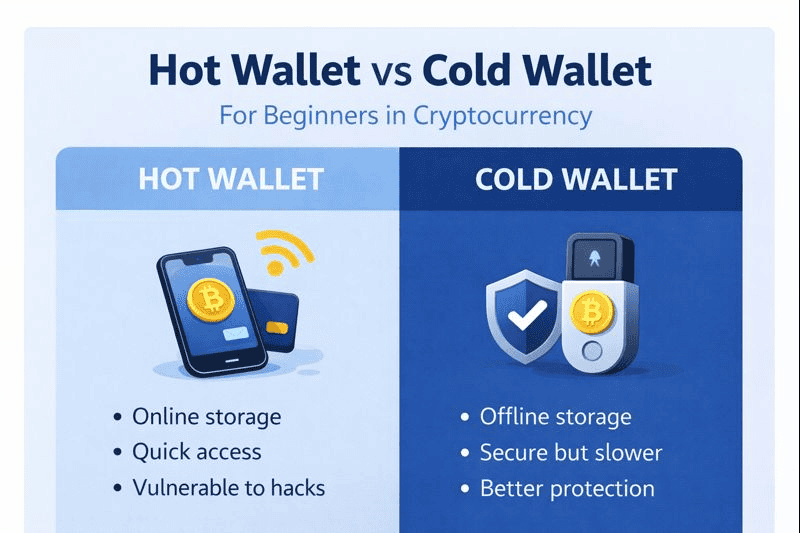
A cold wallet stays offline. This usually means a physical hardware device or even a paper wallet. Cold wallets are intentionally inconvenient. That extra friction is what protects them.
Core characteristics include:
- Hot wallets are always online
- Cold wallets remain offline except during transfers
- Hot wallets emphasize speed and accessibility
- Cold wallets emphasize long-term security
- Both store private keys, but in very different ways
Understanding this difference early can save you from costly mistakes, especially if you plan to hold crypto for more than a few months.
In-Depth Analysis of Hot Wallet vs Cold Wallet
Before choosing a wallet, it helps to understand how each option behaves in real-world conditions, not just ideal ones.
Security and Risk Exposure
Security is where cold wallets dominate. Because they’re offline, they’re largely immune to online attacks, including Hacking attempts that exploit software vulnerabilities. Even if your computer is compromised, a cold wallet keeps private keys isolated.
Hot wallets, by design, face more exposure. They rely on encryption, passwords, and user behavior. One careless click or weak password can open the door to serious Cyber Threats.
Performance and Speed
Hot wallets are built for action. Transactions are quick, confirmations are easy, and integrations with exchanges or decentralized apps feel seamless. If you trade frequently, this speed is a major advantage.
Cold wallets take longer. You have to physically connect the device, confirm details, and sign transactions manually. While slower, this process drastically reduces accidental or malicious transfers.
Ease of Use
Hot wallets feel familiar. They resemble modern banking apps and often pair well with privacy tools like Express VPN to protect your connection. Cold wallets, meanwhile, require patience. Writing down recovery phrases and storing them safely is nerve-wracking the first time.
Updates and Maintenance
Hot wallets receive frequent updates, sometimes coinciding with broader system patches like a Windows Update. While updates improve security, they can also introduce bugs.
Cold wallets update less often, which lowers risk but requires manual checks to stay compatible with evolving networks.
Emerging Threats
Modern scams are becoming disturbingly sophisticated. Some attackers even use Deepfakes to impersonate wallet providers or customer support. Cold wallets reduce exposure to these tactics, but no solution replaces user awareness.
Hot Wallet vs Cold Wallet Comparison
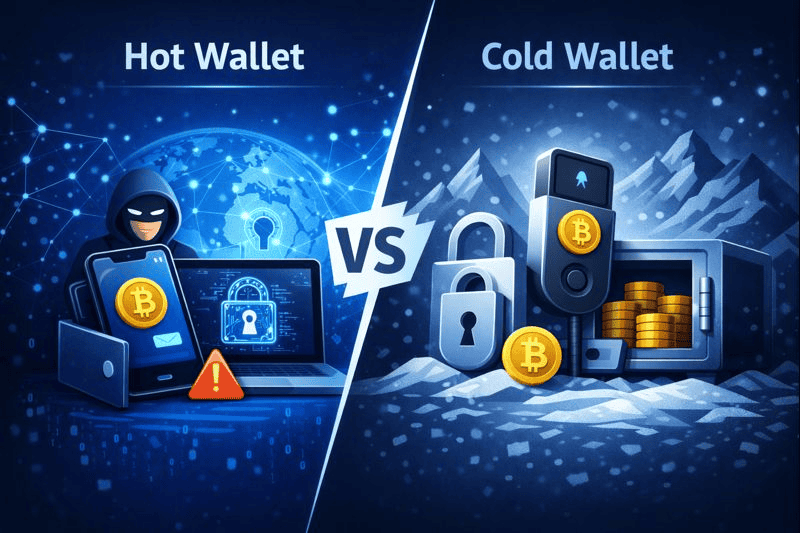
Comparing hot wallet vs cold wallet options side by side highlights why neither is universally better.
Hot wallets are best for people who interact with crypto often. Traders, NFT users, and DeFi participants benefit from instant access and smooth integrations. These wallets shine when convenience matters more than maximum security.
Cold wallets are designed for preservation. Investors holding assets long-term often prefer knowing their funds are unreachable from the internet. The lack of constant connectivity is the point.
| Feature | Hot Wallet | Cold Wallet |
|---|---|---|
| Connectivity | Online | Offline |
| Transaction speed | Fast | Slower |
| Security level | Moderate | Very high |
| Ease of setup | Simple | Moderate |
| Ideal use | Active use | Long-term storage |
Many experienced users split their funds. They keep spending balances in hot wallets and savings in cold wallets, reducing overall risk without sacrificing usability.
Hot Wallet vs Cold Wallet Pros and Cons
Before committing, it helps to see the trade-offs clearly.
| Wallet Type | Pros | Cons |
|---|---|---|
| Hot Wallet | Convenient, fast, user-friendly | Vulnerable to online attacks |
| Cold Wallet | Extremely secure, offline protection | Less convenient, hardware cost |
There’s no perfect solution, only one that fits your habits and risk tolerance.
Conclusion
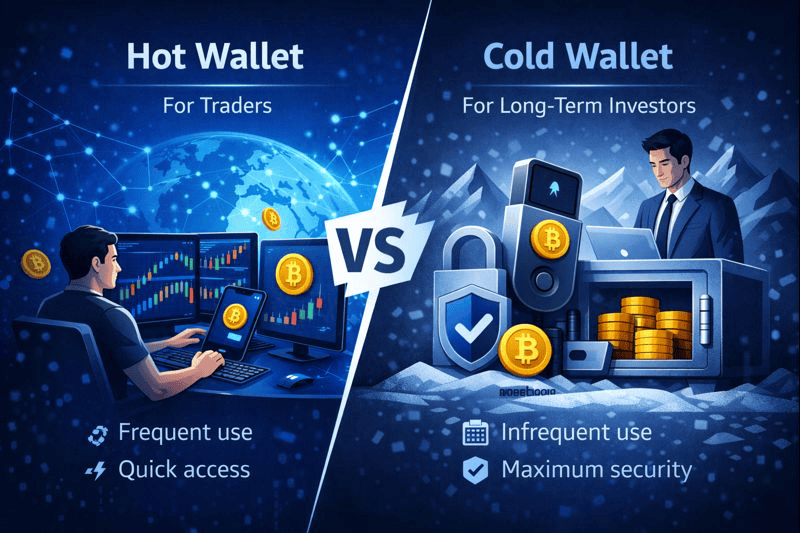
The hot wallet vs cold wallet decision becomes much easier once you stop looking for a “best” option and start looking for the right one. If you trade frequently or use crypto as a tool, hot wallets make sense. If you treat crypto like a long-term investment, cold wallets offer peace of mind that’s hard to replicate.
In my own setup, using both reduced anxiety and improved flexibility. I stopped worrying about every login while still keeping funds accessible when needed. The smartest approach isn’t extreme. It’s balanced, informed, and intentional.
Hot Wallet vs Cold Wallet Rating
Overall Rating: ⭐⭐⭐⭐☆ (4/5)
Excellent when used together, less ideal when relying on only one.
FAQ
Is hot wallet vs cold wallet security important for beginners in cybersecurity?
Yes. For beginners learning Cybersecurity, starting with a hot wallet builds confidence, but adding a cold wallet early protects assets as holdings grow.
How does hot wallet vs cold wallet storage protect against cybercrime?
Cold wallets limit exposure to online cyber threats, while hot wallets depend on strong passwords, secure devices, and cautious behavior to remain safe.
Which hot wallet vs cold wallet option is better for long-term investors?
For long-term investors, cold wallets are generally preferred because offline storage significantly reduces the risk of theft or unauthorized access.
Resources
- Investopedia. Hot Wallet vs. Cold Wallet: What’s the Difference?
- BitGo. Cold Wallet vs Hot Wallet Explained
- Blockchain Council. Hot Wallet vs Cold Wallet Comparison
- Trading 212. Cold Storage vs Hot Storage in Crypto
- Cobo. Cold Wallet vs Hot Wallet: 2025 Insights