
Casino Site Downtime refers to periods when a platform becomes unavailable or unstable, creating direct cost impact through failed transactions, interrupted sessions, operational recovery expense, and long-term trust loss. Because casino platforms operate in real time and often face traffic spikes, even short outages can generate disproportionate disruption across active users and backend workflows.
Key Takeaways
- Casino Site Downtime creates costs through lost activity, failed deposits or withdrawals, and service interruption.
- Downtime impact includes direct losses (transaction disruption) and indirect losses (support load, recovery effort).
- Outages during peak demand amplify disruption because more sessions and workflows are active.
- Resilience investments reduce downtime frequency and shorten recovery time, lowering cost exposure over time.
Definition
Casino Site Downtime means any period when a casino platform cannot deliver normal service due to outages, infrastructure failure, or severe performance degradation that prevents users from completing expected actions.
How it works
Downtime interrupts core platform workflows
Casino platforms depend on continuous availability for sessions, game delivery, and wallet services. When downtime occurs, the platform may not be able to support normal user activity.
Common downtime effects include:
- disconnected or frozen sessions
- failed or pending deposits and withdrawals
- incomplete game state updates
- delayed authentication or account access
- unstable service responses under load
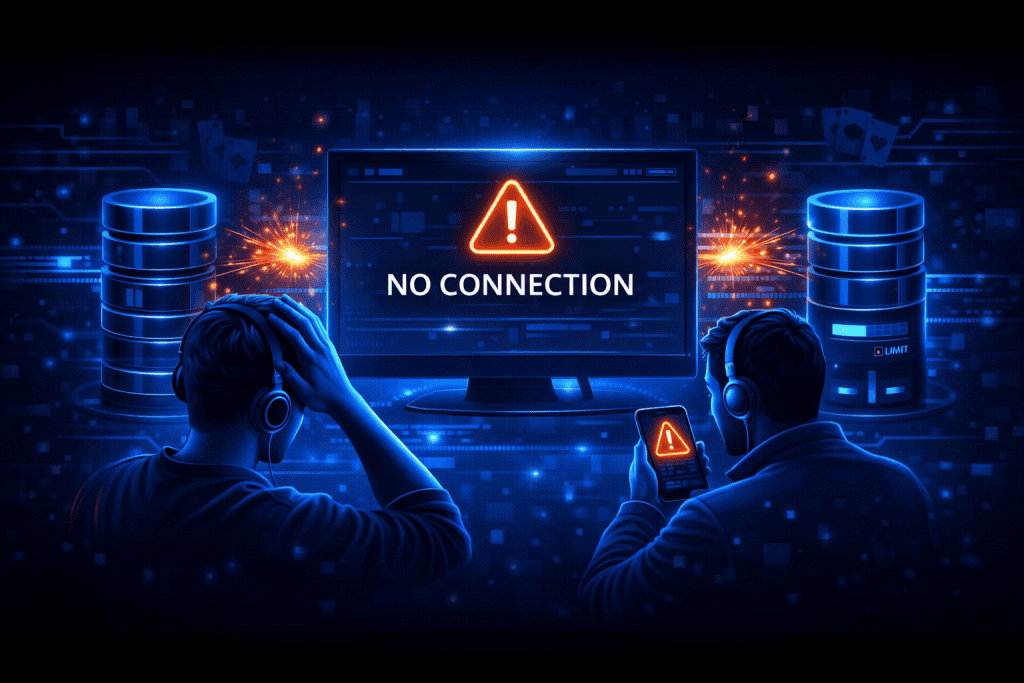
Downtime can be total, where the site becomes unreachable, or partial, where specific components such as payment services or game servers fail while the homepage remains accessible.
Because casino platforms operate through many interconnected services, even one failing component can disrupt the full user experience.
Cost impact comes from multiple layers
Casino Site Downtime cost impact is not limited to the minutes when the platform is offline. Costs often appear in several overlapping layers.
Direct disruption includes:
- lost transaction completion
- interrupted sessions during active use
- paused or delayed backend workflows
Indirect disruption includes:
- incident response and recovery effort
- backlog processing after systems return
- increased customer support volume
- longer-term trust decline if outages repeat
Even when the platform is restored quickly, follow-up work is often required to confirm transaction consistency and resolve incomplete processes.
Recovery overhead is a major hidden cost
A key part of downtime cost is the operational burden after an outage. Restoring service often requires:
- diagnosing the root cause
- restarting services or triggering failover
- validating database consistency
- reconciling pending transactions
- monitoring for repeated instability
This recovery effort consumes engineering resources and can delay other development or maintenance work. Platforms with frequent outages may experience compounding operational cost because teams spend more time in reactive mode rather than improving stability.
Downtime therefore creates both immediate disruption and longer-term efficiency loss.
Peak traffic outages amplify cost per minute
Casino platforms frequently experience traffic spikes. Outages during high-demand periods are more expensive because:
- more users are active simultaneously
- more deposits, withdrawals, and game sessions are in progress
- transaction queues grow faster
- recovery backlog becomes larger
A short outage during low traffic may affect a limited number of sessions, but the same outage during peak demand can disrupt thousands of concurrent workflows.
This amplification effect is why downtime risk is often treated as a high-priority operational issue, especially for platforms that depend on continuous real-time engagement.
Trust and retention impact extends beyond technical failure
Reliability is a baseline expectation for interactive platforms. Repeated Casino Site Downtime can weaken trust, even if outages are short.
Trust erosion can occur through:
- uncertainty about transaction completion
- concerns about account stability
- frustration from repeated session interruptions
- reduced confidence in platform availability
While reputational cost is harder to measure than transaction disruption, it often becomes one of the most significant long-term impacts of downtime.
In technical terms, downtime affects not only availability metrics but also perceived platform dependability.
Downtime sources are often multi-layered
Casino Site Downtime can originate from many system layers, including:
- infrastructure overload or hardware failure
- database bottlenecks under high concurrency
- application bugs causing crashes or deadlocks
- third-party service outages (payment processors, network providers)
- deployment errors or misconfigurations
- insufficient scalability planning
Modern casino platforms are complex distributed systems. Downtime is rarely caused by one isolated issue, which is why monitoring and redundancy are critical to reducing severity.
Downtime reduction focuses on resilience, not perfection
Downtime cannot be eliminated entirely, but platforms can reduce frequency and severity through resilience practices such as:
- redundancy across critical services
- load balancing during traffic surges
- automated failover systems
- real-time monitoring and alerting
- controlled deployment and rollback processes
The ROI of resilience is often measured in shorter outage duration, fewer transaction failures, and reduced recovery overhead.
In this sense, downtime management is a cost-control strategy as much as a technical reliability strategy.
Why it matters
Casino site downtime cost matters because system outages can interrupt gameplay, block transactions, and reduce overall platform reliability. Even short periods of downtime may lead to lost activity and operational disruption, which is why platforms such as Woori Casino prioritize infrastructure stability and monitoring systems to minimize service interruptions.
The most common downtime cost drivers include:
- transaction disruption and backlog
- session interruption at scale
- operational incident response expense
- peak traffic amplification
- long-term trust and retention decline
Platform uptime is therefore not only a technical metric, it is a core operational stability requirement.
Light Support Block
| Downtime factor | What happens | Cost impact |
|---|---|---|
| Transaction failure | Deposits or withdrawals do not complete | Direct financial disruption |
| Session interruption | Users disconnect mid-activity | Engagement and retention loss |
| Recovery overhead | Engineers restore and reconcile systems | Operational cost increase |
| Support escalation | Ticket volume increases after outage | Higher service workload |
| Peak traffic outages | Failures occur during surges | Amplified loss per minute |
| Reputation impact | Trust declines after repeated issues | Long-term stability risk |
Common mistakes
Downtime also creates recovery cost, backlog processing, and trust damage after service is restored
Even brief downtime can disrupt many sessions and transactions at scale, especially during peak demand.
Outages cannot be eliminated entirely, but monitoring, redundancy, and scalability planning reduce frequency and severity
Downtime also increases operational expense, support workload, and long-term retention risk.
Examples
Example: Peak traffic outage cascade. A platform fails during a demand surge. Thousands of sessions drop, transaction queues pause, and recovery requires extended engineering and support effort.
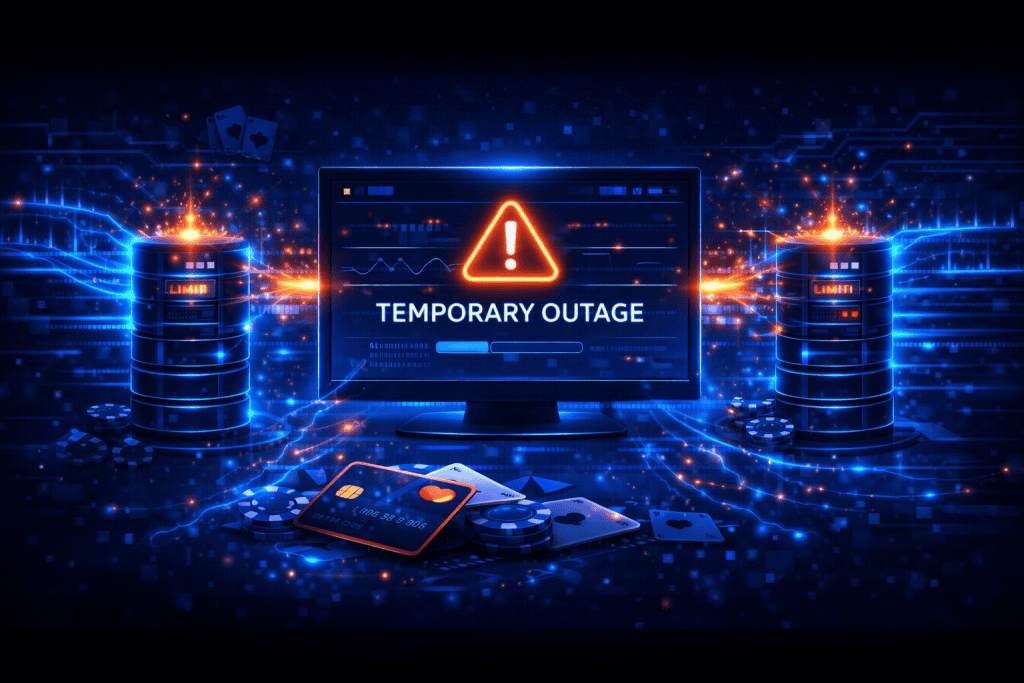
Example: Payment workflow disruption. An outage interrupts withdrawal processing. Requests remain pending, reconciliation is required, and support volume increases until settlement completes.
Example: Partial outage in game delivery. The site loads, but game servers become unstable. Users experience lag, incomplete sessions, and repeated retries, creating strain even without a full outage.
FAQ
What is the main cost impact of Casino Site Downtime?
Lost transactions, interrupted sessions, and operational recovery effort are the most common cost drivers.
Why does downtime cost more during peak traffic?
Because more concurrent users and transactions amplify disruption and backlog.
Can platforms reduce downtime impact?
Yes. Monitoring, redundancy, and scalability planning reduce outage frequency and shorten recovery time.
Resources
- Icon Era. Digital Casinos and Outages: The Hidden Risks Behind Online Play
- FasterCapital. Understanding the Financial Impact of Downtime: Calculating the Cost of Downtime
- Queue-it. Cost of Downtime
- ChooseNiagara. The Hidden Costs of Poorly Built Casino Platforms
- MoistureRid. The Economic Impact of Disasters on the Casino Industry
