

If you’ve ever felt a knot in your stomach after reading about another crypto exchange breach, you’re not alone. In the world of cybersecurity, protecting digital assets isn’t optional anymore. It’s essential. That’s where a Multi-Signature Wallet comes in.
Think of it like a vault that requires two or three keys instead of just one. Even if someone gets hold of one key, they can’t open the vault. That extra layer of protection makes a real difference in a time when Hacking and evolving Cyber Threats are becoming more sophisticated every year.
For crypto investors, blockchain developers, and even small fintech teams, learning to use a Multi-Signature Wallet isn’t just a smart move. It’s peace of mind. Whether you’re safeguarding company funds or your personal crypto savings, this guide will walk you through exactly how to set one up and use it effectively. By the end, you’ll understand why many professionals refuse to store large sums without one.
Tools Needed
Before setting up a Multi-Signature Wallet, gather the right tools. Preparation makes the process smoother and prevents costly mistakes.
You’ll need:
- A compatible wallet provider that supports multi-signature functionality
- Two or more trusted co-signers (partners, team members, or secondary devices)
- Secure internet access
- Backup storage solution (hardware wallet or encrypted offline storage)
- Updated operating system (keep your Windows Update current)
- Optional: VPN such as Express VPN for added network protection
Here’s a quick overview:
| Tool/Material | Purpose |
|---|---|
| Multi-signature wallet provider | Enables shared authorization |
| Co-signers | Approve transactions |
| Secure device | Prevents unauthorized access |
| Backup storage | Protects recovery keys |
| VPN | Encrypts internet traffic |
Having these ready before you begin reduces risk and keeps your setup secure from day one.
Multi-Signature Wallet Instructions
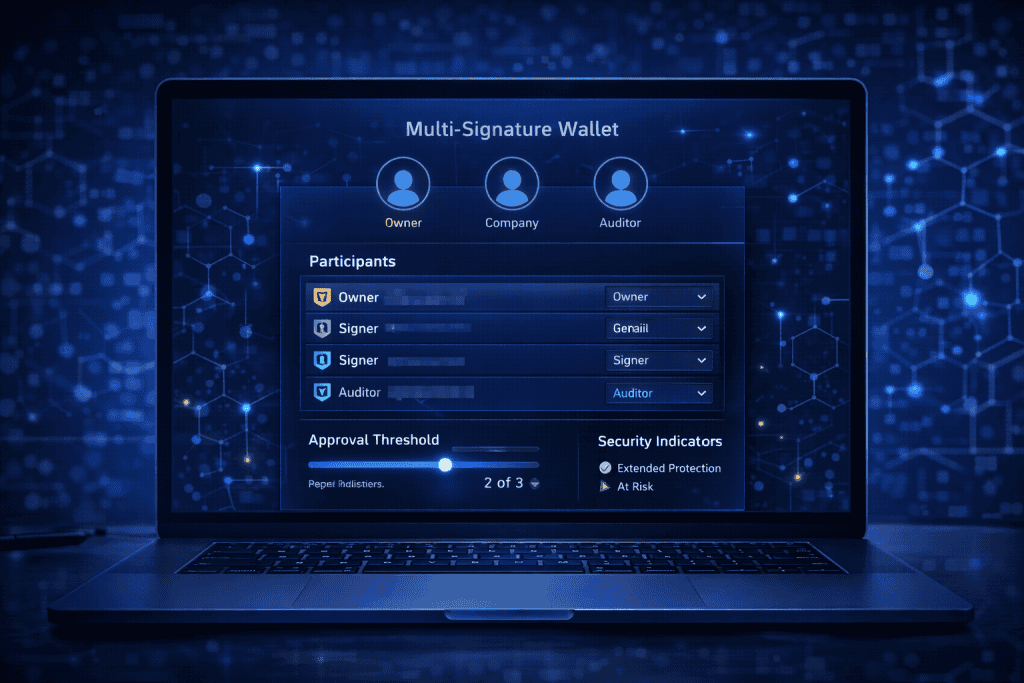
Step 1: Choose a Trusted Multi-Signature Wallet Provider
Start by researching reputable platforms that support Multi-Signature Wallet functionality. Look for providers with strong security reputations, transparent documentation, and active development communities. Read user reviews and compare features carefully. Some wallets allow 2-of-3 signatures, others 3-of-5. Choose a structure that fits your needs. For businesses, 2-of-3 is common. For higher security, consider 3-of-5. Always verify the official website before downloading anything.
Step 2: Set Up Primary Wallet and Generate Keys
Install the wallet on a secure device. During setup, you’ll generate private keys or seed phrases. This step is critical. Write down your recovery phrase on paper, not in a notes app or screenshot. Store it offline in a secure location. Never share it through email or messaging apps.
The wallet will then generate public addresses linked to your keys. Double-check every detail. Small mistakes here can cause permanent loss of funds.
Step 3: Add Co-Signers
Next, invite your co-signers. Each participant will generate their own private key securely on their device. You’ll then combine the public keys into the Multi-Signature Wallet configuration.
This structure ensures that no single person controls the funds. For example, in a 2-of-3 setup, any two authorized signers must approve a transaction. It’s a simple concept, but incredibly powerful.
Communicate clearly with co-signers and verify identities before finalizing setup.
Step 4: Test a Small Transaction
Before transferring large amounts, run a small test transaction. Send a minimal amount of crypto and practice the approval process. Each required signer should confirm the transaction properly.
This is where many beginners feel confused. Take your time. Review each step carefully. Confirm wallet addresses and network fees. Testing builds confidence and reduces risk when real funds are involved.
Step 5: Secure and Monitor the Wallet
Once everything works, move your intended funds into the Multi-Signature Wallet. After that, your job isn’t finished.
Enable notifications for transactions. Keep devices updated. Regularly review access permissions. Stay aware of new forms of deception, including phishing attempts and even Deepfakes that impersonate executives or trusted partners.
Security is not a one-time action. It’s ongoing vigilance.
Multi-Signature Wallet Tips and Warnings

Using a Multi-Signature Wallet dramatically improves security, but only if managed properly.
First, choose your co-signers wisely. I once worked with a small crypto startup where one signer lost access to their private key. Funds weren’t stolen, but they were locked for weeks. Trust matters. So does responsibility.
Second, store recovery phrases separately. Never keep all keys in the same physical location. That defeats the purpose.
Third, protect your devices. Use antivirus software and encrypted storage. Public Wi-Fi is risky. A secure VPN adds an extra shield against data interception.
Common mistakes include:
- Sharing private keys over chat apps
- Failing to back up seed phrases
- Not testing the setup before funding
- Ignoring software updates
- Using weak passwords
Here’s a quick reference:
| Tip | Why It Matters |
|---|---|
| Separate key storage | Prevents single point of failure |
| Regular updates | Closes security vulnerabilities |
| Small test transactions | Identifies setup errors |
| Use strong passwords | Stops brute-force attacks |
| Educate co-signers | Reduces human error |
In cybersecurity, human mistakes cause more losses than technical flaws. Treat your Multi-Signature Wallet like a shared safe deposit box. Communication, clarity, and caution keep it secure.
Conclusion
A Multi-Signature Wallet isn’t just a technical upgrade. It’s a mindset shift. Instead of trusting a single key, you distribute responsibility. That alone reduces risk dramatically.
By choosing a trusted provider, setting up secure keys, adding reliable co-signers, testing transactions, and maintaining ongoing vigilance, you build a powerful layer of defense against modern threats.
Cybersecurity isn’t about fear. It’s about preparation. The tools are available. The process is manageable. And the peace of mind is worth the effort.
If you’re holding significant crypto assets, now is the time to strengthen your protection. Start small. Follow the steps. Test everything. Once you see how secure and controlled the process feels, you’ll wonder why you didn’t adopt a Multi-Signature Wallet sooner.
FAQ
What is a multi-signature wallet?
A multi-signature wallet is a digital wallet that requires more than one private key to authorize transactions, increasing security by distributing control among multiple parties.
How do multi-signature wallets increase security?
Because multi-sig wallets require multiple keys for transactions, it’s harder for hackers to access your funds even if one key is compromised.
Which multi-sig wallet provider do you recommend?
Popular multi-sig wallet providers include Electrum, BitGo, and Armory, each of which offer strong security features and user-friendly interfaces.
Resources
- Swissmoney. How to Secure Crypto Wallet
- B2BinPay. Top 10 Multi-Sig Wallets to Use in 2024
- Medium. Implementing Multi-Signature Wallets with Python for Enhanced Security on the Blockchain
- Byte Federal. What is a Multi-Signature Wallet?
- Swissmoney. Cryptocurrency Security Guide