
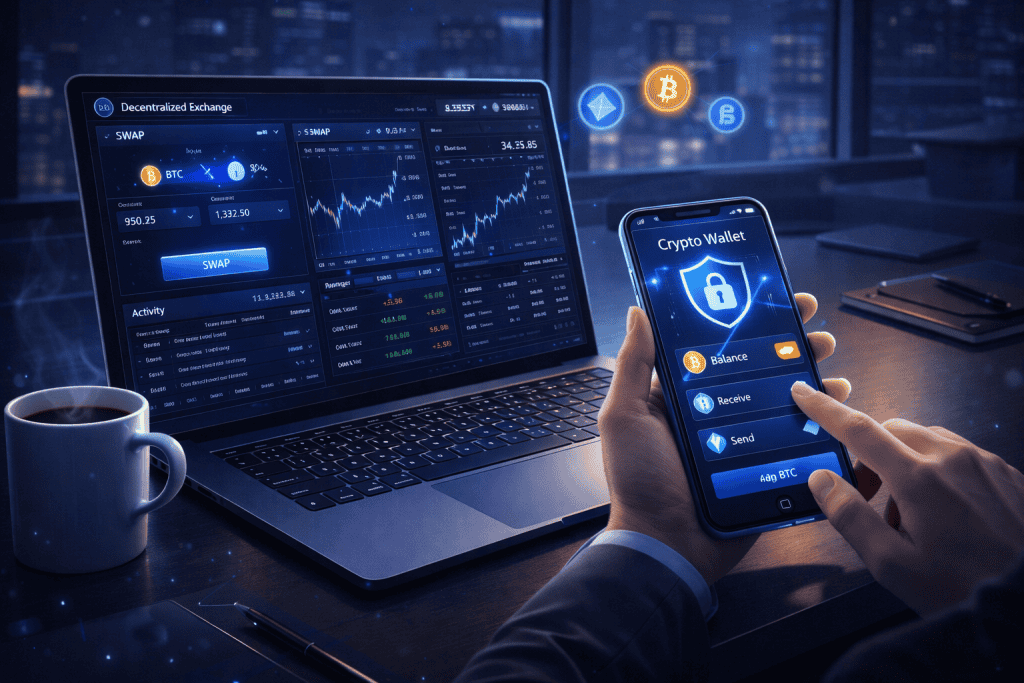
The first time I tried a decentralized exchange, I stared at the screen like it was written in another language. Wallet connection. Gas fees. Slippage. Liquidity pools. It felt like stepping into the future without a map. That’s exactly why learning DEX Crypto matters in the Cryptocurrency space. A decentralized exchange lets you trade tokens directly from your wallet instead of handing custody to a traditional platform. In simple terms, you stay in control of your funds while smart contracts handle the swap.
That control is a huge reason many traders, builders, and curious fans are drawn to DEX platforms. They can offer broader token access, more privacy, and direct participation in decentralized finance, though they also demand more care from the user. Once you understand the flow, the process becomes far less intimidating. Think of it less like cracking a secret code and more like learning the rhythm of a new app. After a few careful steps, it starts to click, and the whole experience feels much more empowering.
Tools Needed
Before you begin with DEX Crypto, gather the basics so the process feels smooth instead of stressful. You’ll need a non-custodial wallet, some funds for swapping, and enough native tokens to cover network fees. Most DEX platforms connect directly to wallets, so you usually do not create a standard exchange account. A little preparation goes a long way here. I’ve found that the easiest way to avoid mistakes is to slow down, double-check wallet balances, and confirm that the token and network match before clicking anything. That one-minute pause can save a very expensive headache. You should also use a reputable DEX with healthy liquidity, because low liquidity can lead to worse pricing and more slippage during trades.
| Tool or Material | Why You Need It |
|---|---|
| Non-custodial wallet | Lets you connect directly and keep control of your assets |
| Native token for fees | Needed to pay network transaction costs |
| Tokens to swap | The asset you want to trade from |
| Reputable DEX platform | Helps reduce poor execution and liquidity issues |
| Stable internet connection | Prevents interruptions during approval and swap steps |
| Basic network knowledge | Helps you avoid sending funds on the wrong chain |
DEX Crypto Instructions
Step 1: Set up your wallet
To start with DEX Crypto, create or open a trusted non-custodial wallet that supports the network you plan to use. Write down your recovery phrase offline and store it somewhere secure, not in screenshots or random notes apps. This step sounds boring, but it is the foundation of everything. In Cryptocurrency, self-custody gives you freedom, but it also gives you responsibility. If you lose that phrase, there is usually no customer service miracle waiting to save the day.
Step 2: Fund the wallet with the right assets
Next, add funds for your first DEX Crypto transaction. You need the token you want to trade and the blockchain’s native coin to pay transaction fees. For example, some networks require their native asset for every on-chain action. I learned this the annoying way years ago when I had enough tokens to trade but not enough to cover the fee, which left me stuck at the final click. It felt like reaching the cashier and realizing my wallet was empty.
Step 3: Connect to a reputable decentralized exchange
Now open a reputable platform and connect your wallet to the site. A good DEX Crypto experience depends on using the correct website, strong liquidity, and the right network. Never click the first random link you see in chat threads or social posts. Type carefully, bookmark trusted pages, and inspect token details before interacting. Decentralized exchanges generally let users trade without giving up custody, and many rely on smart contracts or AMM systems rather than a central order-matching company.
Step 4: Choose the token pair and review swap details
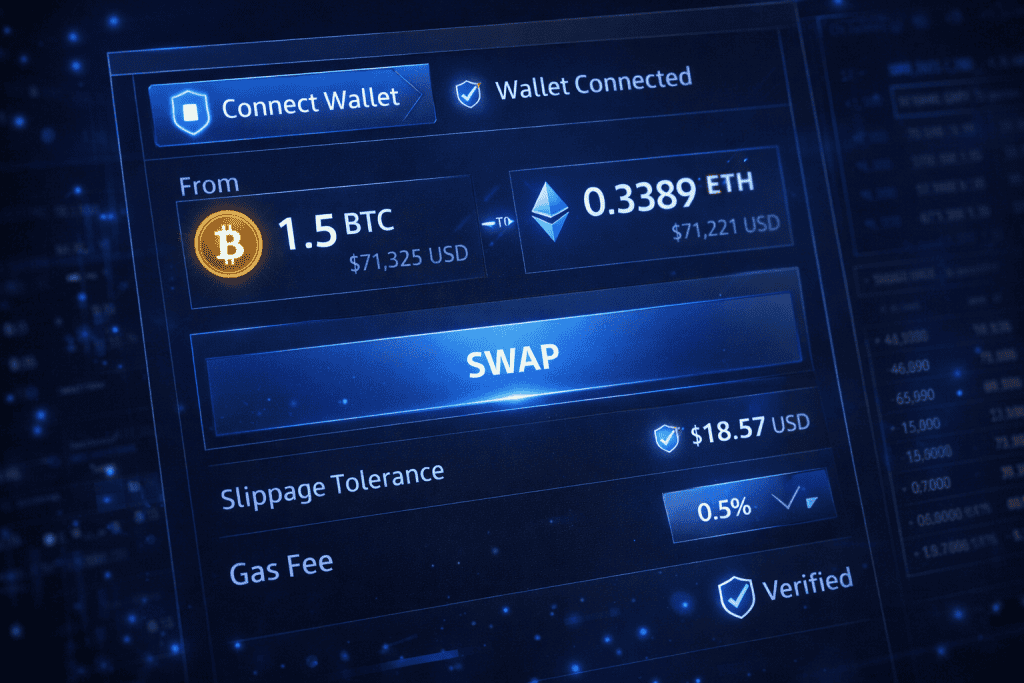
With your wallet connected, select the asset you want to swap from and the one you want to receive. This is where DEX Crypto becomes practical. The interface may look simple, but the details matter. Check the token contract, price impact, estimated output, routing path, and fee information. Pay special attention to slippage tolerance. If it is set too tight, the trade may fail. If it is too loose, you could receive a worse price than expected. In the wider Blockchain world, tiny settings can have big consequences.
Step 5: Approve, confirm, and track the transaction
The final step in DEX Crypto is to approve the token if needed, confirm the swap in your wallet, and wait for the blockchain to finalize the transaction. Read the confirmation screen before signing. Do not rush because the last click is the one that counts. Once the network confirms it, check your wallet balance and transaction history. This moment is oddly satisfying. The first successful swap feels a bit like assembling furniture without leftover screws. You step back and think, alright, I actually did that.
DEX Crypto Tips and Warnings
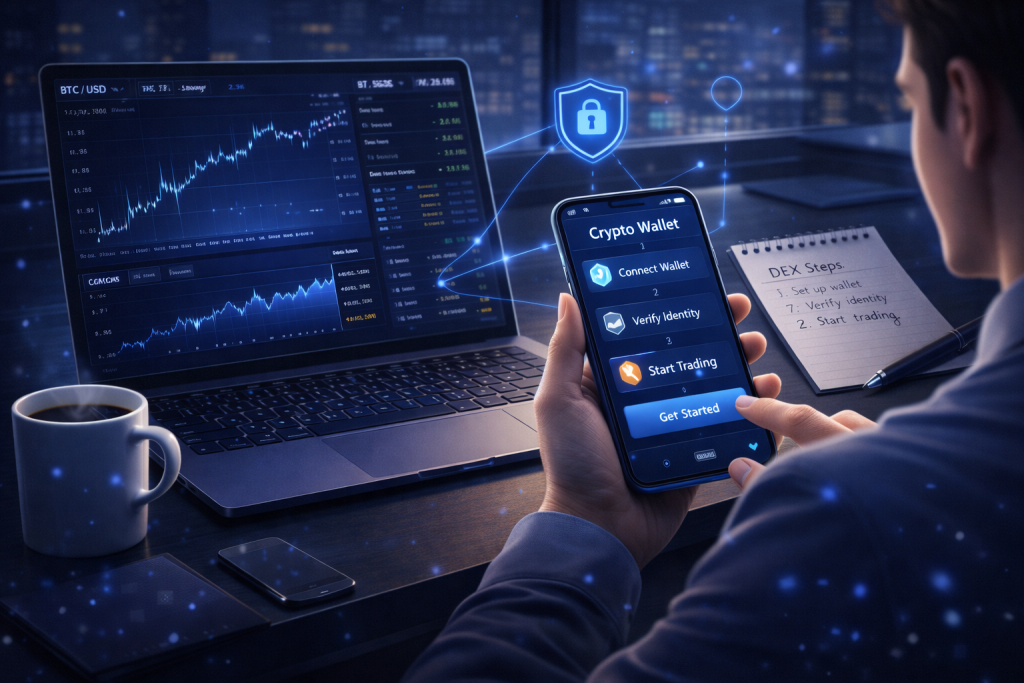
Using DEX Crypto gets easier fast, but only if you respect the small details. The biggest mistake beginners make is assuming that decentralized means foolproof. It does not. It means you have more control, which is great, but it also means fewer safety rails. Always verify the network, token contract, and site address. Avoid rushing into newly listed assets just because the hype feels loud. In the Crypto Market, noise travels faster than good judgment. The smartest users are usually the calmest ones. They test with a small amount first, review the fee breakdown, and keep enough balance for gas. Another important point is liquidity.
Thin pools can create heavy slippage, which means the price you get may slide away while your transaction is processing. That can sting, especially during fast-moving conditions in the Coin Market. And while many people arrive through Bitcoin curiosity or a broader interest in digital assets, DEX trading is not automatically a smart Investment. It is a tool, not a shortcut. Treat every swap like a financial action that deserves patience, not like a casino button you tap for fun.
| Tip or Warning | Why It Matters |
|---|---|
| Test with a small swap first | Helps catch mistakes before they become expensive |
| Keep extra funds for gas | Prevents failed or stuck transactions |
| Check token contracts carefully | Reduces the risk of fake or wrong assets |
| Use reputable platforms with liquidity | Helps improve pricing and execution |
| Review slippage before confirming | Protects you from poor fills |
| Store your recovery phrase offline | Protects your wallet from simple security failures |
Conclusion
Once you understand the basics, DEX Crypto stops feeling intimidating and starts feeling useful. The process is straightforward: set up a wallet, fund it properly, connect to a reliable exchange, review the swap details, and confirm the trade with care. That is the heart of it. The real skill is not speed. It is attention. A careful user usually has a much better experience than an impulsive one.
In Cryptocurrency, that habit matters more than people think. So take your time, start small, and learn the interface before making bigger moves. Your first swap may feel a little nerve-racking, but that is normal. Most people feel that way the first time. The good news is that each step becomes more familiar with practice. Stick with the basics, protect your wallet, and treat every transaction like it deserves a second look. That simple mindset can save money and build confidence.
FAQ
What is DEX Crypto in Cryptocurrency, and how is it different from a centralized exchange?
DEX Crypto in Cryptocurrency refers to using a decentralized exchange to swap tokens directly from your own wallet rather than depositing funds with a centralized platform. The biggest difference is custody. With a decentralized exchange, you usually keep control of your assets while smart contracts help execute trades. Centralized exchanges often provide easier onboarding and support, but they also hold user funds and may require account creation and identity checks.
How can beginners use DEX Crypto safely when swapping tokens for the first time?
To use DEX Crypto safely, beginners should choose a trusted wallet, verify the correct network, keep enough native currency for fees, and test with a small amount before making a larger swap. It also helps to review slippage tolerance, token contracts, and liquidity before confirming. That extra minute of caution can prevent many beginner mistakes in Cryptocurrency trading.
Why does DEX Crypto sometimes show price changes, failed swaps, or high fees during token trading?
DEX Crypto trades can show price changes because decentralized exchanges depend on liquidity pools, routing, and on-chain execution. If liquidity is low or the market is moving quickly, slippage can increase and the final price may differ from the quote. Fees can also rise depending on the blockchain and network activity. Failed swaps often happen when slippage settings are too strict or when the wallet lacks enough funds for transaction fees.
Resources
- Kriptomat.io. What is DEX?.
- Chainlink. What is Decentralized Exchange (DEX)?
- Rejolut. A Complete Guide on Decentralized Exchange.
- Predict. Decentralized Exchange Software: A Comprehensive Guide.
- Bitcoin.com. How to use a DEX.