
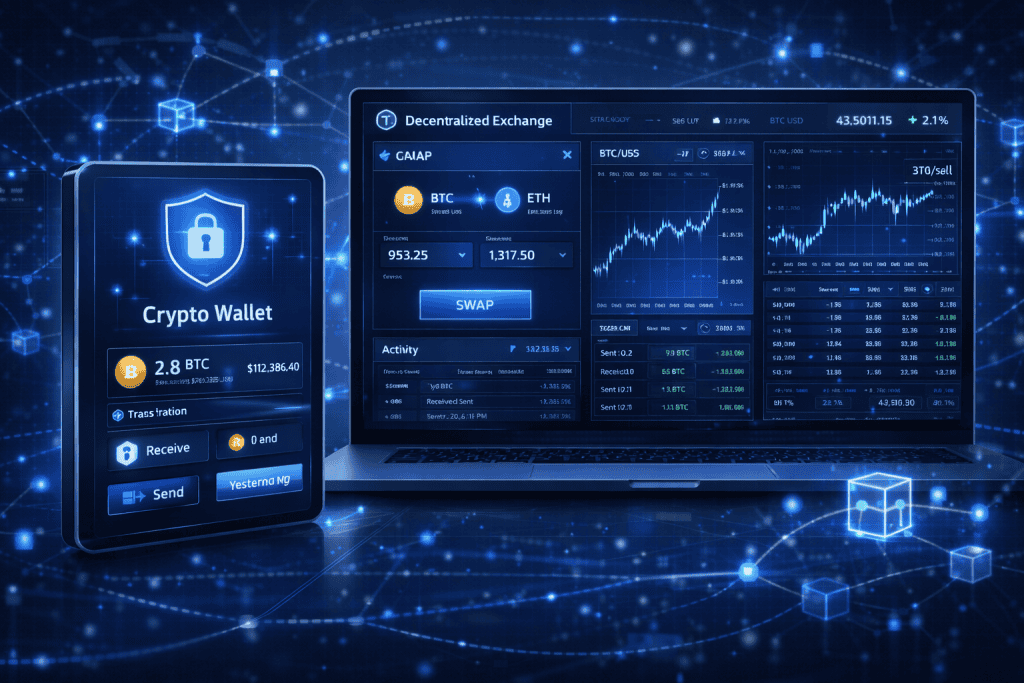
The first time I opened a Decentralized Crypto Exchange, I had the same reaction a lot of beginners do: excitement for about three seconds, followed by a quiet panic when I saw wallet buttons, token pairs, gas fees, and a warning about slippage. In the world of Cryptocurrency, that moment is common, and it is exactly why a plain-English guide matters. A DEX lets users trade directly from their own wallets instead of handing funds to a centralized platform, which means more control, more privacy, and fewer middlemen. KuCoin’s overview of DEXs highlights those core advantages, while Bitcoin.com explains that DEXs are built around wallet-based, permissionless swapping and liquidity pools
Learning how to use a Decentralized Crypto Exchange is valuable whether you are a curious fan, an active trader, or someone working in the industry who wants to understand how modern DeFi tools actually feel in practice. Once the process clicks, it stops looking like a tangle of buttons and starts feeling more like a self-checkout lane for digital assets, only smarter, faster, and entirely in your hands.
Tools Needed
Before you begin, a Decentralized Crypto Exchange setup is surprisingly simple. You need a self-custodial wallet, some crypto for the asset you want to trade, and a little extra of the network’s native token to cover transaction fees. Bitcoin.com’s guide breaks that down clearly: wallet, cryptocurrency, and a reputable DEX site with healthy liquidity. If you plan to do more than a single swap, it also helps to have a notebook or screenshot folder where you can track token contract addresses, fees, and swap history. That tiny habit saves a lot of headaches later, especially when the Crypto Market is moving fast and every screen suddenly feels urgent.
| Item | Why You Need It | Example |
|---|---|---|
| Self-custodial wallet | Lets you connect directly and keep control of your funds | MetaMask, Trust Wallet, WalletConnect-supported wallet |
| Crypto balance | Gives you the asset to swap | ETH, USDC, or another supported token |
| Gas fee token | Pays network transaction costs | ETH on Ethereum, BNB on BNB Chain |
| Reliable DEX | Provides the trading interface and liquidity | Uniswap, PancakeSwap, dYdX |
| Token details | Helps avoid fake assets | Verified contract address or official token page |
Decentralized Crypto Exchange Instructions
Step 1: Choose a wallet and fund it
Your first step with a Decentralized Crypto Exchange is choosing a self-custodial wallet and adding funds to it. Think of this wallet as your digital pocket, except you hold the keys. Bitcoin.com notes that self-custody gives you direct control over your assets rather than leaving them with a third party. Start with a wallet that is widely supported, back up the recovery phrase offline, and send in a small amount of crypto before anything else. The first transfer is not the time to act brave. It is the time to act careful.
Step 2: Pick a reputable platform with strong liquidity
Not every Decentralized Crypto Exchange is built the same. KuCoin’s roundup shows that different DEXs serve different purposes: Uniswap is known for broad token access and AMM trading, PancakeSwap is popular for lower-fee activity on BNB Chain, and dYdX leans toward more advanced trading. Bitcoin.com also stresses the importance of using a reputable platform with healthy liquidity. In everyday terms, liquidity is what helps your swap go through smoothly instead of wobbling into a bad price. If a DEX looks empty, obscure, or strangely confusing, trust your instincts and step back.
Step 3: Connect your wallet and review the network
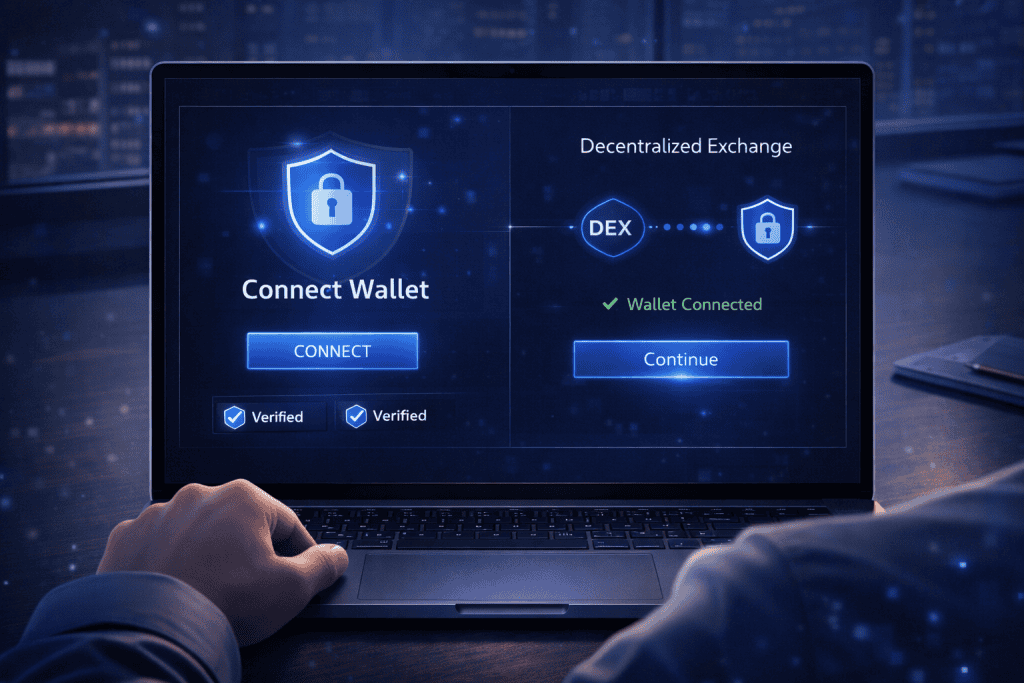
Now connect your wallet to the Decentralized Crypto Exchange site. This is usually a simple click on “Connect Wallet,” followed by choosing your wallet provider and approving the connection. Before you move on, check that the wallet network matches the DEX you are using. Coinsclone’s development guide points out that network choice affects token support, speed, scalability, and fees, so this is not a cosmetic detail. It is the road under the car. One wrong network can make your funds appear missing when they are simply sitting on a different chain.
Step 4: Select the token pair, amount, and slippage
With the wallet connected, the Decentralized Crypto Exchange interface will ask what token you want to swap from and what token you want to receive. Bitcoin.com explains that the swap window usually has an input amount, a token selector, and a second field for the output asset. Check the token contract carefully, especially for new coins. This is where fake listings can fool rushed users. I always pause here like I am checking the name on a package before signing for delivery. One extra minute can save a very expensive mistake. If the platform offers slippage settings, keep them sensible and avoid raising them casually.
Step 5: Approve, confirm, and verify the final transaction
The last stage in a Decentralized Crypto Exchange trade is the approval and confirmation flow. First, some tokens require an approval transaction so the DEX can access that asset in your wallet. After that, you confirm the actual swap. Review the estimated output, network fee, and price impact before signing. Bitcoin.com describes the core flow simply: connect the wallet, choose the assets and amount, then execute by pressing the swap button. After confirmation, wait for the network to process the transaction and check your wallet or block explorer to verify completion. No fireworks, no confetti, just that quiet moment where a transaction lands and you realize you did it yourself.
Decentralized Crypto Exchange Tips and Warnings
Using a Decentralized Crypto Exchange well is less about speed and more about rhythm. Slow enough to verify the wallet address. Calm enough to notice the network. Sharp enough to compare fees before clicking confirm. Coinsclone notes that smart contracts, liquidity pools, wallet integrations, and security testing are central to how DEX platforms function, while Bitcoin.com emphasizes liquidity and slippage as practical concerns for users. That means the smartest habit is not chasing every shiny token in the Coin Market. It is building a repeatable process: verify, preview, approve, confirm, and check.
In a space powered by Blockchain tools, a little discipline goes a long way. I also tell beginners to start with tiny swaps. Treat your first trade like learning to park in an empty lot, not weaving through downtown traffic with your life savings and a bold Investment thesis. And yes, keep some Bitcoin or another core asset only if it suits your plan, but never let emotion make the trade for you.
| Tip or Warning | Why It Matters |
|---|---|
| Start with a small test swap | Confirms the wallet, network, and token pair work as expected |
| Double-check token contracts | Helps avoid scam tokens and copycat names |
| Keep gas fees in reserve | Prevents failed or stuck transactions |
| Watch slippage and price impact | Reduces the chance of receiving much less than expected |
| Use reputable DEXs | Better liquidity and cleaner user experience |
| Never share your seed phrase | A real platform will never ask for it |
| Review approvals later | Token approvals can remain active after a trade |
| Stay calm during volatility | Fear and haste create most beginner mistakes |
A few mistakes show up again and again. People connect the wrong wallet, send assets to the wrong network, approve suspicious tokens, or rush because the market is flashing green. Others ignore price impact and then feel shocked when the final output is lower than expected. Some even land on fake front-end websites through random social links. The safest habit is boring, and that is exactly why it works: type the official site yourself, bookmark it, and return to that bookmark every time. It may not feel glamorous, but neither does losing funds because a copycat page looked convincing in a hurry.
Conclusion
Once you understand the flow, using a Decentralized Crypto Exchange stops feeling like a secret handshake and starts feeling like a practical skill in Cryptocurrency. You choose a wallet, fund it, pick a trusted platform, connect carefully, review the token pair, and confirm the trade with your eyes open. That is the whole journey, and it gets easier every time you do it. The real win is not only making a swap.
It is learning how to move through DeFi with confidence, caution, and control. If you have been staring at DEX interfaces from a safe distance, this is a good day to try a small test transaction and see the process for yourself. Start light, stay alert, and let experience teach you one clean step at a time.
FAQ
What is a Decentralized Crypto Exchange in Cryptocurrency, and how is it different from a centralized exchange?
A Decentralized Crypto Exchange in Cryptocurrency is a platform that allows users to trade directly from their own wallets without handing custody of funds to a central company. KuCoin explains that DEXs emphasize user control, privacy, and peer-to-peer trading, while centralized exchanges manage the assets and process on the user’s behalf. In simple terms, a DEX gives you more control, but it also expects you to pay more attention.
Is Decentralized Crypto Exchange trading safe for beginners in the Cryptocurrency category?
It can be safe for beginners, but only when they use trusted platforms, verify token addresses, protect their recovery phrases, and start with small trades. Most problems come from rushed decisions, fake websites, weak wallet security, or misunderstanding fees and slippage, not from the concept itself. A beginner who treats the first few swaps like practice runs is usually in a much stronger position than someone chasing hype on day one.
How do I choose the best Decentralized Crypto Exchange for low fees and good liquidity in Cryptocurrency?
Choosing the best Decentralized Crypto Exchange depends on what you value most. KuCoin’s overview shows that some DEXs are better known for broad token access, some for lower-fee ecosystems, and others for more advanced trading features. For most users, the best starting point is a platform with strong liquidity, a solid reputation, straightforward wallet support, and a network whose fees match your budget. The cheapest option is not always the best one if the liquidity is thin or the interface feels unreliable.
Resources
- KuCoin. Top Decentralized Exchanges (DEXs) to Know in 2025
- Antier Solutions on Medium. Decentralized Exchange Development in 2024: Adopting the Latest Trend
- Antier Solutions. How to Build a Uniswap-like DEX in 2024?
- Coinsclone. How to Launch a Successful Decentralized Exchange Platform in 2025?
- Bitcoin.com. How to use a DEX