
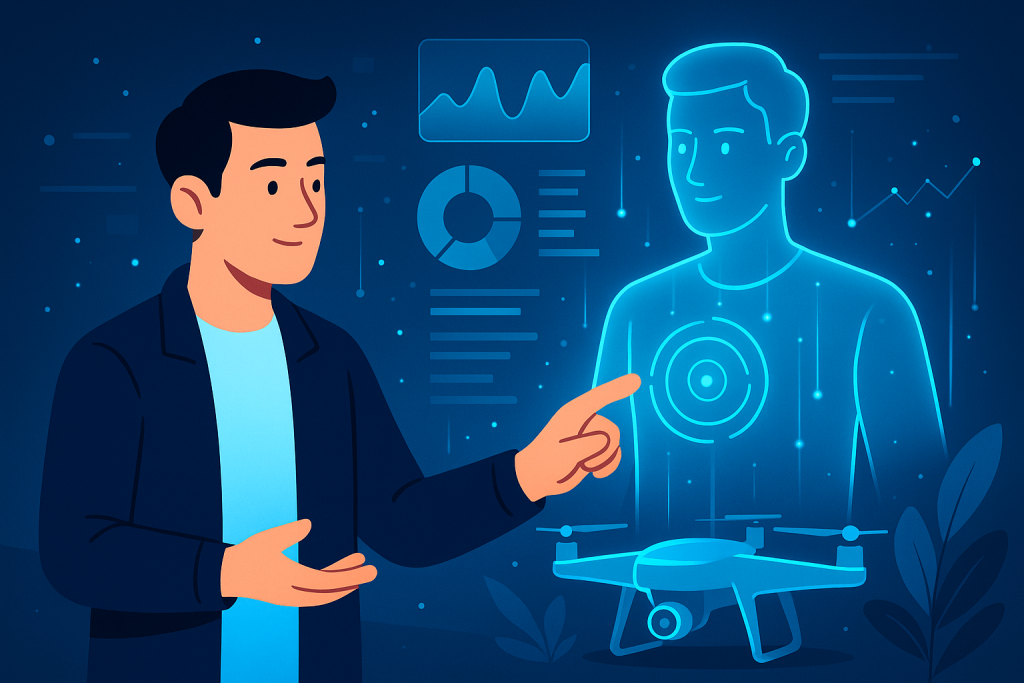
Digital Twins are revolutionizing industries by creating virtual replicas of physical assets. This futuristic technology allows businesses to simulate, analyze, and optimize real-world processes in real time. With the rise of IoT devices and advanced technology, digital twinning is reshaping everything from manufacturing and healthcare to smart cities.
Everything you need to know about starts with understanding how they merge the physical and digital worlds. These virtual models collect real-time data, predict failures, and enhance performance. As companies invest in new inventions, it set to redefine innovation. But what’s new in this technology? And what’s next for its development?
What makes Digital Twins especially valuable is their ability to bridge the gap between planning and real-world execution. Instead of relying only on static blueprints or historical data, organizations can use living digital replicas that evolve continuously. This gives engineers, decision-makers, and city planners a powerful way to test ideas, reduce risk, and improve outcomes before changes are made in the physical world.
As digital transformation accelerates globally, Digital Twins are becoming a key pillar of Industry 4.0, supporting smarter factories, greener energy systems, and more connected communities.
The Rise of Digital Twins in a Data-Driven Era
Digital Twins emerged from the need to create better simulations for industries. First introduced by NASA to replicate spacecraft behavior, the concept evolved with advancements in software and IoT devices. Today, businesses across healthcare, automotive, and construction rely on twinning technology for predictive maintenance and process optimization.
With the ability to model anything from machinery to entire cities, it is at the heart of advanced technology. Their accuracy in forecasting issues, reducing downtime, and improving efficiency makes them a game-changer. As more businesses embrace IoT and artificial intelligence, the demand for digital twin continues to rise.
One major reason for this growth is the explosion of sensor data. Modern machines, vehicles, and buildings generate constant streams of information. Digital Twins turn that raw data into meaningful insights by visualizing performance, detecting anomalies, and suggesting improvements in real time.
For example, manufacturers can build Digital Twins of assembly lines to identify bottlenecks, while energy companies can simulate power grids to prevent outages. Even airports and large transportation systems are adopting digital twinning to improve passenger flow and safety.
As cloud computing becomes more affordable, Digital Twins are no longer limited to large corporations. Mid-sized businesses are also beginning to adopt this technology to enhance productivity and long-term planning.
Key Features of Digital Twins
Real-Time Data Processing
Digital twin collect and analyze real-time data from sensors embedded in physical objects. This enables continuous monitoring and decision-making.
Real-time processing is essential because it allows businesses to respond immediately to changes. If a machine begins overheating or a building system shows abnormal energy usage, the Digital Twin can alert teams instantly. This helps prevent damage, improve safety, and reduce costly delays.
Predictive Maintenance
By simulating different scenarios, digital twin help predict potential failures before they happen. This reduces operational costs and increases efficiency.
Predictive maintenance is one of the most widely used applications today. Instead of fixing equipment after it breaks, organizations can schedule repairs only when needed. Airlines use Digital Twins to monitor aircraft engines, while factories rely on them to extend the life of critical machinery.
This approach not only saves money but also improves reliability, especially in industries where downtime can lead to major losses.
Enhanced Simulation & Visualization
Using AI and machine learning, digital twin create 3D simulations for better visualization of operations. This leads to improved design and troubleshooting.
Visualization makes complex systems easier to understand. Engineers can explore digital replicas in immersive 3D environments, identify weak points, and test improvements without disrupting real operations.
In construction, Digital Twins help architects evaluate structural performance before a building is completed. In healthcare, digital replicas of organs can assist doctors in planning surgeries more precisely.
Integration with IoT Devices
With IoT technology, digital twin receive constant data updates, ensuring their accuracy and relevance in optimizing industrial operations.
The IoT connection is what makes Digital Twins “alive.” Smart sensors provide continuous updates on temperature, pressure, movement, and usage patterns. This creates an evolving model that reflects real-world conditions instead of outdated assumptions.
As IoT networks expand through 5G connectivity, Digital Twins will become faster, more detailed, and more responsive than ever before.
Scalability Across Industries
From individual machines to entire ecosystems, digital twin can scale to match the complexity of various industries.
Scalability is one of the greatest strengths of digital twinning. A company might start with a Digital Twin of one machine, then expand to model an entire production facility, supply chain, or smart city infrastructure.
This flexibility makes the technology useful in nearly every sector, from agriculture and retail to aerospace and environmental science.
What’s New in Digital Twin Technology?
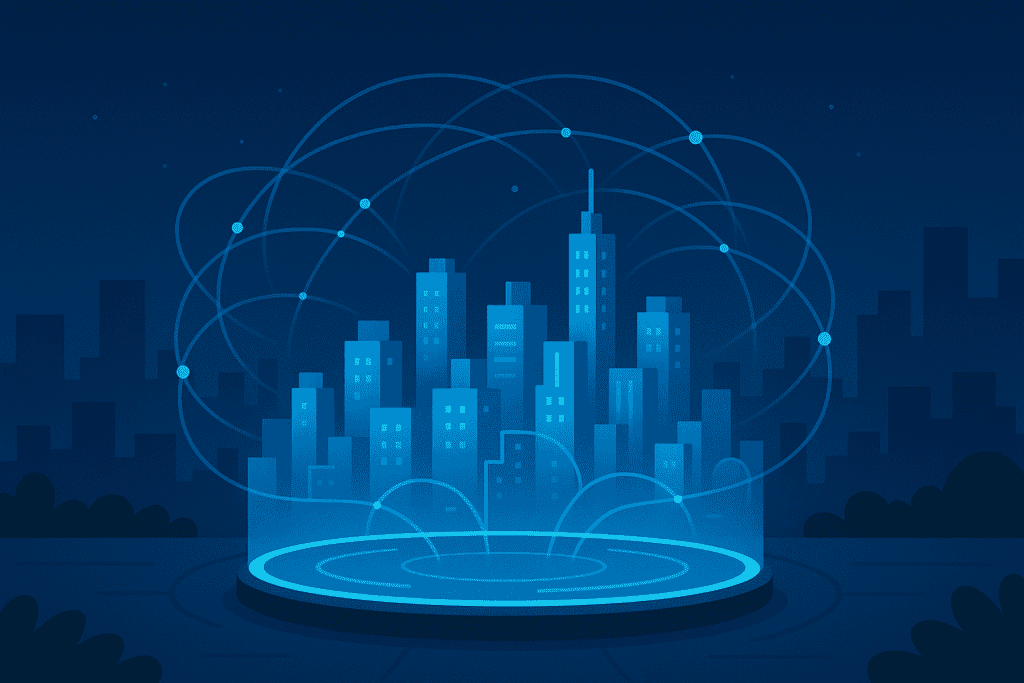
Recent developments in digital twins focus on AI-powered automation and better cloud integration. Companies are now using this software to create self-learning models that adapt and improve over time.
Another major update is the use of blockchain for security. Since digital twin rely on real-time data, protecting sensitive information is crucial. Blockchain enhances data integrity, making digital twin more reliable.
Additionally, companies like IBM and McKinsey are investing in hybrid system that integrate multiple models into a single, unified simulation. This allows businesses to manage complex operations seamlessly.
What’s Next for Digital Twins?
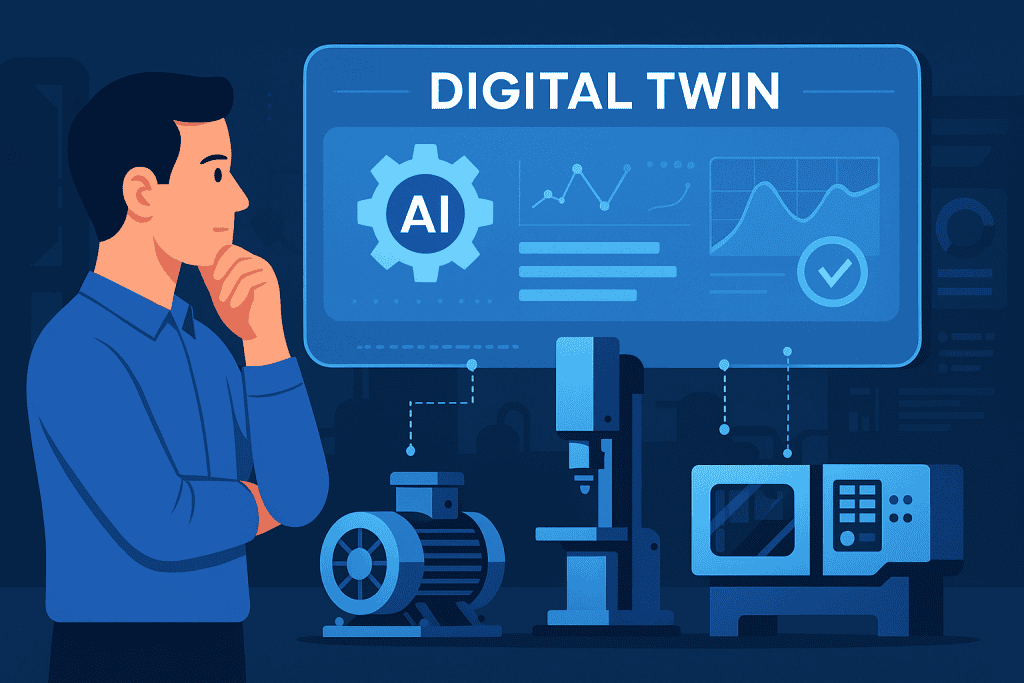
The future of digital twins is filled with possibilities. As AI and quantum computing advance, digital twinning will become even more powerful. Here are some predictions for what’s next:
- AI-Powered Decision Making: AI will enable digital twin to make real-time decisions without human intervention.
- Widespread Adoption in Smart Cities: Governments will use digital twin to optimize urban planning and infrastructure.
- 5G-Enabled Digital Twins: Faster connectivity will enhance real-time data processing and simulation accuracy.
- Personalized Healthcare Applications: Digital twin of human organs will enable precise treatments and medical breakthroughs.
Conclusion
Digital Twins are at the forefront of innovation, transforming industries with real-time simulations and predictive insights. As companies invest in advanced technology, it will become essential in shaping the future.
With continuous improvements in AI, IoT devices, and blockchain security, it will only get more sophisticated. The next decade will see this technology redefine efficiency, sustainability, and smart decision-making.
Businesses looking to stay ahead should start integrating it into their operations now. Whether optimizing a manufacturing line or designing a futuristic city, digital twinning offers limitless potential.
Resources
- UK Government. What a Digital Twin Is and How You Can Contribute.
- IBM. What Is a Digital Twin?.
- McKinsey & Company. What Is Digital Twin Technology?.
- PTC. Industry Insights on Digital Twins.
- TWI Global. What Is a Digital Twin?.