
Imagine standing in your favorite coffee shop, deciding whether to buy a large latte or save that money for lunch later. You only have enough for one. You weigh your options, make your choice, and in doing so, give up the other. That invisible trade-off—the thing you didn’t choose—is what economists call opportunity cost.
Every day, we make decisions like this without thinking about the alternatives we leave behind. Whether you’re choosing to spend money, invest, rest, or work, each decision has an unseen price. Opportunity cost represents the value of the next best thing you give up when making a choice. It’s a concept that shapes everything from personal budgets to corporate investments.
Understanding it gives you the power to make smarter choices. It helps individuals plan wisely, businesses allocate resources effectively, and governments make balanced policy decisions. In this post, we’ll break down what opportunity cost really means, how it works, and why it’s essential in both economics and daily life.
What Is Opportunity Cost?
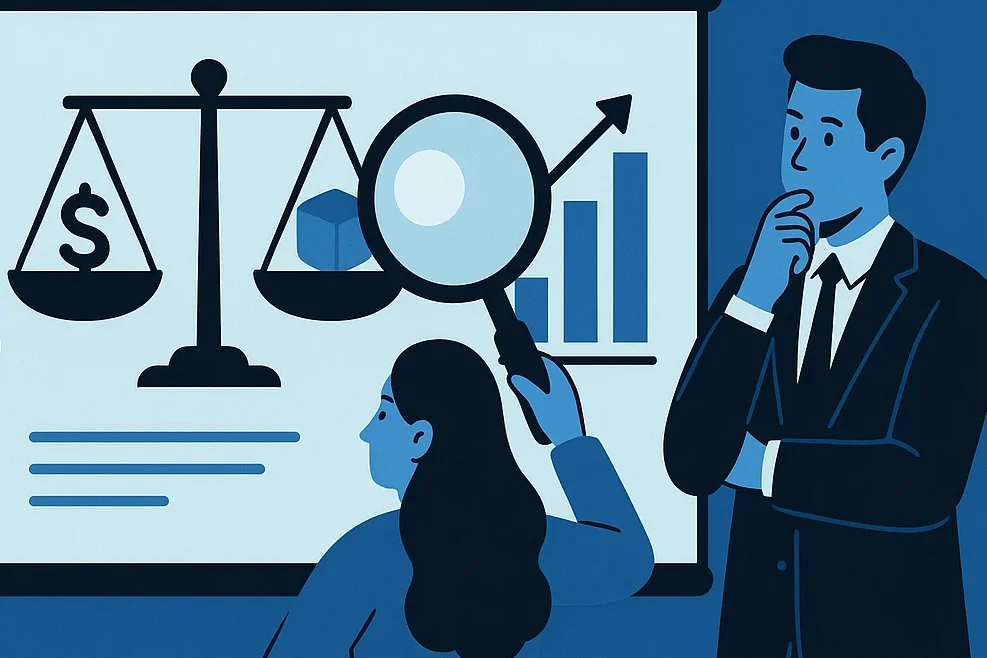
In simple terms, opportunity cost is the value of the next best alternative that must be sacrificed when a decision is made. It’s what you give up in order to get something else. Because time, money, and effort are limited, every choice has a trade-off.
If you spend $100 on a concert ticket, you lose the chance to save or invest that same $100. If you spend an evening watching a movie, you lose the opportunity to study, work, or exercise. The concept doesn’t only involve money—it also includes time, satisfaction, and other benefits that could have been gained from an alternative choice.
In economics, this concept is vital for evaluating the true cost of decisions. It helps people and organizations look beyond immediate results and think about long-term outcomes. By considering opportunity cost, decision-makers can prioritize actions that yield the highest overall benefit.
Breaking Down Opportunity Cost
When we peel back the layers of what makes this concept so essential, several key components come together to explain why it’s at the heart of smart decision-making.
Scarcity
The principle of scarcity is the foundation of this idea. Because time, money, and resources are limited, we can’t have everything we want. Scarcity forces us to make choices—and every choice automatically involves giving something up.
Trade-Offs
Trade-offs are what make decisions meaningful. Choosing one option means letting go of another. Deciding to work late might earn you more money but costs you time with family. Recognizing these trade-offs is crucial for understanding the hidden effects of decisions.
Explicit and Implicit Costs
There are two kinds of costs in any choice—explicit and implicit. Explicit costs are measurable, like tuition or rent payments. Implicit costs are harder to see, such as lost time or missed opportunities for rest. Both together create the total opportunity cost of a decision.
Rational Decision-Making
Rational decision-making involves comparing potential gains and what must be given up. Businesses do this constantly, weighing profits against alternative investments. The same logic applies personally—when you decide how to spend your money or time, you’re evaluating benefits versus sacrifices.
Comparative Advantage
This principle extends to global trade. Countries and individuals benefit by specializing in what they can produce most efficiently, or at the lowest opportunity cost, and trading for the rest. It’s the economic logic that fuels productivity and cooperation.
Everyday Relevance
You face trade-offs every day. Should you take a new job in another city or stay close to family? Should you invest in education or start a business? In each situation, opportunity cost quietly shapes the outcome of your choice.
History of Opportunity Cost
The evolution of this concept traces back to early economic thought.
| Era / Period | Development | Notes / Importance |
|---|---|---|
| 18th century | Adam Smith introduced the idea of trade-offs | Established the foundation for economic choice |
| 19th century | Friedrich von Wieser formally coined the term | Defined it as the value of the next best alternative |
| 20th century | Economists applied the concept to production and finance | Became central to modern cost-benefit analysis |
| 21st century | Adopted widely in behavioral and environmental economics | Used to understand human behavior and sustainability |
From early theories about scarcity to modern global trade models, the concept has remained the cornerstone of economic reasoning and decision analysis.
Types of Opportunity Cost
Different situations call for different interpretations, and economists classify these costs based on how they appear in real life.
Explicit Opportunity Cost
This refers to direct, visible costs. If a business spends $10,000 on advertising, that money can’t be used for equipment upgrades. The explicit cost is clear and measurable in monetary terms.
Implicit Opportunity Cost
Implicit costs involve unseen sacrifices, such as time, experience, or potential earnings. For example, a student who studies full-time instead of working faces an implicit cost in lost income.
Personal Opportunity Cost
Individuals face daily decisions where trade-offs are emotional or practical rather than financial—like choosing between sleep and productivity, or leisure and self-improvement.
Business Opportunity Cost
Companies constantly evaluate which projects, investments, or markets to pursue. If a firm launches a new product, the cost might be the profits lost from not upgrading an existing one.
Societal Opportunity Cost
Governments weigh policy decisions based on what’s gained versus what’s sacrificed. Investing in renewable energy might mean less spending on fossil fuel infrastructure but results in long-term sustainability.
How Does Opportunity Cost Work?
To understand how it functions, consider this example: you have $1,000 to invest. Option A offers a 5% annual return, and Option B offers 8%. If you pick Option A, your cost is the 3% you miss from not choosing B.
The same idea applies beyond finance. Spending time on social media instead of learning a new skill has a cost—the missed growth that could improve your career or life. Businesses use this logic to determine where to allocate resources, balancing short-term and long-term benefits.
Recognizing opportunity cost helps avoid impulsive decisions. Instead of focusing solely on immediate gains, it encourages thinking about what’s lost and what could be gained by choosing differently. This kind of analysis creates wiser investors, smarter leaders, and better planners.
Pros & Cons
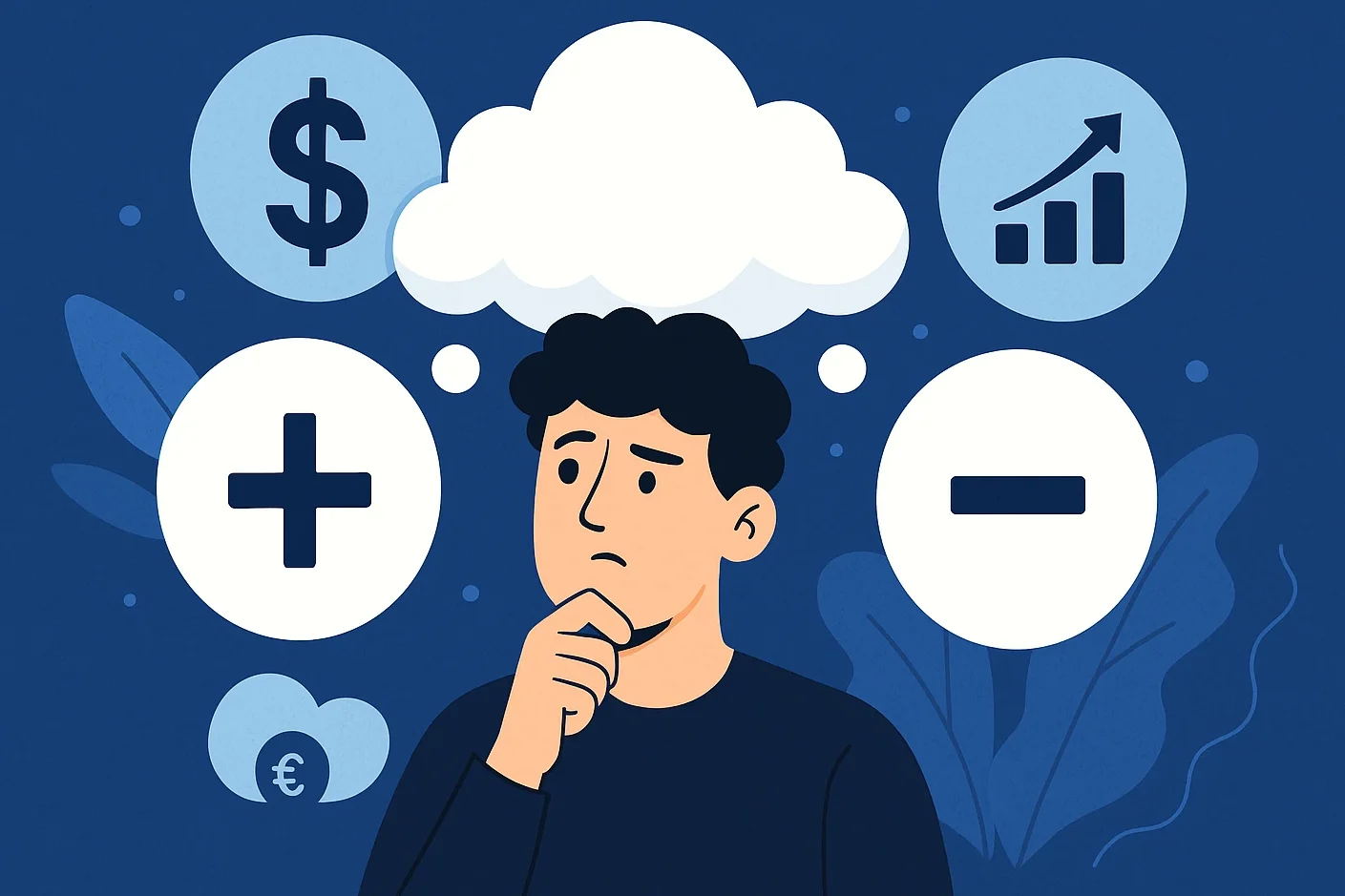
Evaluating decisions through the lens of this principle offers both advantages and limitations.
| Pros | Cons |
|---|---|
| Encourages thoughtful, informed decision-making | Can be difficult to measure accurately |
| Promotes efficient use of resources | Some costs are intangible or uncertain |
| Supports long-term strategic thinking | Over-analysis may cause decision fatigue |
| Helps businesses and individuals maximize value | Emotional or social benefits are hard to quantify |
| Highlights the hidden impact of choices | Future outcomes can’t always be predicted |
Uses of Opportunity Cost
This concept plays a role across nearly every aspect of life and economics.
In Personal Finance
Individuals use it when deciding between spending and saving. For instance, buying luxury items today means missing the potential investment returns tomorrow.
In Business
Companies rely on it for strategic planning—deciding whether to expand, invest, or save capital. The option not chosen always carries a potential benefit that’s lost.
In Education
Students balance short-term earnings against long-term career benefits. The time spent studying could otherwise be used to earn income, creating a clear trade-off.
In Government Policy
Public budgets reflect this principle. Spending on healthcare may mean fewer funds for infrastructure, and each decision has lasting implications.
In Time Management
Time is our most valuable resource. Every hour spent on one activity means giving up another, making time management a daily exercise in evaluating trade-offs.
In Environmental Economics
Preserving natural resources often comes at the cost of reduced industrial output. Yet, the long-term gain—clean air, biodiversity, and stability—can outweigh immediate economic benefits.
Resources
- Investopedia. Opportunity Cost: Definition, Formula, and Examples.
- Khan Academy. Understanding Opportunity Cost and Trade-Offs.
- The Balance. How Opportunity Cost Affects Decision-Making.
- Corporate Finance Institute. Opportunity Cost Explained with Real-World Examples.
- OECD. The Concept of Opportunity Cost in Economic Decision-Making.