
Imagine sending a postcard with your deepest secrets written on it — no envelope, just out there for every mail handler to read. Scary, right? That’s pretty much what happens when data travels across the internet without encryption. In today’s digital world, where cyber threats lurk around every corner, it isn’t just a technical term thrown around by IT folks — it’s your invisible bodyguard. It keeps your information secure, your conversations private, and your identity intact. Whether you’re a student, a business owner, or just someone who shops online, understanding it can empower you to take control of your digital security.
What is Encryption?
It is like turning your personal letter into a complex puzzle that only the recipient can solve. It’s the process of transforming readable data (plaintext) into unreadable code (ciphertext) to prevent unauthorized access. Only someone with the right “key” can decrypt this code and read the original message.
Also known as data scrambling, coding, or ciphering, encryption plays a vital role in cybersecurity. It shields everything from your WhatsApp messages to your bank transactions.
Breaking Down Encryption
Let’s break it down further. Imagine you’re writing a diary, and you use a unique language only you and your best friend understand. Even if someone gets their hands on your diary, it’s gibberish to them. That’s encryption.
It involves three main components:
- Plaintext – the readable data.
- Algorithm – the formula or rule to encode the data.
- Key – a secret value that lets you lock and unlock the message.
For example, in symmetric encryption, one key does both the locking and unlocking. In asymmetric encryption, you have a public key for locking and a private key for unlocking — a clever twist that makes it ultra-secure.
History of Encryption
It isn’t new. It dates back thousands of years. The ancient Greeks used the Scytale — a rod around which a strip of parchment was wound. Julius Caesar encrypted messages by shifting letters of the alphabet — the Caesar Cipher.
Here’s a quick timeline:
| Era | Development |
|---|---|
| Ancient Times | Scytale and substitution ciphers |
| 9th Century | Arabic scholars formalized cryptology |
| WWII | Enigma machine used by Nazis |
| 1976 | Birth of modern public key encryption |
| Today | AES, RSA, and quantum-proof methods |
Types of Encryption
It comes in various forms, each suited for different purposes in cybersecurity. Let’s break them down into easy-to-digest explanations.
Symmetric Encryption
Symmetric encryption is the simplest form, where the same key is used for both encrypting and decrypting the data. Think of it like a shared secret: if two people have the same key, they can lock and unlock the message. It’s fast and efficient, making it ideal for large amounts of data — but if the key is intercepted, the entire system becomes vulnerable. A common example is AES (Advanced Encryption Standard), widely used in everything from Wi-Fi networks to file encryption.
Asymmetric Encryption
Asymmetric encryption uses a pair of keys: a public key to encrypt the data and a private key to decrypt it. The public key can be shared with anyone, but the private key must be kept secret. This method ensures that even if someone accesses the encrypted message, they cannot decrypt it without the private key. It’s slower than symmetric encryption but far more secure for activities like secure email (PGP) or online payments (RSA encryption).
Hashing
Hashing is often confused with encryption but serves a slightly different purpose. It transforms data into a fixed-length string of characters, known as a hash, which acts like a digital fingerprint. Unlike encryption, hashing is a one-way process — you can’t reverse it to get the original data. It’s primarily used for verifying data integrity and storing passwords securely. Algorithms like SHA-256 are commonly used in blockchain and password management systems.
End-to-End Encryption
End-to-end encryption ensures that only the sender and intended recipient can read the messages, with no intermediaries — not even the service provider. The data is encrypted on the sender’s device and only decrypted on the receiver’s end, creating a highly secure communication channel. This method is used in popular messaging apps like WhatsApp and Signal, offering privacy even in the face of surveillance or hacking.
Transport Layer Security (TLS)
Transport Layer Security (TLS) is the protocol that keeps your web browsing safe. When you visit a website with “https” in the URL, TLS is at work — encrypting the data between your browser and the website’s server. It prevents cyber threats from intercepting login credentials, credit card numbers, and other personal information. TLS is essential for online shopping, banking, and any site requiring secure transactions.
How Does Encryption Work?
Let’s take a ride through the core process step-by-step.
- You input your message — say, “I love cybersecurity.”
- The encryption algorithm scrambles it using a key.
- The resulting ciphertext might look like “#f9*Bz12q!”
- This ciphertext travels across the internet.
- The recipient uses a key to decrypt it and sees your original message.
It works at many levels — your emails, banking, messaging, and even when updating your system through a Windows Update. It’s the silent warrior in your digital life.
Pros & Cons of Encryption
Before you crown it the hero of the internet, let’s weigh its strengths and weaknesses.
| Pros | Cons |
|---|---|
| Protects sensitive data from hackers | Can be complex to implement correctly |
| Enhances trust in digital communications | Lost keys = lost data |
| Mandatory in many regulations (e.g., GDPR) | Can slow down processing time |
| Prevents identity theft | Encrypted data is a target for brute force |
It is like a sturdy lock — excellent when managed well, but problematic if the keys are lost.
Uses of Encryption
The impact of secure data protection methods extends far beyond tech circles. It quietly empowers daily life, keeps commerce flowing, and fortifies global security systems. Below are some of the most powerful, real-world uses of this protective coding.
Personal Communication
In our digital age, messaging is as common as breathing — and the privacy of those messages is vital. Secure encoding ensures that your texts, voice notes, and video calls remain shielded from prying eyes. Platforms like WhatsApp, Signal, and iMessage use private communication layers that turn your casual “good morning” or your deepest secrets into unreadable gibberish for anyone except the intended recipient. This kind of message shielding ensures you can speak freely, knowing your words are hidden beneath layers of complex code.
Online Banking & E-commerce
Financial safety is a top priority for anyone who clicks “Add to Cart” or transfers money online. Code protection methods scramble sensitive details like credit card numbers and account credentials before they travel through the internet. Banks and online stores rely on this digital armor to ensure your money and personal data stay safe from cybercriminals. Every time you see “https” in your browser during checkout, that’s a sign your financial information is being wrapped in a secure digital shell.
Cloud Storage
Imagine uploading your family photos, tax records, or personal journals to the cloud — and realizing anyone with a laptop could read them. Thankfully, modern file protection algorithms step in to twist your data into unreadable scripts until you unlock them. Whether you’re storing documents in Dropbox or backing up your phone to iCloud, this kind of data scrambling acts like a private vault in the sky — only accessible by you and those you authorize.
Corporate Data Protection
Businesses are juicy targets for cybercriminals, making internal defenses absolutely critical. Secure file conversion mechanisms are used across organizations to guard everything from payroll records to trade secrets. Employees log into email platforms, databases, and internal tools that encode their activity — shielding it from unauthorized access. These safeguards help prevent not only data breaches but also intellectual property theft and insider leaks.
VPN Services
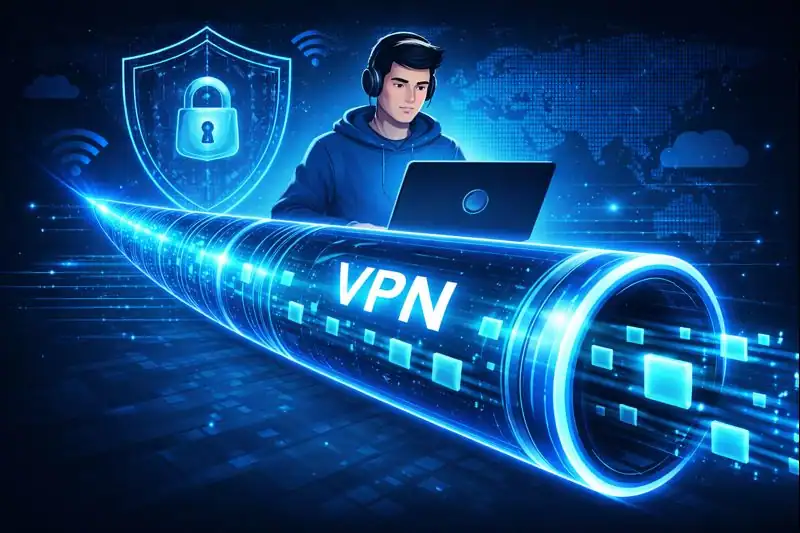
Virtual Private Networks (VPNs) are like invisibility cloaks for your online activity. They tunnel your internet traffic through a secret pathway while locking the doors behind you with data obfuscation techniques. This ensures your browsing history, downloads, and even your location are shielded from internet providers, hackers, or surveillance systems. Tools like Express VPN excel in this area, giving users the freedom to explore the web while wrapped in a cloak of digital invisibility.
Government and Military
When it comes to national defense and high-level negotiations, confidentiality is non-negotiable. Classified documents, mission plans, and diplomatic cables undergo extreme forms of secure transformation to prevent adversaries from intercepting or decoding them. From encrypted radio signals during battlefield communication to ultra-secure digital file vaults, governments invest heavily in systems that make information incomprehensible to anyone without the proper clearance. For the military, this kind of data shielding is as vital as tanks and missiles.
Resources
- NIST – Cryptography
- EFF – Surveillance Self-Defense
- Mozilla – Privacy and security
- Cloudflare – What is TLS?
- Kaspersky – Encryption Explained