
Imagine walking through your city, and with just a glance, your glasses show you directions, upcoming appointments, and even translate a sign in real time. Welcome to the world of Meta Glasses. So, what are Meta Glasses and why are they becoming a hot topic in technology trends?
I remember the first time I tried a pair of smart glasses at a tech conference. It felt like stepping into a sci-fi film. The moment the interface popped up in front of my eyes, hands-free and seamless, I knew I was looking at something game-changing. And that was just the beta version. Today, Meta Glasses are on a whole other level, blending digital and physical worlds like never before.
With the surge in interest around futuristic technology and immersive computing, understanding what Meta Glasses offer is more than curiosity—it’s insight into where our digital lives are headed.
What is Meta Glasses?
Meta Glasses, sometimes referred to as AR glasses or smart glasses, are wearable technology devices that project digital content directly onto the lenses in front of your eyes. Unlike traditional glasses, they overlay computer-generated visuals, information, and interactions over the real world.
In simpler terms, they act like mini heads-up displays (HUDs) worn on your face, giving you the power to navigate apps, view notifications, and interact with virtual objects without touching a screen.
Also known as augmented reality glasses, Meta Glasses bridge the gap between digital data and physical experience.
Breaking Down Meta Glasses
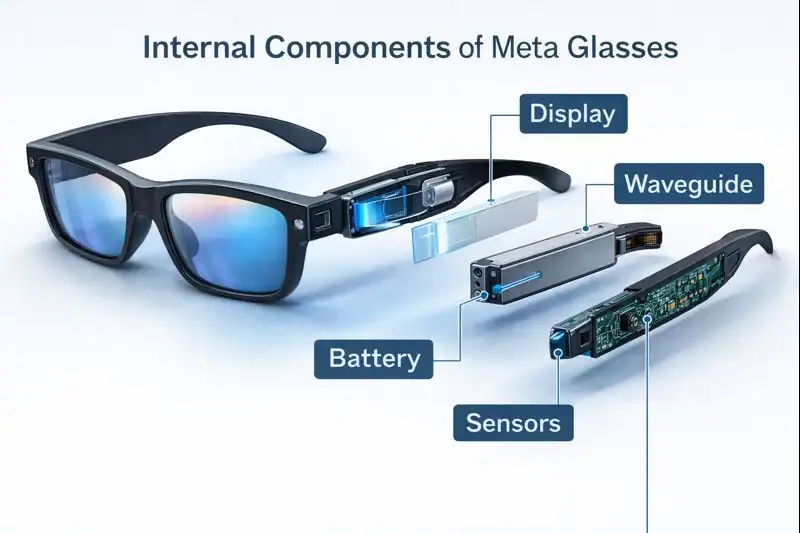
Let’s take a closer look at what makes these glasses tick:
- Micro-Displays: Tiny projectors built into the frame display images or text on the lenses.
- Waveguide Optics: These guide light from the projector to your eyes without obstructing your real-world vision.
- Sensors & Cameras: Track your movements, environment, and gestures to deliver interactive content.
- Audio Systems: Bone-conduction speakers or small earbuds allow audio without blocking out the world.
- Connectivity: Bluetooth and Wi-Fi enable syncing with smartphones and cloud services.
I remember using a prototype that translated street signs in real-time while visiting Japan. No phone needed. Just a blink and I understood the sign. That moment felt like magic, but it was all made possible by these tiny yet powerful components.
History of Meta Glasses
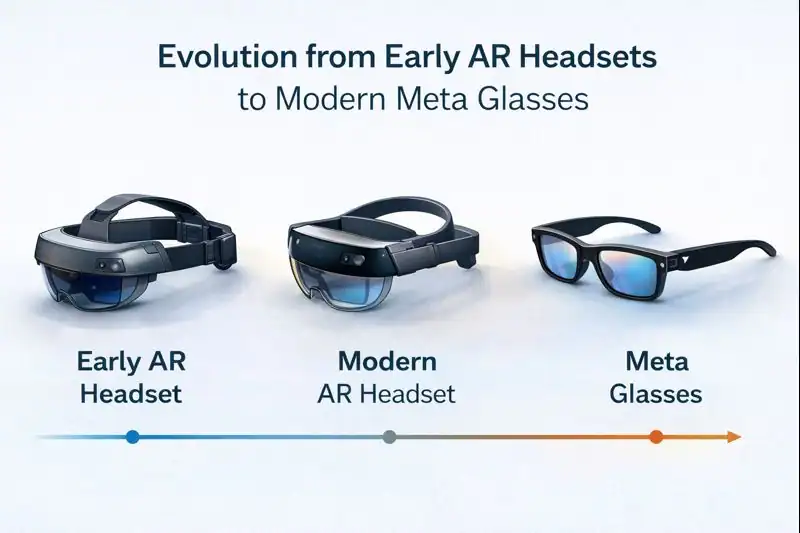
The concept of wearable augmented reality isn’t new, but Meta Glasses bring the idea into everyday usability.
| Year | Development |
|---|---|
| 1968 | Ivan Sutherland creates the first AR headset: the Sword of Damocles. |
| 2012 | Google Glass introduces consumer-grade smart glasses. |
| 2016 | Microsoft HoloLens expands AR capabilities in business and education. |
| 2021 | Facebook (now Meta) invests heavily into AR wearables. |
| Today | Meta Glasses combine fashion, functionality, and immersive tech. |
What started as bulky headsets used in labs has evolved into sleek, stylish eyewear. With advanced technology baked into every frame, today’s Meta Glasses are a blend of utility and futuristic flair.
Types of Meta Glasses
Not all Meta Glasses are built the same. Depending on use-case, power, and design, they fall into several categories.
Display-Only Smart Glasses
These show notifications, weather, or fitness stats from a paired phone. Simple, lightweight, and great for casual use.
Example: Ray-Ban Meta glasses (with built-in voice assistant and display features).
Augmented Reality (AR) Glasses
These overlay interactive 3D elements on your field of vision. Ideal for gaming, design, and work productivity.
Example: Magic Leap and Microsoft HoloLens.
Mixed Reality Glasses
A hybrid approach that combines AR and VR features. These often require more computing power and are used in enterprise environments.
Example: Meta Quest Pro with passthrough capabilities.
Prescription-Compatible Meta Glasses
Designed for users with vision correction needs. They blend traditional lens functionality with smart features.
Example: Vuzix Blade prescription editions.
Each type caters to different lifestyles—from casual wearers to developers building the next big app.
How Does Meta Glasses Work?
Using Meta Glasses feels like your digital life got embedded into your line of sight. Here’s how the magic happens:
- You wear the glasses like regular specs.
- Sensors scan your environment and detect your gestures.
- The processor receives input and sends relevant info to the display.
- Micro-displays project content into the lenses.
- Audio plays through open-ear systems or bone conduction.
- The content updates in real-time as you move.
All this happens within milliseconds, giving the illusion that digital objects are floating naturally in your space.
Pros & Cons
Meta Glasses are like a double-edged sword of the tech world. On one hand, they unlock powerful, hands-free, immersive experiences. On the other, they’re still in their early stages, with a few limitations worth noting. Whether you’re a tech enthusiast ready to embrace the future or a cautious adopter waiting for refinement, it’s helpful to weigh the benefits and drawbacks. Below is a quick overview to help you decide if Meta Glasses fit your lifestyle and needs.
No cutting-edge tech is without its trade-offs. Here’s what to expect:
| Pros | Cons |
| Hands-free access to information | Expensive compared to traditional devices |
| Immersive AR experience | Battery life can be limited |
| Stylish and lightweight models | Privacy concerns with built-in cameras |
| Enhances productivity and accessibility | Limited app ecosystems in early stages |
For users seeking innovation, the benefits often outweigh the growing pains.
Uses of What Are Meta Glasses
Meta Glasses are more than just a glimpse into tomorrow—they’re practical tools already reshaping the way we work, learn, shop, and play. Their ability to seamlessly integrate digital overlays into our physical environments is creating real-world applications across diverse sectors. Let’s explore some of the most exciting and impactful uses.
Healthcare
Doctors can view patient vitals or 3D organ models during surgery.
Retail & Shopping
Try on clothes or preview furniture in your home without stepping into a store.
Education
Students explore planets, historical events, or chemistry reactions in real-time.
Remote Work
Virtual meetings pop into your space, allowing eye contact and spatial awareness.
Navigation & Travel
Live translations, GPS overlays, and travel guides help tourists and commuters alike.
They’re also a game-changer in iot devices, enabling contextual notifications and device control with a glance.