
In cybersecurity, there are plenty of terms that sound more intimidating than they need to be. SOC 2 is one of them. It often enters the conversation when a company is growing, signing bigger clients, or being asked tough questions about how it handles sensitive data. For many teams, the first reaction is stress. Audits sound painful. Reports sound dense. And compliance can feel disconnected from day-to-day work. But when you step back, SOC 2 exists for a simple reason: trust.
Organizations today rely heavily on third-party software. Customer data flows through dozens of platforms, often without users ever seeing what happens behind the scenes. With rising Cyber Threats, public data breaches, and reputational damage, customers want proof that their information is handled responsibly. SOC 2 provides that proof. It offers a structured way for businesses to show they’ve thought about security, availability, and privacy and, more importantly, that they consistently act on those principles. Understanding it helps leaders make informed decisions, helps security teams prioritize controls, and helps customers feel confident saying yes.
What is SOC 2
SOC 2 is a cybersecurity compliance framework developed by the American Institute of Certified Public Accountants. Unlike financial audits, this framework focuses entirely on how organizations protect customer data and operate their systems securely. It evaluates internal controls related to security, availability, processing integrity, confidentiality, and privacy. These are collectively known as the Trust Services Criteria.
What makes SOC 2 stand out is that it’s not a certification you simply “get.” It’s an independent assessment performed by an external auditor who reviews evidence, interviews employees, and tests systems. The outcome is a detailed report that explains how controls are designed and, in some cases, how well they perform over time.
Another important detail is that SOC 2 is especially relevant for technology companies, cloud service providers, and SaaS businesses. If you store, process, or transmit customer data, chances are clients will eventually ask for it. They want reassurance that their data isn’t exposed to misuse, Hacking, or accidental loss. In practice, SOC 2 becomes a shared language between vendors and customers, replacing vague promises with documented proof.
Breaking Down SOC 2
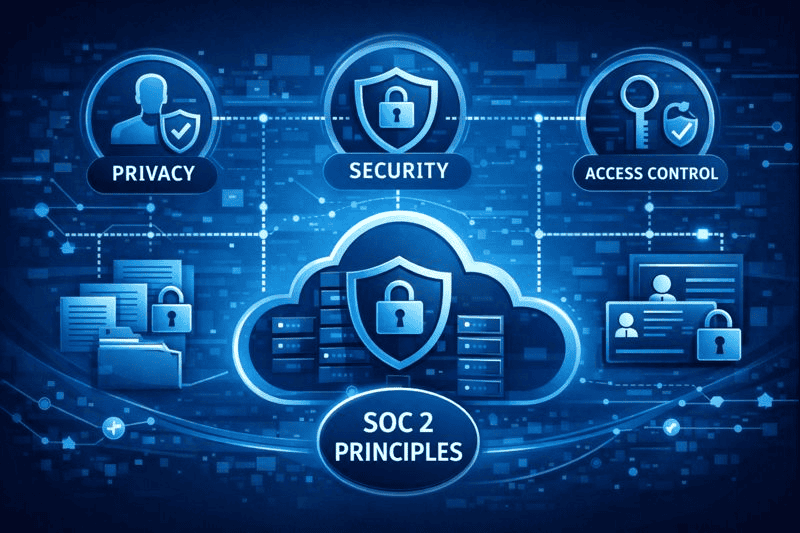
To really understand SOC 2, it helps to move past the buzzwords and focus on how it works in real life. The framework revolves around the Trust Services Criteria, starting with security, which is mandatory. This includes firewalls, access controls, monitoring, and incident response plans designed to prevent unauthorized access. In other words, it answers the question: who can get in, and how do we stop the wrong people?
Availability looks at system reliability. If a company promises 99.9% uptime, auditors expect evidence that systems can actually deliver on that promise. Processing integrity checks whether systems do what they’re supposed to do accurately and consistently. Confidentiality focuses on protecting sensitive information like contracts or financial data. Privacy addresses how personal data is collected, stored, and shared.
Imagine a SaaS platform that processes payroll. SOC 2 auditors would review how employee data is encrypted, who can access it, and how often systems are patched. Ignoring updates, much like skipping a Windows Update, can signal poor security hygiene. Auditors don’t just review policies. They look for logs, tickets, training records, and real examples of controls in action.
What makes SOC 2 powerful is flexibility. Controls are tailored to how a business actually operates, making the framework realistic rather than theoretical.
History of SOC 2
SOC 2 emerged as businesses began relying heavily on cloud computing and outsourced services. Traditional audits focused on financial reporting and weren’t designed to evaluate modern data risks. As organizations moved customer information outside their own walls, the need for a new type of assurance became clear.
The American Institute of Certified Public Accountants responded by introducing the SOC reporting framework. SOC 2 specifically addressed non-financial controls tied to data protection and operational integrity. Over time, it evolved alongside new technologies, remote work, and increased regulatory pressure.
| Year | Milestone |
|---|---|
| 2010 | SOC reporting introduced |
| 2011 | SOC 2 framework released |
| 2017 | Trust Services Criteria updated |
| 2020+ | Becomes SaaS baseline requirement |
Today, SOC 2 is widely recognized as a credibility marker for organizations handling sensitive data.
Types of SOC 2
There are two primary types of SOC 2 reports, and understanding the difference helps set realistic expectations.
SOC 2 Type I
Type I evaluates whether controls are properly designed at a specific moment in time. It answers whether security measures exist and are structured correctly. This is often used by early-stage companies to demonstrate readiness.
SOC 2 Type II
Type II goes further. It evaluates whether those controls operate effectively over a defined period, usually six to twelve months. This report carries more weight because it shows consistency, not just intent.
| Type | Focus | Timeframe |
|---|---|---|
| Type I | Control design | Single date |
| Type II | Control effectiveness | 6–12 months |
How does SOC 2 work?
The process starts with defining scope. A company identifies systems, data, and criteria that apply. Controls are documented, gaps are addressed, and evidence is collected. An independent auditor then tests controls through interviews, documentation reviews, and system checks. The result is a report that organizations share with customers under confidentiality.
Pros & Cons
SOC 2 delivers value, but it isn’t effortless.
| Pros | Cons |
|---|---|
| Builds trust | Time-intensive |
| Improves security posture | Costly for small teams |
| Supports sales cycles | Requires ongoing effort |
Uses of SOC 2
SOC 2 isn’t just an audit report that sits in a shared drive. When used correctly, it becomes a working tool that supports trust, security, and business growth. Below are the most common and practical ways organizations actually use it.
Building Customer Trust and Credibility
One of the primary uses of SOC 2 is to establish trust with customers before they ever sign a contract. Buyers want reassurance that their data will be handled responsibly, especially when dealing with cloud-based platforms. Sharing a SOC 2 report during sales conversations reduces friction, shortens security reviews, and signals maturity. Instead of relying on promises, companies can point to independently verified controls that show how data is protected in real environments.
Supporting Vendor Risk Assessments
Large organizations often depend on dozens of third-party tools. Each vendor introduces potential exposure to Cyber Threats and operational risk. SOC 2 is commonly used as a screening mechanism during vendor onboarding. By requiring it, companies reduce the need for custom questionnaires and lengthy audits. It provides a standardized baseline that helps security teams quickly assess whether a vendor meets minimum expectations.
Strengthening Internal Security Practices
Preparing for SOC 2 forces teams to take a hard look at how things actually work day to day. Access controls, incident response plans, and monitoring procedures often improve as gaps are identified and fixed. This reduces the likelihood of errors caused by poor hygiene, delayed updates, or unmanaged privileges, which are common contributors to Hacking incidents.
Supporting Long-Term Compliance Strategy
Although it isn’t a legal requirement, SOC 2 is often used as a foundation for broader compliance efforts. Many organizations build on it as they scale, using the framework to stay aligned with evolving regulations and customer expectations. It helps turn security into a repeatable, sustainable process rather than a one-time project.
Resources
- Palo Alto Networks. What Is SOC 2?
- CyberArk. What Is SOC 2 Compliance?
- Akamai. What Is SOC 2?
- OneLogin. What Is SOC 2?
- IBM. SOC 2 Compliance for Cloud