
If you have ever worked in IT or cybersecurity long enough, you have probably heard someone mention SIEM in a meeting, usually right before the room goes quiet. It sounds heavy, technical, and expensive, and to be fair, it can be all three. But at its core, this concept is not mysterious at all. It exists because modern systems generate mountains of security data, and no human can realistically watch all of it alone.
Logs pile up, alerts fire off at odd hours, and small warning signs are easy to miss until they turn into real problems. Understanding this technology matters because it often becomes the nervous system of an organization’s security posture. When something goes wrong, this is usually where teams look first. In the world of cybersecurity, knowing what it does and why it matters can be the difference between reacting late and responding in time.
What is SIEM
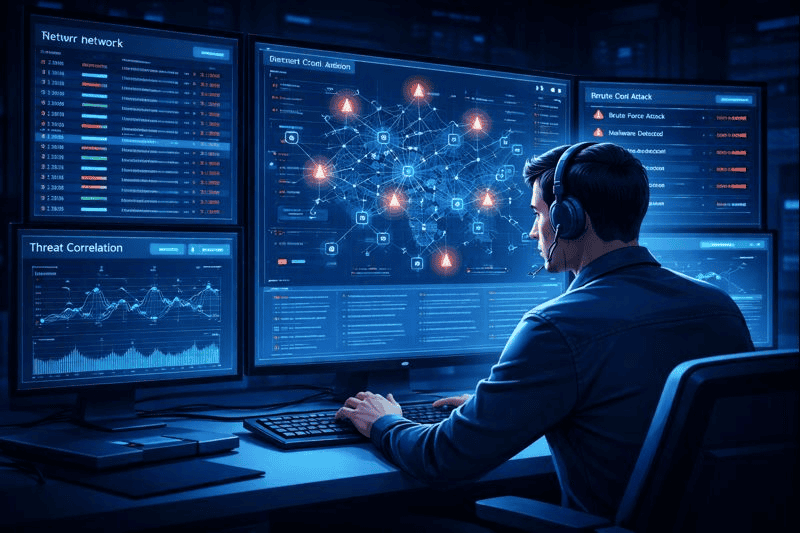
At its simplest, SIEM stands for Security Information and Event Management. It is a centralized system that collects, analyzes, and correlates security data from across an organization’s digital environment. You might also hear it described as a security monitoring platform or a log management and analytics system. The goal is to turn scattered technical signals into meaningful insights that help security teams detect threats, investigate incidents, and stay compliant with regulations.
Breaking Down SIEM
To really understand SIEM, it helps to break it into the two ideas that make up its name. “Security information” refers to the logs and data generated by systems such as firewalls, servers, applications, and endpoints. Every login attempt, configuration change, or system error leaves a digital footprint. On their own, these logs are not very useful. They are verbose, repetitive, and often cryptic.
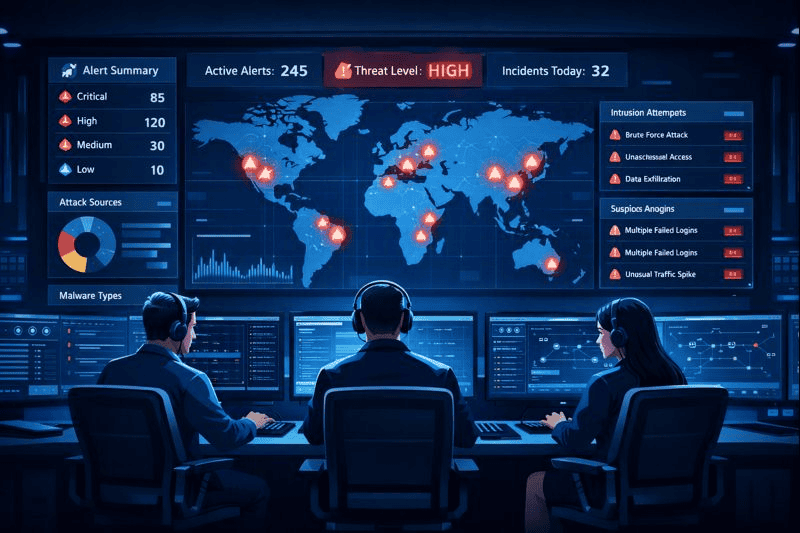
“Event management” is where the intelligence comes in. This part focuses on analyzing those logs, identifying patterns, and deciding which events matter. For example, a single failed login might mean nothing. Hundreds of failed logins across different servers in a short time window could signal Hacking activity. The system connects those dots faster than any human could.
Think of it like a security camera system for your entire network, except instead of video, it watches behavior. It notices when something feels off, such as a user accessing sensitive data at an unusual hour or a server suddenly communicating with an unfamiliar external address.
In practical terms, this technology pulls data from many sources, normalizes it into a common format, and runs rules or analytics on top of it. Some platforms rely heavily on predefined rules, while others use machine learning to spot anomalies. Either way, the purpose is the same: reduce noise and surface real risk.
As environments grow more complex, especially with cloud services and remote work, the value of this approach becomes obvious. Without it, security teams are left juggling dashboards and alerts from dozens of tools, hoping nothing slips through the cracks.
History of SIEM
The idea behind SIEM did not appear overnight. It evolved as networks grew larger and threats became more sophisticated. Early security tools focused mainly on log collection or simple alerting. Over time, vendors began combining these capabilities into unified platforms that could do both.
| Year | Milestone |
|---|---|
| Early 2000s | Log management and security event tools emerge separately |
| Mid 2000s | Correlation engines introduced to connect events |
| 2010s | Unified platforms gain traction in enterprises |
| Today | Cloud-native and AI-enhanced solutions dominate |
Types of SIEM
Modern SIEM platforms come in several forms, each suited to different needs and environments.
On-Premises SIEM
These are installed and managed within an organization’s own infrastructure. They offer control but require significant maintenance and hardware investment.
Cloud-Based SIEM
Hosted by vendors, these solutions scale easily and reduce operational overhead. They are popular with organizations embracing cloud-first strategies.
Hybrid SIEM
This approach combines on-premises and cloud components, allowing flexibility for organizations with mixed environments.
| Type | Best For | Key Trade-Off |
|---|---|---|
| On-Premises | Highly regulated industries | High maintenance |
| Cloud-Based | Fast-growing teams | Less control |
| Hybrid | Transitional environments | Added complexity |
How does SIEM work?
At a high level, it works by continuously collecting data, analyzing it in near real time, and alerting security teams when something looks suspicious. Data flows in from endpoints, network devices, and applications. The system correlates events, applies rules or analytics, and generates alerts that analysts can investigate. Some platforms also automate responses, such as blocking an IP or isolating a device, to reduce response time.
Pros & Cons
Before adopting, it helps to understand both sides of the equation.
| Pros | Cons |
|---|---|
| Centralized visibility | Can be expensive |
| Faster threat detection | Requires tuning |
| Compliance support | Alert fatigue risk |
Uses of SIEM
Beyond vendor explanations and glossary definitions, SIEM plays a very practical role in day-to-day security operations. These uses come directly from how teams work in real environments, not from the reference articles.
Detecting Insider Misuse
Security teams use SIEM to spot risky internal behavior that would otherwise look normal. For example, an employee downloading large volumes of sensitive data outside business hours can trigger alerts based on behavior patterns rather than simple rules.
Incident Investigation and Forensics
When something goes wrong, SIEM becomes the starting point for investigations. Analysts trace timelines, identify the first suspicious event, and understand how far an incident spread. This is critical after ransomware infections or credential compromise.
Regulatory Auditing and Reporting
Many industries require proof that security controls are working. SIEM simplifies audits by storing logs long-term and generating compliance-ready reports, reducing the scramble during audit season.
Monitoring Cloud and SaaS Environments
As organizations move workloads to cloud platforms, SIEM helps maintain visibility. It monitors activity across cloud accounts, API usage, and authentication events that traditional tools might miss.
Supporting Security Operations Centers
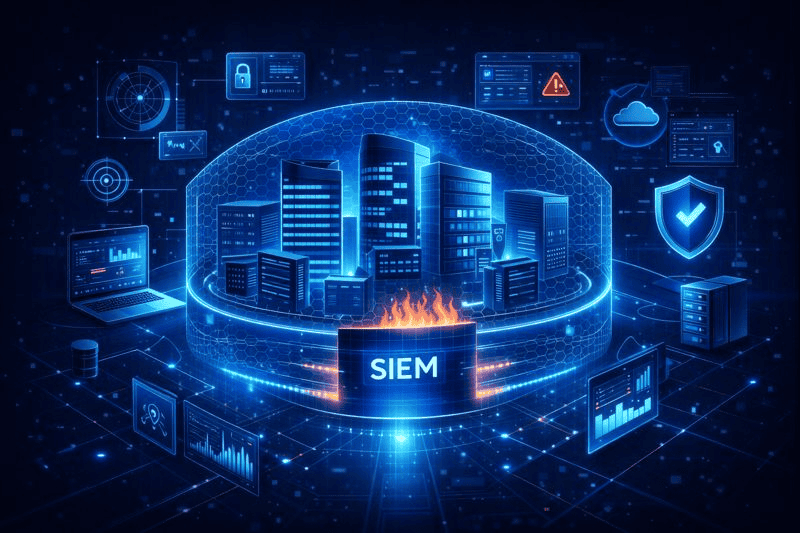
In a SOC environment, SIEM acts as the central screen analysts watch all day. It prioritizes alerts, assigns severity, and helps teams decide what needs immediate attention versus what can wait.
Resources
- IBM. What is SIEM?
- TechTarget. Security Information and Event Management (SIEM)
- Gartner. Security Information and Event Management (SIEM)
- Fortinet. What Is SIEM in Cybersecurity?
- SolarWinds. SIEM: Security Information and Event Management