
In the fast-paced world of technology trends, the way applications are developed, tested, and deployed has transformed beyond recognition. The days of manual setups, unpredictable server behavior, and environment conflicts are long gone. Today, efficiency and consistency define success — and OpenShift stands at the center of that transformation.
This modern container application platform has redefined how businesses manage deployment, automation, and scalability. With its ability to orchestrate containers seamlessly across hybrid and multi-cloud environments, OpenShift has become a trusted foundation for innovation. It doesn’t just help developers — it empowers entire organizations to deliver faster, safer, and smarter.
By automating repetitive workflows and removing infrastructure headaches, this platform bridges the gap between development and operations. Whether you’re a startup aiming to scale quickly or a large enterprise optimizing thousands of workloads, OpenShift creates a stable, reliable environment that adapts to your needs.
This article explores what this revolutionary container solution is, its evolution, key components, benefits, and how it continues to transform the development landscape through automation, scalability, and intelligent design.
What is OpenShift?
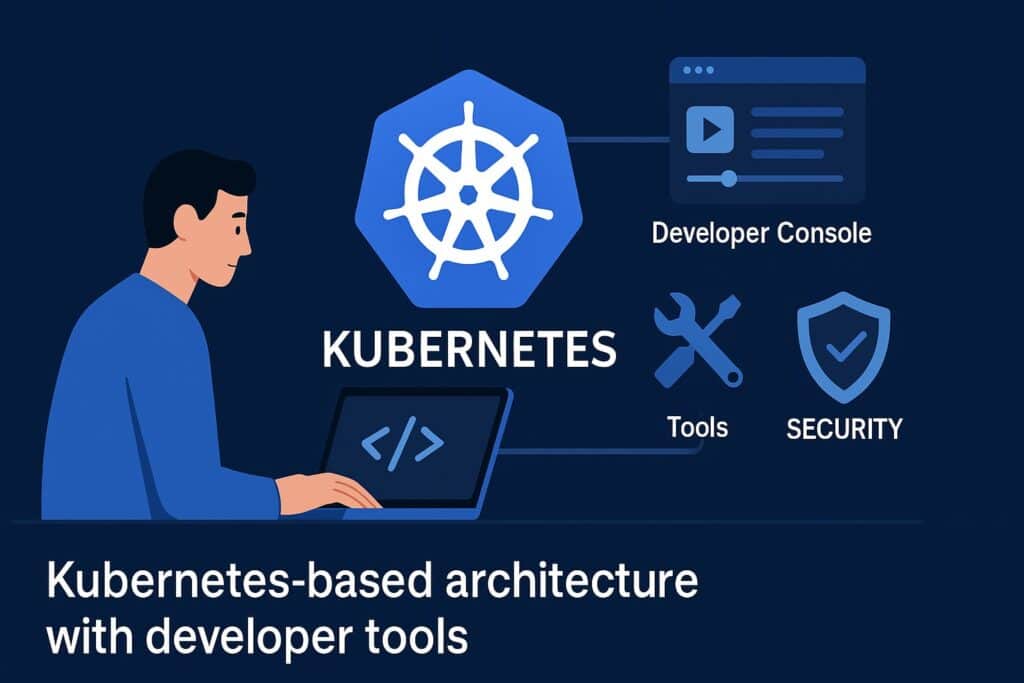
At its core, OpenShift is a powerful Kubernetes-based container platform built by Red Hat. It enables developers to build, deploy, and manage applications consistently across multiple environments — from on-premises servers to public cloud platforms.
You can think of it as a comprehensive cloud framework that takes Kubernetes — already a robust container orchestrator — and makes it easier to use for real-world business needs. It integrates developer tools, monitoring systems, and security mechanisms into a single, streamlined platform.
Essentially, it allows teams to code once and deploy anywhere. Developers can focus on innovation rather than worrying about infrastructure or compatibility issues. The result is a smoother, faster, and more predictable development cycle — one that saves both time and resources.
Imagine being able to push your latest app update, knowing it will run identically in development, staging, and production. That’s the promise of this containerized ecosystem: consistency across every layer.
Breaking Down OpenShift
This cloud-native system is made up of several integrated components that together create a powerful, automated workflow.
At the heart of the architecture lies the OpenShift Container Platform (OCP) — the core engine responsible for orchestrating and managing containers. This component coordinates deployment, scaling, and health monitoring automatically, ensuring smooth operation even under heavy loads.
The Developer Console provides a clean, intuitive dashboard where users can visualize workloads, monitor system health, and perform updates with ease. This user-friendly interface is one of the reasons many developers prefer Red Hat’s platform over managing raw Kubernetes manually.
BuildConfig and ImageStreams simplify the application lifecycle by automating build and deployment pipelines. When developers update their source code, OpenShift automatically rebuilds and redeploys applications with minimal human input — a crucial advantage in fast-paced DevOps environments.
Networking is handled by the OpenShift Router, which balances traffic and ensures secure communication among microservices. This layer keeps applications responsive and resilient, even under unpredictable demand.
Lastly, Source-to-Image (S2I) technology turns raw code directly into containerized applications. It removes manual configuration steps, making deployment as simple as pushing code to a repository.
Together, these components form a complete, end-to-end solution that makes modern software development more efficient and reliable.
History of OpenShift
The story of this transformative technology began in 2011, when Red Hat launched OpenShift as a Platform-as-a-Service (PaaS). The goal was to make application hosting simpler, enabling developers to focus on building rather than maintaining servers.
As cloud computing matured, Red Hat recognized the potential of containers and Kubernetes. By 2015, OpenShift had fully embraced container orchestration, marking a pivotal shift in how enterprises managed software infrastructure.
From there, the platform’s evolution mirrored the broader cloud revolution. It expanded to support multiple cloud environments, becoming a truly hybrid and multi-cloud solution.
| Year | Milestone | Description |
|---|---|---|
| 2011 | Initial Launch | Introduced as a PaaS for developers. |
| 2014 | Enterprise Edition | Offered on-premise deployment for secure organizations. |
| 2015 | Kubernetes Integration | Transitioned into a container-based orchestration system. |
| 2018 | Multi-Cloud Support | Expanded to work with AWS, Azure, and Google Cloud. |
| 2020–Present | Cloud-Native Expansion | Integrated AI, DevSecOps, and edge computing support. |
Today, the platform plays a critical role in digital transformation strategies worldwide. Companies in finance, healthcare, retail, and manufacturing rely on it to modernize operations, automate workflows, and maintain compliance in complex environments.r while maintaining security and control.
Types of OpenShift
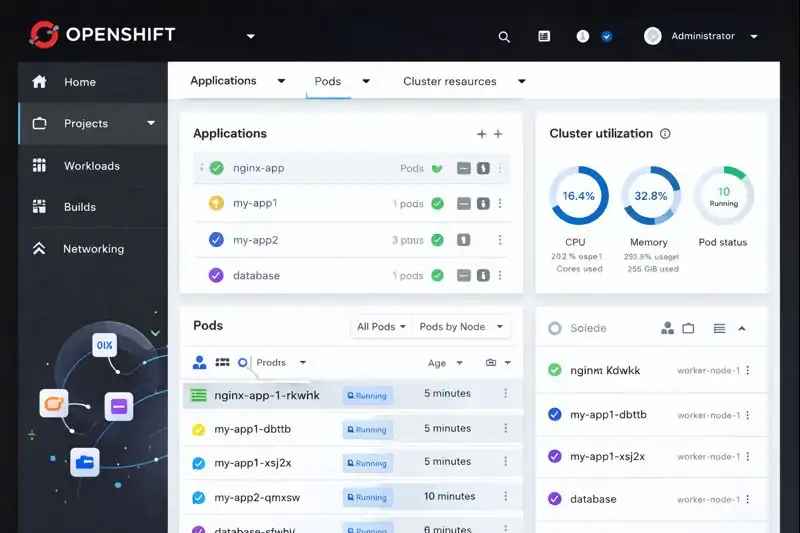
Over time, Red Hat developed multiple editions of its platform to cater to different user needs — from individual developers to enterprise-scale organizations.
OpenShift Online
This fully managed, cloud-hosted version offers the easiest entry point into container development. It’s ideal for small teams or independent developers experimenting with cloud-native applications without needing to manage infrastructure.
OpenShift Dedicated
For organizations that want a balance between control and convenience, this managed service provides private clusters with Red Hat handling maintenance and security updates. It’s perfect for companies seeking reliability without extra operational burden.
OpenShift Container Platform (OCP)
The flagship enterprise edition. Designed for hybrid and on-prem environments, it delivers full control over security, compliance, and customization — making it popular among government agencies and financial institutions.
OKD (Origin Community Distribution)
This open-source variant of OpenShift invites community collaboration and experimentation. It’s a favorite among developers who enjoy exploring new features and contributing to the platform’s evolution.
OpenShift Service on Cloud Providers
Major providers like AWS and Azure now offer native OpenShift integration. This allows businesses to run workloads directly on cloud infrastructure while maintaining the same OpenShift experience they use on-prem.
Each version targets a specific audience but remains united by the same goal: simplifying containerized development and operations across any environment.
How Does OpenShift Work?
Under the hood, OpenShift relies on Kubernetes for container orchestration, enhanced with automation layers that make the process far more user-friendly.
When developers push code to a repository, OpenShift automatically builds it into a container image. The system uses built-in pipelines to test and deploy the application, often without human involvement. Once running, the Kubernetes core ensures scalability and resilience — adding or removing containers based on real-time demand.
This platform follows a client-server architecture:
- The CLI (Command-Line Interface) and web console act as clients for developers.
- The OpenShift master nodes manage the overall cluster, orchestrating worker nodes that host containers.
- Built-in monitoring and health checks ensure that any failing service is replaced instantly.
For larger deployments, tools like Operators and Ansible automation help manage complex configurations across clusters. The result is a fully automated, self-healing environment that minimizes downtime and reduces human error.
In practice, this approach enables developers to focus entirely on innovation. The platform takes care of scaling, networking, and resource allocation behind the scenes, freeing teams from manual infrastructure management.
Pros & Cons
| Pros | Cons |
|---|---|
| Streamlined automation and built-in CI/CD support | Initial setup can be complex |
| Strong enterprise-grade security and compliance | Requires Kubernetes knowledge |
| Seamless hybrid and multi-cloud deployment | Resource-intensive for small setups |
| Developer-friendly web console and CLI | Enterprise licensing can be costly |
| Extensive Red Hat and community support | Custom integrations may require expertise |
While the learning curve can be steep, organizations quickly see the payoff in efficiency, scalability, and security once they integrate this platform into their workflow. It’s a long-term investment that drives digital maturity.
Uses of OpenShift
In Application Development
This platform revolutionizes development workflows by creating isolated, repeatable environments. Teams can build, test, and deploy applications confidently, knowing they’ll perform consistently across systems. It reduces configuration errors and accelerates release cycles.
In Continuous Integration and Delivery
By integrating smoothly with CI/CD tools such as Jenkins and GitLab, this system enables automated testing and deployment pipelines. Each code push triggers an immediate workflow, reducing manual steps and increasing release frequency.
In Cloud Infrastructure
Many enterprises use OpenShift to manage workloads that span multiple data centers and public clouds. It provides centralized control, automated scaling, and simplified monitoring — ensuring applications remain performant even during heavy usage.
In Artificial Intelligence and Machine Learning
Data-driven industries use OpenShift to train and deploy machine learning models efficiently. The containerized approach ensures consistent environments for experimentation and production, speeding up innovation cycles.
In Enterprise Modernization
Large organizations are containerizing legacy applications with this platform, converting outdated systems into agile, modern architectures. It provides a pathway to digital transformation without completely rebuilding existing software.
Resources
- Red Hat: OpenShift Official Site
- IBM Blog: Understanding OpenShift and Kubernetes
- TechTarget: OpenShift Explained
- DigitalOcean: Kubernetes vs OpenShift Overview
- CNCF: Cloud Native Ecosystem Overview