
NoSql is transforming the world of technology trends by changing how we store and manage data. In an age where speed, flexibility, and scalability rule, traditional databases struggle to keep up. It steps in as the hero of data management, providing innovative ways to handle massive, unstructured, and diverse data. Whether it’s powering social media platforms or supporting cutting-edge IoT devices, it plays a key role in today’s data-driven landscape.
What is NoSql?
The short for term is “Not Only SQL,” which refers to a range of database systems designed to handle large volumes of data that don’t fit neatly into tables. Unlike traditional SQL databases, this databases embrace flexibility, allowing developers to store data in formats like documents, graphs, key-value pairs, or columns. These systems excel when handling real-time applications, big data, and scalable cloud environments.
Breaking Down NoSql
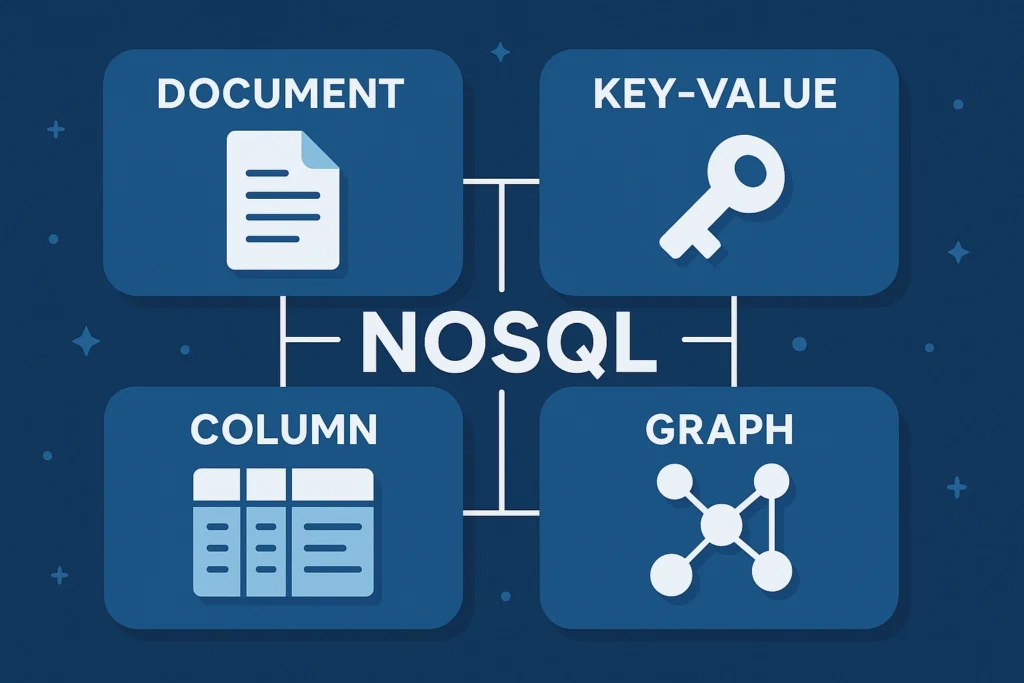
It isn’t a single technology but a family of database types built for speed and flexibility. Think of it as a set of tools — each with a unique way to organize and retrieve data.
For instance, document databases like MongoDB store information in JSON-like documents. Key-value stores such as Redis handle data in pairs, making them lightning-fast for caching. Meanwhile, column-oriented databases like Cassandra organize data in columns, optimizing performance for analytics. Finally, graph databases like Neo4j model relationships — perfect for social networks and recommendation systems.
Each system focuses on solving a specific challenge, from high-speed transactions to complex relationship mapping. This versatility makes NoSql indispensable in the digital era.
History of NoSql
It has its roots in the late 1990s but truly gained momentum in the 2000s as internet giants like Google, Amazon, and Facebook sought better ways to handle growing data loads. Traditional relational databases couldn’t handle the web’s increasing complexity, so engineers built new systems that prioritized scalability and speed over rigid structure.
| Year | Milestone | Description |
|---|---|---|
| 1998 | Birth of NoSql concept | Carlo Strozzi coined the term “NoSQL” for lightweight relational databases. |
| 2000s | Rise of web-scale data | Companies like Google and Amazon developed distributed systems for massive data. |
| 2009 | Popularization of term | NoSql movement gained traction after a developer meetup in San Francisco. |
| 2010s | Industry adoption | It became essential for cloud-based and real-time applications. |
| Today | Core technology | It powers everything from IoT devices to AI-driven analytics. |
Types of NoSql
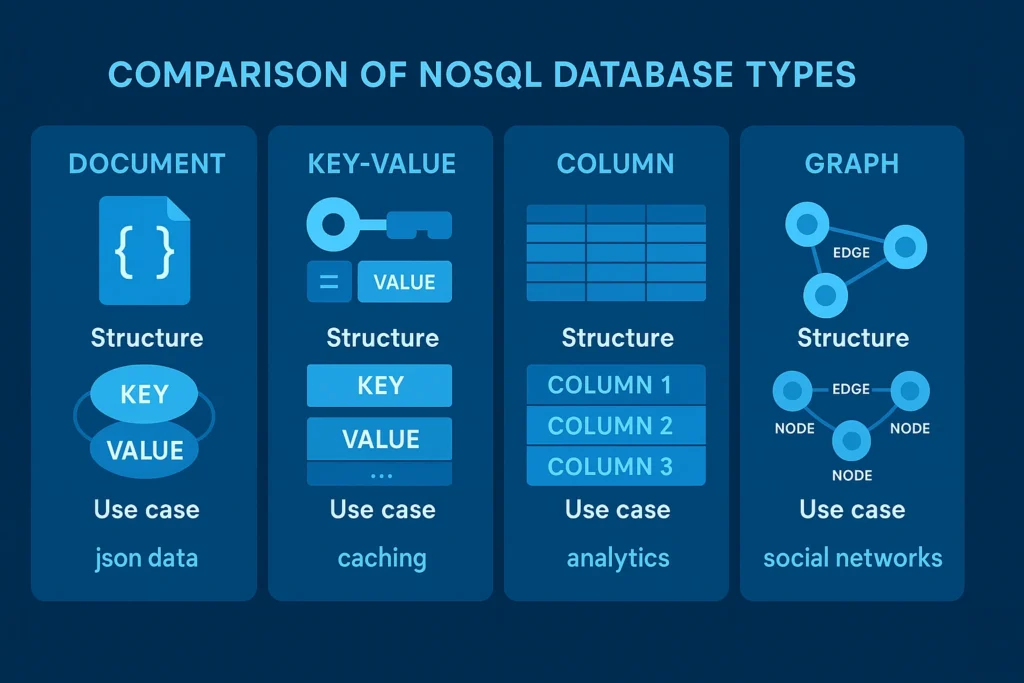
NoSql databases come in various types, each designed to solve unique data challenges.
1. Document-Oriented Databases
Document stores like MongoDB and CouchDB manage data in JSON or XML formats. Each document can have a different structure, making them ideal for dynamic applications such as content management systems or e-commerce platforms.
2. Key-Value Stores
In these databases, data is stored as key-value pairs, similar to a dictionary. Systems like Redis and Amazon DynamoDB shine in caching, session management, and real-time analytics.
3. Column-Family Stores
Column-oriented databases like Apache Cassandra and HBase store data in columns rather than rows. This structure boosts read and write performance, making them perfect for analytical workloads and time-series data.
4. Graph Databases
Graph databases, such as Neo4j, store data as nodes and relationships. They are essential for social media networks, fraud detection, and recommendation engines, where relationships matter more than individual records.
How Does NoSql Work?
The databases function by distributing data across multiple servers instead of relying on a single machine. This method, known as horizontal scaling, enhances performance and resilience.
Here’s how it works step-by-step:
- Data Distribution: Data is partitioned across several nodes to ensure availability and faster access.
- Replication: Copies of data are stored on multiple servers for redundancy.
- Flexible Schema: Unlike SQL databases, it allows adding new fields without restructuring existing data.
- Query Optimization: Depending on the type, NoSql databases use specialized query methods—like map-reduce for document stores or graph traversals for relationships.
- Consistency Models: Systems use either strong or eventual consistency to balance speed and reliability.
This approach makes NoSql ideal for handling the unpredictable, massive datasets found in cloud computing, e-commerce, and social platforms.
Pros & Cons
Non-relational databases have become a cornerstone of modern data management because of their unmatched scalability and flexibility. Unlike traditional relational systems that rely on fixed table structures, these schema-free systems allow developers to mold data storage according to the unique needs of their applications. This flexibility means organizations can move faster, experiment more freely, and adapt to changing data types without being constrained by rigid schemas. Whether handling social media feeds, IoT sensor readings, or user-generated content, these databases thrive where speed and variety are key.
However, this same adaptability can introduce complexity. Unstructured data models often lack the consistency and standardization of relational systems, which can make integration and data validation more challenging. Teams may also face a steeper learning curve, as query languages and performance optimization techniques vary widely across different platforms. Additionally, while these systems excel in scalability, achieving strong consistency across distributed environments can require trade-offs in latency or complexity.
| Pros | Cons |
|---|---|
| Highly scalable for large datasets | Limited standardization across systems |
| Flexible schema for dynamic data | Complex query capabilities compared to SQL |
| Fast performance for specific workloads | Requires specialized knowledge |
| Perfect for cloud and distributed systems | May sacrifice consistency for speed |
Uses of NoSql
NoSql databases are everywhere — quietly powering the technologies we use daily. From mobile apps to global enterprises, they drive data flow and innovation.
1. Social Media and Messaging
Platforms like Facebook and Twitter use NoSql to store billions of user interactions and messages in real time. The flexible schema allows them to adapt as new features roll out.
2. E-commerce and Retail
Amazon and eBay depend on NoSql to handle massive product catalogs, customer sessions, and transaction histories. Scalability ensures seamless shopping experiences during high traffic.
3. IoT and Smart Devices
With the rise of connected devices, NoSql databases efficiently handle streaming data from sensors, vehicles, and appliances. They manage unstructured data at scale, supporting the next wave of futuristic technology.
4. Big Data Analytics
It powers analytical engines that process terabytes of data for industries like finance, healthcare, and entertainment. This capability helps businesses make data-driven decisions faster.
5. Gaming and Mobile Apps
Games like Clash of Clans use this type of sql for user profiles and in-game progress. Its low latency keeps gameplay smooth even during massive user spikes.
Resources
- MongoDB: Introduction to NoSql Databases
- Amazon Web Services: What Is NoSql?
- IBM Cloud: Understanding NoSql Databases
- Google Cloud: Types of NoSql Databases
- Microsoft Azure: NoSql Database Guide