
Fiscal Policy plays a powerful role in shaping nations’ economies. It’s how governments manage taxes and spending to control growth, reduce unemployment, and stabilize prices. Understanding Fiscal Policy is vital for anyone navigating the modern Economic System, from investors to everyday citizens.
What is Fiscal Policy
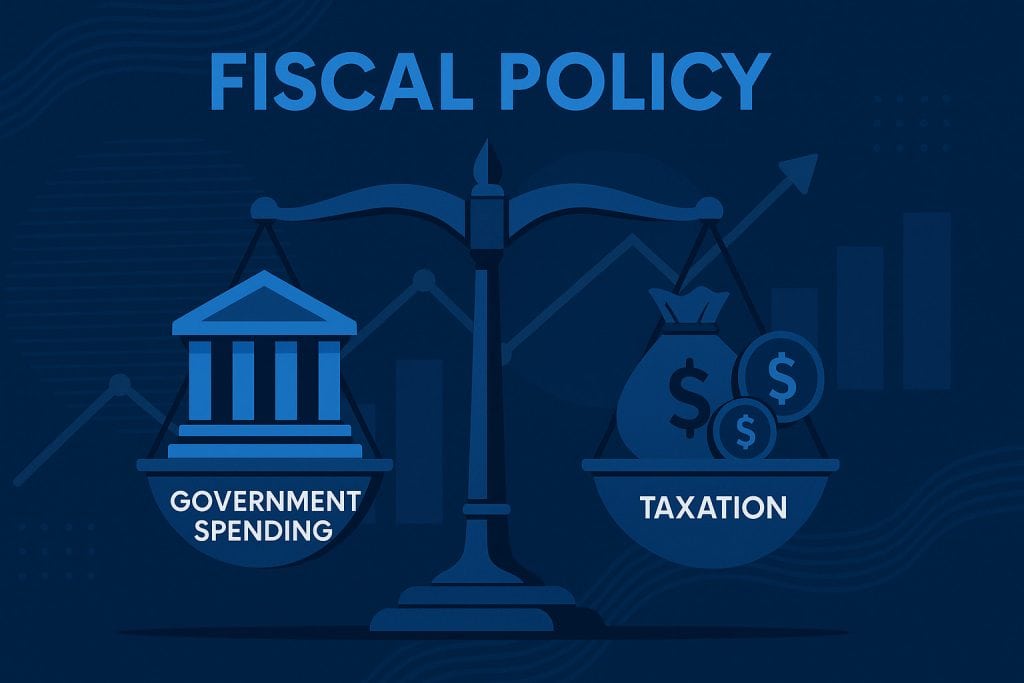
It refers to the government’s use of taxation and public spending to influence the overall economy. In simpler terms, it’s how governments decide when to spend more or less and when to raise or lower taxes. This approach helps balance economic growth and control inflation.
It works alongside monetary policy—the system controlled by central banks—to keep the economy healthy. Synonyms or related terms include “government budget policy” or “public finance management.” Whether funding infrastructure, providing stimulus checks, or adjusting tax brackets, Fiscal Policy directly impacts people’s wallets and business decisions.
Breaking Down Fiscal Policy
To understand more about this, imagine it as the steering wheel of an economy. When growth slows down, governments can accelerate it by spending more and cutting taxes. When the economy overheats—causing high inflation—they can hit the brakes by reducing spending or increasing taxes.
There are two main components:
Government Spending: This includes funding for education, defense, infrastructure, and welfare programs. It injects money into the economy, creating jobs and boosting demand.
Taxation: Taxes provide the revenue to fund government activities. Adjusting tax rates affects how much money consumers and businesses have to spend or invest.
Let’s take an example: During a recession, governments often launch stimulus programs. These initiatives—like public works projects or tax rebates—aim to increase spending power, reduce unemployment, and rebuild confidence.
A great example in action was the 2008 financial crisis. Governments worldwide increased public spending and reduced taxes to stimulate economies suffering from a market crash. Similarly, during the COVID-19 pandemic, fiscal stimulus packages provided relief to households and businesses.
It isn’t just about macroeconomics; it influences our everyday lives. From healthcare access to job creation, the choices policymakers make ripple through society. Investors and economists watch these moves closely since Fiscal Policy can affect trading strategies, investment trends, and even the Best stocks to buy in changing markets.
History of Fiscal Policy
The idea of the said policy dates back centuries but gained modern relevance during the Great Depression of the 1930s. British economist John Maynard Keynes introduced the concept that government intervention could stabilize economies during downturns.
| Period | Milestone | Description |
|---|---|---|
| 1930s | Keynesian Revolution | Advocated government spending during recessions to boost demand. |
| 1940s–1970s | Post-War Expansion | Fiscal Policy guided reconstruction and economic growth. |
| 1980s | Supply-Side Economics | Focused on tax cuts to stimulate private investment. |
| 2000s | Globalization Era | Governments adjusted policies to balance growth and debt. |
| 2020s | Pandemic Response | Large-scale stimulus programs revived struggling economies. |
From Keynes to modern policymakers, Fiscal Policy remains a cornerstone of global economic stability.
Types of Fiscal Policy
Expansionary Fiscal Policy
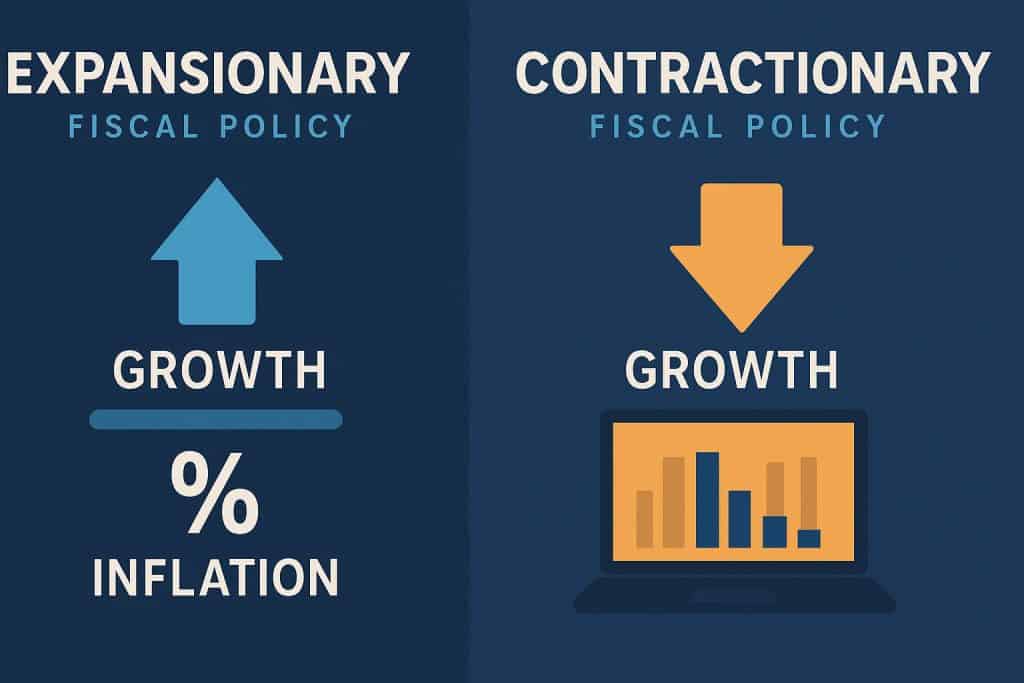
Expansionary Fiscal Policy is a strategy governments use during economic slowdowns or recessions to boost growth. It involves increasing public spending on infrastructure, education, and welfare while reducing taxes to encourage consumer spending and business investment. This approach injects money into the economy, creating jobs, stimulating demand, and restoring confidence among citizens and investors.
Contractionary Fiscal Policy
Contractionary Fiscal Policy is applied when the economy grows too quickly and inflation becomes a threat. Governments reduce public spending or increase taxes to limit excess money flow and stabilize prices. Though it may temporarily slow growth, this policy helps maintain long-term economic balance, control debt levels, and protect purchasing power.
| Type | Purpose | Example |
|---|---|---|
| Expansionary | Boost growth and reduce unemployment | Economic stimulus packages |
| Contractionary | Control inflation and prevent overheating | Tax increases, reduced spending |
How Does Fiscal Policy Work?
The policy operates through a cause-and-effect relationship between government decisions and economic outcomes. When spending increases, demand rises, encouraging businesses to produce more and hire workers. When taxes decrease, people have more disposable income to spend or save.
For instance, if the government launches an infrastructure project, construction firms gain contracts, employees earn wages, and local businesses see more customers. That’s the multiplier effect in action—one fiscal decision sparking a chain reaction of growth.
However, these policies must be balanced. Overspending can lead to higher national debt, while excessive austerity can slow down recovery. That’s why policymakers constantly adjust the balance based on economic conditions.
Pros & Cons of Fiscal Policy
| Pros | Cons |
|---|---|
| Stimulates economic growth during downturns. | May lead to higher public debt. |
| Reduces unemployment through job creation. | Political delays can slow implementation. |
| Helps control inflation. | Can trigger inflation if overused. |
| Supports public welfare and infrastructure. | Tax changes affect consumer behavior unpredictably. |
Like any tool, Fiscal Policy is powerful but must be used wisely.
Uses of Fiscal Policy
Fiscal Policy serves as both a shield and a sword for modern economies—defending against downturns while driving progress and growth. As a shield, it protects citizens through social programs, job creation, and crisis response. As a sword, it promotes innovation, infrastructure, and investment, empowering nations to adapt, compete, and thrive in an ever-changing global landscape.
Stimulating Economic Growth
Governments use Fiscal Policy to jumpstart sluggish economies. By increasing public spending or reducing taxes, they create demand and jobs. For example, after major crises, stimulus bills fund infrastructure, healthcare, and innovation projects that generate long-term benefits.
Managing Inflation and Stability
During periods of high inflation, it cools the economy by reducing spending or increasing taxes. This maintains purchasing power and prevents runaway prices that destabilize the Economic System.
Reducing Inequality
It supports fairness through progressive taxation and social welfare programs. When designed effectively, it narrows income gaps and strengthens the social fabric.
Encouraging Investment
Through tax incentives and subsidies, governments can attract businesses and support entrepreneurship. This indirectly influences investors’ investment plan decisions by shaping market conditions and boosting confidence.
Ultimately, effective the policy creates a balanced, resilient economy. It’s a fine dance between growth and restraint—a dance that determines whether nations thrive or struggle in uncertain times.
Resources
- IMF: Fiscal Policy Overview
- Investopedia: All About Fiscal Policy
- World Bank: Fiscal Policy and Economic Growth
- Brookings Institution: The Role of Fiscal Policy
- The Commonwealth: Fiscal Policy Options for Resilient and Sustainable Development