
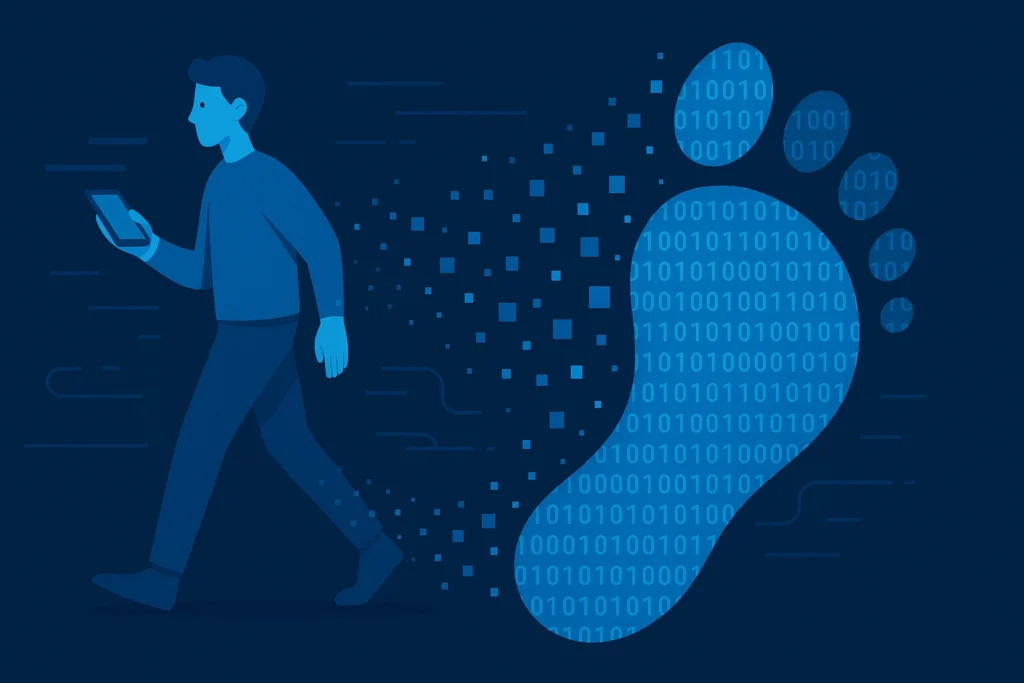
Imagine leaving footprints in wet sand. Every step marks where you’ve been, who you are, and sometimes even where you’re headed. Now picture that only digital. Every email, social media post, or Google search adds to your digital footprint a lasting trail of your online identity.
In the world of cybersecurity, understanding what is a digital footprint isn’t optional it’s essential. It affects your privacy, your security, and even your reputation. From employers reviewing your online presence to hackers using your data for scams, your digital trail can either empower or expose you.
What Is a Digital Footprint?
It is the record of your online activity the data you leave behind when you use the internet. Every login, every tweet, and every purchase adds to this invisible identity. Think of it as your digital DNA, uniquely identifying you in the vast online ecosystem.
In simpler terms, it’s everything you post, share, or even unintentionally collect through cookies, devices, and apps. While most of us never think about it, this footprint forms the foundation of how websites, companies, and even governments understand who we are online.
Breaking Down Digital Footprint
Data Creation
Collectively, these pieces form the foundation. Even something as simple as adjusting your Netflix preferences adds to your digital profile, showing how personal habits become part of your broader online identity.
Data Collection
Cookies, trackers, and analytics systems capture where you’ve been, how long you stayed, and what you clicked. Companies gather this information to enhance user experiences, target ads, or study consumer behavior.
Data Sharing
That’s why searching for “running shoes” on one site might lead to ads on another. This interlinked web of shared data builds a more complete picture of your habits and while it powers convenience, it also raises serious questions about privacy and consent.
Data Storage
Emails, messages, and account details may remain in cloud backups long after you delete them locally. Storage systems ensure accessibility but also pose risks: the more data that exists, the more vulnerable it is to breaches or misuse.
Data Analysis
Streaming services suggest shows you might like, while e-commerce platforms anticipate your next purchase. Even your scrolling patterns and device type can help build predictive algorithms. This analytical layer transforms raw activity into insight.
Data Persistence
Even deleted content can linger in backups or be archived by third parties. Tweets, photos, and comments might disappear from public view but still exist in hidden databases. This durability makes digital footprints powerful and, at times, permanent.
History of Digital Footprint
| Year | Milestone |
|---|---|
| 1990s | Internet adoption grows; websites start tracking visits via cookies. |
| 2000s | “Digital footprint” enters public vocabulary; social media expands data sharing. |
| 2010s | Big data analytics turns footprints into marketing gold. |
| 2020s | Privacy laws like GDPR and CCPA empower users to control digital data. |
Types of Digital Footprint

Active Digital Footprint
For example, when you comment on a YouTube video or post a vacation photo on Instagram, that’s your active footprint in motion. You’re consciously contributing to your digital persona. Because it’s visible and deliberate, you can often manage or delete this data more easily though.
Passive Digital Footprint
A passive digital footprint forms quietly in the background, often without your direct involvement. It’s the invisible trail you leave as you browse websites, use apps, or stream videos. Your location, device type, and browsing time might all be recorded automatically.
Permanent Digital Footprints
Cloud backups, web archives, and third-party databases often preserve what you thought was gone.The permanence of data online means that what you post today could resurface years later, influencing future opportunities or public perception. Managing your footprint means thinking long-term before hitting “post.”
Temporary Digital Footprints
These traces are designed to fade, offering short-term visibility without permanent storage.However, “temporary” doesn’t always mean invisible. Platforms may still retain some data behind the scenes for analytics or moderation.
Personal Digital Footprints
These seemingly harmless actions create a detailed picture of your personality. Being aware of your personal footprint helps you maintain control over how much of your private life becomes public knowledge.
Professional Digital Footprints
A strong professional footprint can open doors to new career opportunities, but inconsistency or controversy can harm your credibility. Maintaining a polished, accurate digital presence shows responsibility and reinforces your professional brand.
How Does a Digital Footprint Work?
So how does your digital footprint actually come to life? It’s a process happening every time you log in, click, or interact.
- Data Creation: You post, search, or share something online.
- Data Collection: Platforms store this data, often alongside metadata (like your device type or location).
- Data Aggregation: Companies compile and analyze data to create behavioral profiles.
- Data Use: These profiles drive advertising, recommendations, or even security checks.
- Data Retention: Unless deleted, much of this information stays on servers indefinitely.
That’s why managing your digital footprint is not about paranoia it’s about awareness. Every online action is a small brushstroke in the portrait of your digital self.
Pros & Cons
Your digital footprint isn’t inherently good or bad it’s a tool. Its impact depends on how it’s used and protected.
| Pros | Cons |
|---|---|
| Easier access to personalized content | Privacy risks and identity theft |
| Builds your professional online reputation | Permanent digital record (hard to erase) |
| Enables targeted recommendations | Potential misuse by advertisers or hackers |
| Supports digital marketing insights | Unintentional exposure of sensitive data |
Uses of Digital Footprint
Your digital footprint isn’t just data it’s influence. Across industries, it helps shape user experience, business strategies, and even law enforcement practices.
Marketing and Advertising
Companies rely on digital footprints to understand consumer behavior. They analyze browsing history and social engagement to predict future purchases. For example, if you search for travel destinations, expect to see ads for flights or hotels within hours.
Cybersecurity and Identity Verification
Security systems analyze footprints to detect anomalies. If your login suddenly originates from another country, AI systems may flag it as suspicious. For individuals, tracking their online presence also helps identify potential breaches early.
Education and Employment
Educational institutions and employers often review applicants’ digital footprints to assess credibility and character. A well-maintained LinkedIn profile can open doors, while an inappropriate post might close them just as fast.
Law Enforcement and Investigation
Authorities use digital footprints to trace cybercrimes, track suspects, and recover stolen data. Every IP log or timestamp can be a digital fingerprint pointing to the source of illegal activity.
Healthcare and Data Analytics
In healthcare, anonymized footprints help researchers study patterns like how people search for symptoms or health tips. This data can improve public health responses and predictive models.
Resources
- Norton : Understanding Your Digital Footprint.
- Kaspersky: How Digital Footprints Are Formed.
- Forbes : Why Digital Footprints Matter.
- IBM Security: Managing Digital Identity and Cybersecurity.
- TechTarget: Digital Footprint Explained.