
In today’s interconnected world, safeguarding sensitive information is more critical than ever. One of the most persistent threats in the cybersecurity landscape is data exfiltration, a method used by malicious actors to steal valuable data. This act can result in significant financial losses, reputational damage, and compliance violations. From insider threats to sophisticated hacking techniques, the ways in which data is exfiltrated have become more complex.
Understanding data exfiltration, its definition, methods, and how to prevent it provides a solid foundation for mitigating risks. This article will explore the concept in detail, shedding light on its mechanisms and the best strategies to protect organizations.
What is Data Exfiltration?
At its core, data exfiltration refers to the unauthorized transfer of data from a system or network. Often described as “data theft” or “data leakage,” it involves malicious actors, whether external hackers or internal insiders, accessing sensitive information without proper authorization.
Within the cybersecurity domain, data exfiltration is considered a major threat due to the value of stolen data. This could include personal information, financial records, intellectual property, or proprietary business data. Unlike accidental data loss, exfiltration is a deliberate act, typically involving covert methods to evade detection.
Other terms synonymous with data exfiltration include data breaches, information theft, and unauthorized data extraction. These variations emphasize the intent to remove data stealthily, bypassing security measures.
Data exfiltration is especially dangerous because it often happens quietly. In many cases, attackers do not immediately disrupt systems or trigger obvious alarms. Instead, they focus on remaining undetected for as long as possible while collecting and transferring sensitive information in small amounts. This stealth makes data exfiltration particularly damaging, as organizations may not discover the incident until long after the data has already been stolen and misused.
Breaking down Data Exfiltration

Data exfiltration is a growing concern in modern cybersecurity due to the evolving sophistication of cybercriminals and the increasing reliance on digital systems. The risk extends beyond external attacks; insider threats have become a significant vector for data theft. Employees or contractors with access to sensitive systems can intentionally or inadvertently exfiltrate critical information.
For example, high-profile incidents such as the Target breach in 2013 and the Capital One data breach in 2019 highlight how attackers use phishing, malware, and other malicious techniques to exfiltrate data. These breaches not only resulted in financial losses but also raised awareness of the importance of robust cybersecurity defenses.
As organizations continue to adopt cloud platforms, remote work models, and mobile devices, the opportunities for unauthorized data movement have expanded. Data no longer resides in a single office server or protected local environment. It may be accessed through laptops, smartphones, SaaS applications, and cloud storage accounts across multiple locations. While this flexibility improves productivity, it also increases the number of entry points attackers can exploit.
Another reason data exfiltration remains a serious issue is the growing value of data itself. Cybercriminals recognize that stolen credentials, customer information, and corporate documents can be sold, leaked, or used for extortion. In many cases, the stolen information is more valuable than the devices or systems from which it was taken.
Key Components of Data Exfiltration
Malicious Intent: Most cases stem from deliberate actions by cybercriminals or disgruntled employees.
Methods Used: Common tactics include phishing, malware infections, and unauthorized use of removable storage devices.
Targets: Data types often targeted include financial records, trade secrets, and customer information.
A key point to remember is that data exfiltration rarely happens in isolation. It is often the final stage of a larger attack chain. An attacker might first gain access through a phishing email, escalate privileges, move laterally across systems, identify valuable assets, and only then begin extracting data. Recognizing this sequence helps organizations build layered defenses instead of relying on a single security tool.
History of Data Exfiltration
The origins of data exfiltration trace back to the rise of interconnected systems in the 1980s, where early hackers exploited vulnerabilities in networks to gain unauthorized access to information. As computer systems became more advanced, so did the tactics used to extract data.
In the 1990s, the advent of the internet opened doors for global cyberattacks. The proliferation of email and early malware programs enabled attackers to exfiltrate data more efficiently. The early 2000s saw the emergence of phishing attacks, which remain a common method of exfiltration today.
Today, the threat landscape has evolved even further. Advanced persistent threats (APTs), ransomware groups, and organized cybercrime operations use automation, encrypted communication channels, and stealthy malware to move data without detection. At the same time, organizations must also guard against negligent insiders who may accidentally expose sensitive data through weak passwords, poor file-sharing habits, or misconfigured cloud storage.
| Era | Significant Development | Impact |
|---|---|---|
| 1980s | Network vulnerabilities exploited | Early cases of unauthorized data access |
| 1990s | Internet proliferation | Global exposure to cyber threats |
| 2000s | Rise of phishing and ransomware | Increase in sophisticated data breaches |
| Present Day | Advanced persistent threats (APTs) and insider risk | More complex exfiltration methods |
Types of Data Exfiltration
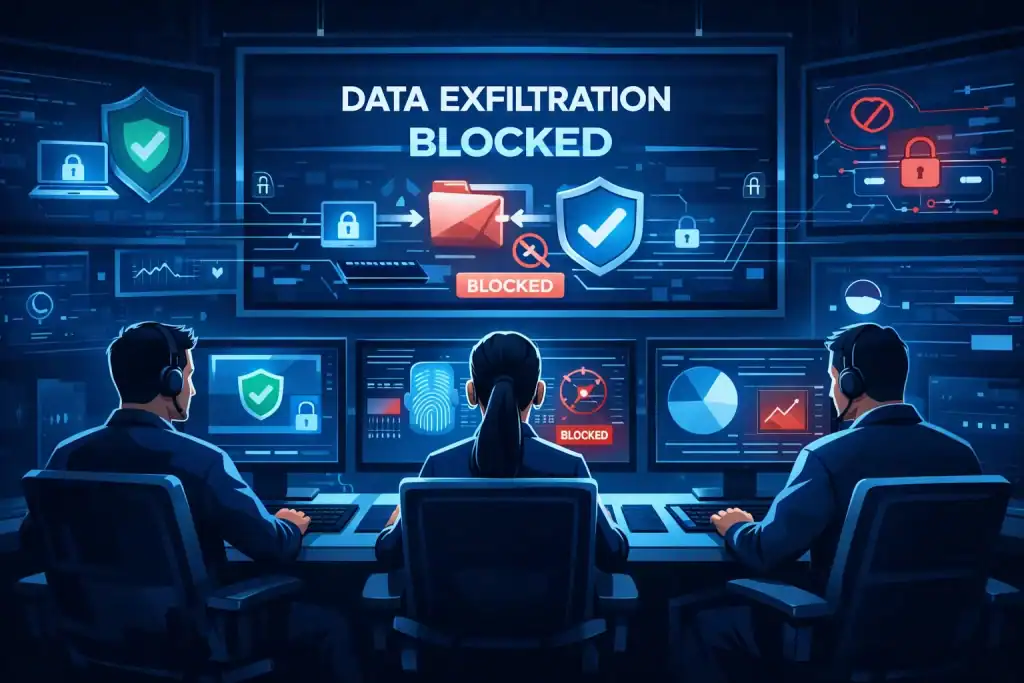
This can take various forms depending on the methods employed by attackers.
| Type | Description |
|---|---|
| Physical Exfiltration | Data transferred via physical media like USB drives. |
| Network-Based Exfiltration | Data transferred through unauthorized network connections or via phishing emails. |
| Application-Based Exfiltration | Exploitation of software vulnerabilities to extract sensitive information. |
| Cloud-Based Exfiltration | Data stolen from cloud-based applications or storage solutions. |
Each type presents a different security challenge. Physical exfiltration may involve an employee copying sensitive files to a USB drive, while network-based exfiltration can occur when malware sends data to an attacker-controlled server. Application-based exfiltration often takes advantage of weak software configurations, and cloud-based exfiltration can happen when permissions are mismanaged or when accounts are compromised. Understanding these categories helps security teams align their defenses with real-world attack scenarios.
How Does Data Exfiltration Work?
The process typically begins with attackers gaining unauthorized access to a system. Once inside, they identify valuable data to extract, use tools to bypass security measures, and transmit the data to an external destination.
This process is often carried out in stages. First, the attacker compromises a user account, endpoint, or application. Next, they search for high-value data such as customer records, financial statements, login credentials, or confidential internal documents. After identifying the target, they may compress, encrypt, or disguise the files to make the transfer less noticeable. Finally, the data is sent outside the network through email, cloud-sharing platforms, command-and-control servers, or other hidden channels.
Techniques include:
Phishing Attacks: Trick users into revealing credentials.
Malware Installation: Inject malicious software to facilitate data extraction.
Social Engineering: Manipulate insiders to share confidential data.
Other common methods include DNS tunneling, unauthorized remote access tools, and misuse of legitimate administrative accounts. Because attackers often blend malicious behavior with normal business activity, security teams must pay attention to unusual patterns such as large outbound data transfers, access outside normal working hours, or repeated attempts to move files to unapproved destinations.
Pros & Cons
| Pros (For Organizations) | Cons (For Victims) |
|---|---|
| Identifies security loopholes during post-breach analysis | Loss of customer trust and financial damage |
| Encourages investment in stronger security systems | Risk of regulatory fines due to non-compliance |
While there are no true “pros” to a cyberattack, organizations can still learn valuable lessons from security incidents. A data exfiltration attempt may expose weak access controls, outdated systems, or gaps in employee awareness. In that sense, post-incident analysis can serve as a catalyst for long-term improvement. However, these lessons often come at a high cost, making prevention and early detection far more desirable than reacting after a breach has occurred.
Applications or Uses
In cybersecurity, it serves as both a wake-up call and an opportunity to enhance defenses.
Training Programs: Educate employees on spotting phishing attempts.
Real-Time Monitoring: Implement tools that detect unusual network activity.
Data Loss Prevention (DLP) Software: Prevent unauthorized data transfers.
Organizations can also strengthen protection by enforcing least-privilege access, segmenting networks, and using multifactor authentication. Regular audits of user permissions help reduce unnecessary access to sensitive files, while encryption ensures that even if data is intercepted, it is more difficult to exploit. Incident response planning is equally important. When teams know how to isolate affected systems, investigate suspicious activity, and communicate effectively during a breach, they can reduce both the operational and reputational impact of data exfiltration.
Another practical measure is building a culture of security awareness. Technology alone cannot stop every attack. Employees who understand how data exfiltration happens are more likely to report suspicious emails, protect login credentials, and follow secure file-handling practices. Over time, this creates a stronger first line of defense across the organization.
Resources
- Digital Guardian. The Definitive Guide to Data Exfiltration.
- Fortinet. Cybersecurity Glossary: Data Exfiltration.
- IBM Think. What Is Data Exfiltration?
- SentinelOne. Understanding Data Exfiltration Techniques.
- Tessian. Data Exfiltration and Insider Threats.