
If you’ve ever watched a “simple” cloud migration turn into a permissions mess overnight, you already know why Cybersecurity is suddenly everyone’s job. In the last year, digital transformation has accelerated—and so have attacks that exploit cloud misconfigurations, remote work gaps, and AI-powered deception. This update breaks down what’s happening, who’s involved, and why Cybersecurity now decides whether transformation becomes a breakthrough… or a breakdown.
What Happened

Digital transformation is no longer just “moving to the cloud.” It’s AI in workflows, IoT at the edge, and data everywhere—meaning the attack surface expands every time a business modernizes. That’s why Cybersecurity is being pulled forward into the earliest planning stages instead of being bolted on at the end.
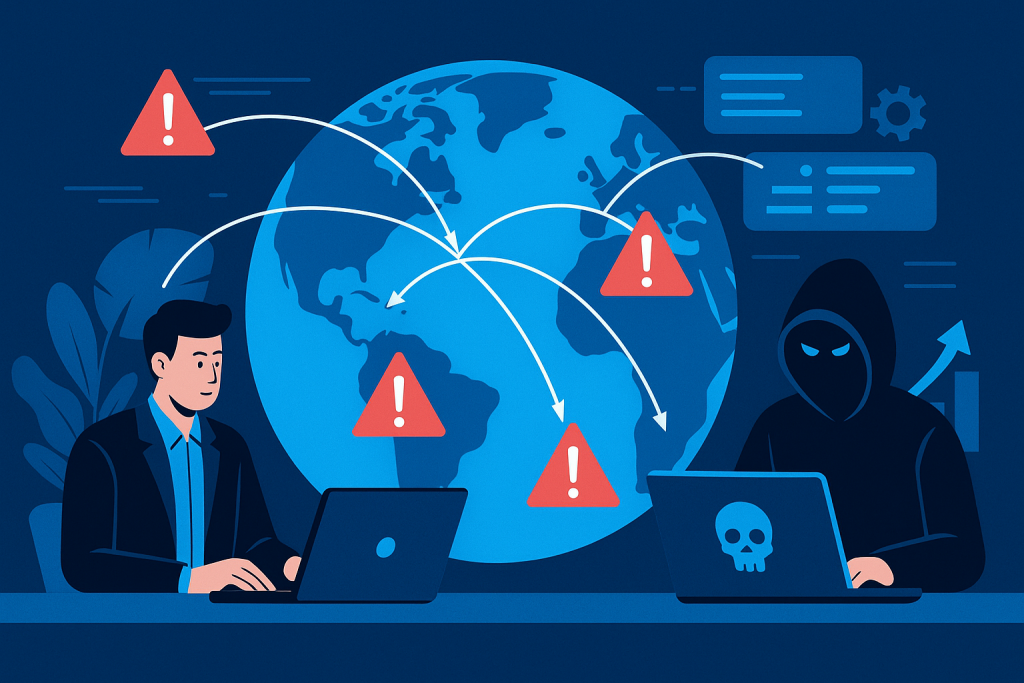
At the same time, attackers are scaling faster. Ransomware continues to disrupt operations at a brutal pace, and guidance from CISA emphasizes that organizations must prepare, mitigate, and respond with discipline—not hope.
And yes—AI is changing the game: deepfake-style impersonation and AI-assisted social engineering are pushing teams to treat identity, access, and verification as mission-critical Cybersecurity controls, not optional checkboxes.
When and Where
These developments aren’t limited to one region, one sector, or even one type of business. They’re happening wherever digital transformation is moving fastest—and that usually means environments with heavy cloud adoption, remote work, SaaS sprawl, and interconnected devices. In practice, you’ll see Cybersecurity pressure peak during “high-change” moments: cloud migrations, mergers and acquisitions, app modernization, new ERP rollouts, and rapid deployments of AI tools.
When does this matter most? Often right at the start of a transformation program—before a single workload moves. That’s when teams define identity models, network segmentation, vendor access, and data handling rules. If those foundations are rushed, the gaps get amplified later. It’s why Cybersecurity has shifted from a final checklist item to a core workstream that runs in parallel with engineering.
Where do the highest risks show up?
- Cloud environments: misconfigurations, overly broad permissions, exposed storage, weak key management.
- Remote work setups: unmanaged devices, risky Wi-Fi, inconsistent patching, credential reuse.
- IoT and operational tech: devices that can’t be patched easily, weak authentication, long lifecycles.
- Third-party integrations: vendors that require access to internal systems, APIs, and data.
In all of these places, Cybersecurity becomes the guardrail that keeps innovation from turning into exposure.
Who is Involved
The biggest misconception is that Cybersecurity is only owned by the security team. In reality, digital transformation makes security everyone’s shared responsibility—because decisions made in architecture, procurement, HR, and operations can create (or eliminate) risk.
Key groups involved include:
- Executive leadership and boards: They set risk appetite, approve budgets, and require governance. When leadership treats Cybersecurity as a “business enabler,” teams are more likely to build secure-by-design systems instead of rushing fragile shortcuts.
- IT and cloud engineering teams: They implement identity controls, network segmentation, CI/CD pipelines, logging, and configuration standards. If engineering teams don’t partner closely with Cybersecurity, security controls often become “afterthought patches” that slow delivery later.
- Security operations (SOC) and incident response: They monitor alerts, investigate anomalies, and coordinate responses—especially important as ransomware and AI-assisted attacks grow more disruptive.
- Compliance and legal teams: They map transformation activities to regulations, handle reporting obligations, and guide privacy requirements. This is where Cybersecurity intersects directly with legal exposure and customer trust.
- Vendors and partners: Cloud providers, MSPs, SaaS tools, and consultants often hold privileged access. Vendor risk management and shared responsibility models are now central to Cybersecurity outcomes.
- Employees and end users: They’re targeted constantly by phishing and impersonation. Training, MFA adoption, and safer password behavior can be the difference between a near-miss and a breach.
Digital transformation succeeds when all these groups treat Cybersecurity as part of delivery—not a blocker.
Why It Matters
Here’s the uncomfortable truth: digital transformation can amplify risk as easily as it amplifies speed. If a company digitizes customer journeys but neglects Cybersecurity, it may accidentally create faster pathways for fraud, downtime, and data loss.
Cybersecurity matters because the costs of failure are no longer limited to IT cleanup. They spill into operations, revenue, brand reputation, and even business survival:
- Operational continuity
A single ransomware event can freeze critical systems, delay shipments, cancel appointments, or stop manufacturing lines. That’s why agencies like CISA emphasize preparation and layered defenses—because recovery is often slower and more expensive than leaders expect. - Customer trust and retention
Customers may forgive a slow app. They rarely forgive data exposure. Strong Cybersecurity protects personal information, payment details, and sensitive business data—especially when transformation increases how much data is collected and how widely it’s shared. - Faster innovation, fewer rollbacks
When security is embedded early, product and engineering teams move faster long-term. Secure-by-design reduces last-minute rework, emergency patches, and “pause the release” moments. In other words, Cybersecurity can actually speed up transformation by preventing disruptive surprises. - Regulatory and contractual readiness
As rules tighten and customers demand proof of controls, Cybersecurity becomes a competitive edge. Being able to demonstrate governance, monitoring, and incident response maturity can influence enterprise deals, partnerships, and renewals. - AI changes the threat landscape
AI-assisted phishing, impersonation, and deepfake deception push companies toward stronger verification, identity controls, and detection. Cybersecurity strategies that rely purely on “awareness” without technical guardrails are increasingly risky.
Bottom line: Cybersecurity is the confidence layer that makes transformation sustainable—so growth doesn’t come with a hidden security debt.
Quotes or Statements
One message comes up repeatedly in expert discussions: security must be treated as a business requirement, not an IT afterthought.
Another recurring theme: ransomware pressure keeps increasing, and even disclosure rules can become part of attacker tactics—pushing organizations to treat its readiness as a board-level priority.
Conclusion
Digital transformation is moving fast—but it has to move faster. The winners will be organizations that build security into design, budgets, and daily habits, not just into tools. Expect continued focus on governance, identity, and resilience as transformation expands into cloud and connected systems. The most practical next step is simple: treat it as a product feature of transformation, not a last-minute patch.
Resources
- Motadata. Cybersecurity’s Role in Digital Transformation
- Innovation Cloud. Cybersecurity Innovation as the Backbone of Digital Transformation
- Honeywell Forge. Cybersecurity Strategies for Digital Transformation
- YouTube. Cybersecurity in Digital Transformation
- X (Twitter). Women Entrepreneurs on Cybersecurity and Digital Transformation