
Casino Site Compliance refers to the systems that help a casino platform meet legal and oversight requirements, mainly by verifying user identity, restricting access by location, and monitoring activity for risk, reporting, and control. In practice, this means KYC checks confirm who the user is, geo-location tools determine whether access is allowed in a given jurisdiction, and monitoring systems track patterns or transactions that may require review. Tech24’s broader guide to casino site compliance controls in platform architecture describes these controls as identity verification, geo-location restrictions, and activity monitoring built directly into the platform.
Key Takeaways
- Casino Site Compliance is a technical and operational function focused on identity verification, location-based access control, and activity monitoring.
- KYC helps verify user identity and supports regulatory checks tied to fraud, AML, and customer due diligence.
- Geo-location systems help enforce jurisdiction rules by determining where access should be restricted or allowed.
- Monitoring systems use logs, analytics, thresholds, and alerts to identify anomalies, support audits, and improve oversight.
- These controls matter because compliance failures can create legal exposure, service disruption, and reputational damage.
Definition
Casino Site Compliance is the set of controls, workflows, and monitoring tools used to align a casino platform with applicable legal, regulatory, and oversight requirements.
What it means / How it works
KYC, or Know Your Customer, is the identity-verification layer. Its purpose is to confirm that a user matches the information required by the platform’s compliance process. The exact checks vary by jurisdiction and operator, but the core role is consistent: establish identity, support due diligence, and reduce regulatory and fraud-related risk.
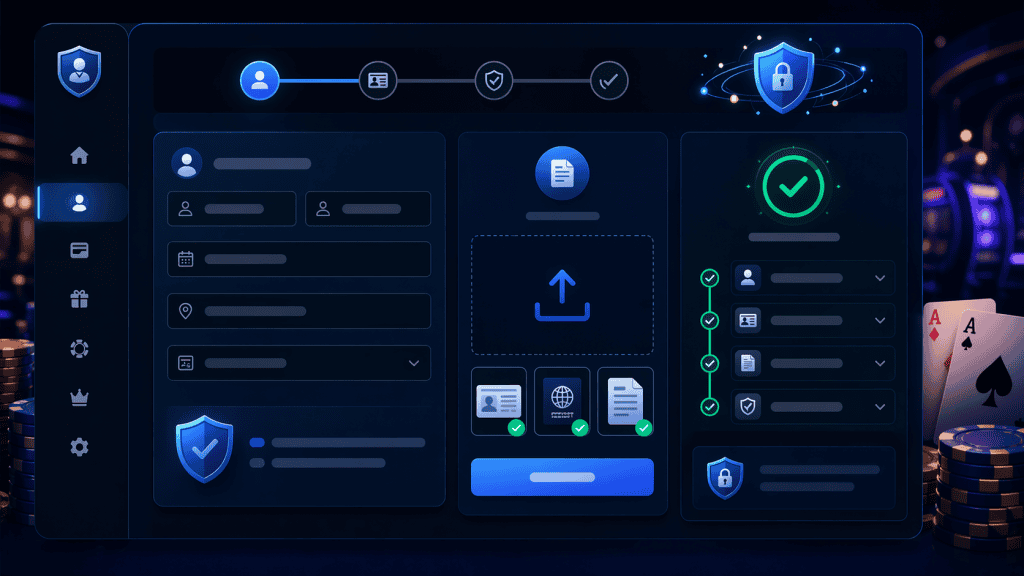
Geo-location is the access-control layer. It helps determine whether a user can access certain services from a specific location. Tech24’s pillar explains that regional legal frameworks can require location-based access controls and that these controls are often integrated into the platform rather than added later as external tools.
Monitoring systems are the oversight layer. These tools track activity, logs, and risk indicators so compliance teams can review unusual patterns, document events, and respond when thresholds are triggered. EY notes that data analytics is widely used in gaming compliance programs, including dynamic risk scoring for large volumes of transactions, while DataCalculus describes real-time monitoring as important for detecting discrepancies and supporting corrective action.
Together, these systems form a narrow compliance workflow: verify identity, confirm location, then monitor activity continuously. That is the core meaning of Casino Site Compliance in technical terms.
Why it matters
These systems matter because compliance is not only a policy issue. It affects how the platform is built, how access is controlled, and how risks are detected before they become larger failures. Tech24 notes that compliance requirements influence platform architecture and that failures can result in penalties or service disruption.
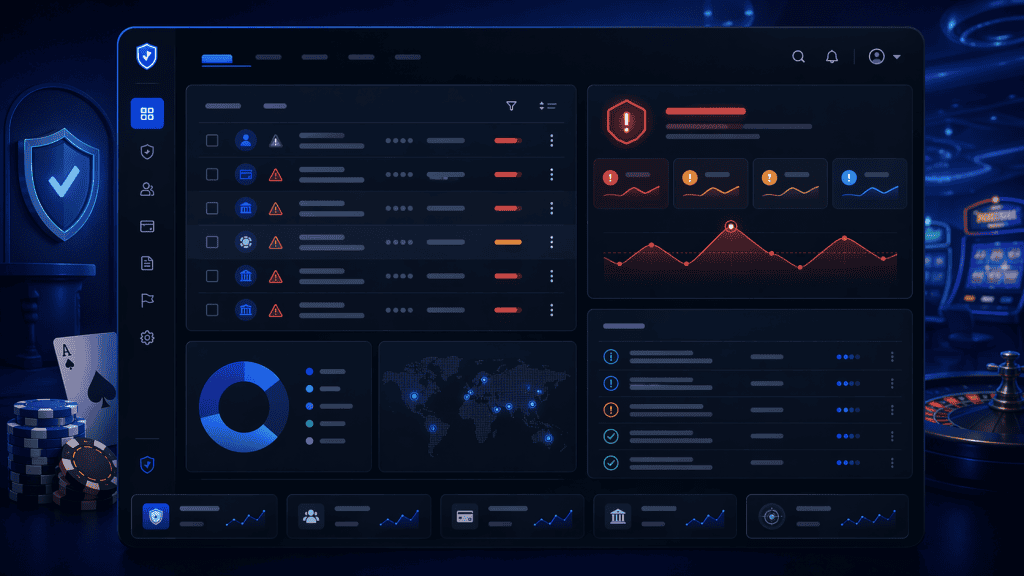
The broader compliance literature makes the same point from an operational side. EY describes gaming compliance technology as closely tied to AML, fraud, and risk management, and SCCG frames compliance failures such as weak AML controls or failed age verification as issues that can lead to fines, license problems, or reputational damage.
Light Support Block
| System | Main function | Why it matters |
|---|---|---|
| KYC | Verifies user identity | Supports due diligence and reduces fraud or AML risk |
| Geo-location | Checks whether access is allowed by region | Enforces jurisdiction-specific access rules |
| Monitoring systems | Track activity, logs, and anomalies | Supports oversight, alerts, and reporting workflows |
Common mistakes / misconceptions
One common mistake is treating Casino Site Compliance as only a legal document or policy checklist. The sources point to a technology-heavy model that includes analytics, monitoring, identity workflows, and access controls embedded in system design.
Another misconception is that KYC alone is enough. In this topic, KYC is only one part of compliance. It works alongside geo-location controls and activity monitoring, not as a substitute for them.
A third mistake is assuming monitoring means only watching for security incidents. Monitoring also supports reporting, auditability, anomaly review, and operational oversight. DataCalculus and Tech24 both describe monitoring as part of broader compliance visibility, not just security defense.
Examples
A platform may use KYC checks to verify that an account matches required identity records before allowing full account functionality. The specific workflow depends on jurisdiction and operator requirements, but the purpose is identity assurance.

A platform may use geo-location controls to block or limit access in locations where a service is not permitted. Tech24 describes this as a compliance-oriented control built into architecture.
A platform may use transaction and behavior monitoring to flag unusual patterns, support reporting, and help teams review potential non-compliance or fraud indicators. EY and DataCalculus both describe analytics-based monitoring in this way.
FAQ
What is Casino Site Compliance in simple terms?
It is the system of checks and controls that helps a casino platform verify identity, enforce location rules, and monitor activity to meet regulatory and oversight requirements.
Is KYC the same as Casino Site Compliance?
No. KYC is one part of Casino Site Compliance. It focuses on identity verification, while compliance also includes geo-location controls and ongoing monitoring.
Why is monitoring part of compliance?
Because compliance teams need activity visibility, anomaly detection, and reporting support. Monitoring helps identify issues early and document what happened for review or audit purposes.
Resources
- DataCalculus. Compliance Officer: Ensuring Compliance with Gaming Regulations
- EY. Gaming compliance: transforming with technology and AI
- TheRMS. Casino Security: Protecting Players, Assets & Data
- SCCG Management. Gambling Compliance Strategy – The 7 Strongest Elements of Building Risk-Resilient Gaming Organizations
- PureSoftware. Casino Game Testing & Compliance Guide 2025