
Pi Coin has always had a way of getting people talking. One day, it feels like the people’s crypto project built for everyday smartphone users. The next, everyone is refreshing charts, scanning Telegram groups, and asking the same nervous question: “What just happened?” In the cryptocurrency space, price drops are common, but the recent 10% fall in Pi Coin felt different because the project has such a loyal, emotionally invested community.
What Happened
Pi recently took a sharp 10% hit, sliding toward the lower price range and sparking fresh anxiety across the Pi Network community. For many holders, this was not just another red candle on a chart. It felt personal. Pi Coin is tied to years of mobile mining, referrals, KYC waiting, mainnet expectations, and the dream of a crypto project that ordinary people could join without expensive hardware.
The drop arrived after a period of uncertainty around exchange listings, liquidity, and ecosystem progress. Pi Network officially moved toward its Open Network phase on February 20, 2025, a milestone the project described as a major step after years of community building and mainnet migration work. Pi Network said at the time that it had surpassed 10.14 million Mainnet migrations and had more than 19 million identity-verified Pioneers.
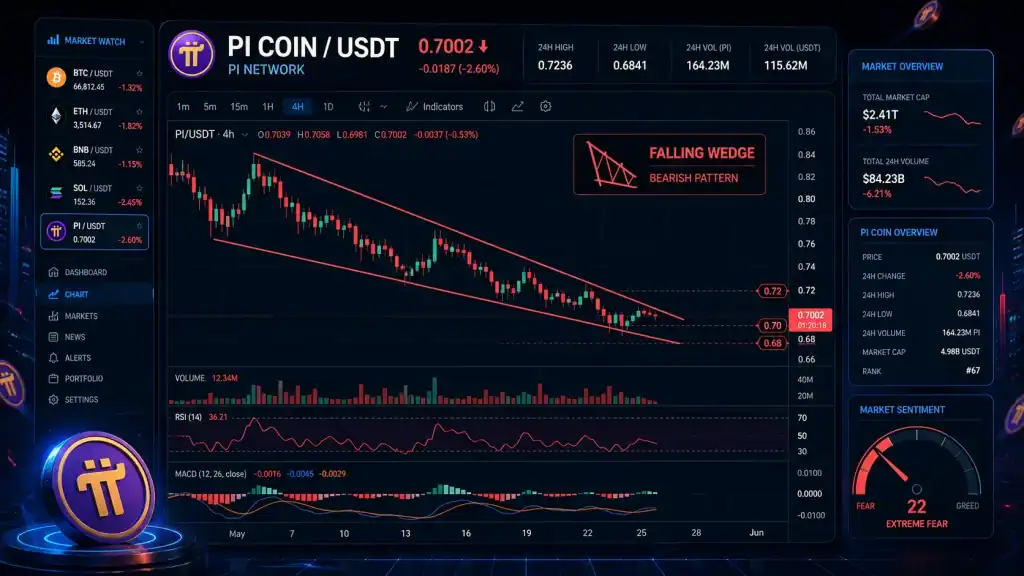
Still, Pi price action has remained volatile. FXEmpire noted that Pi Network’s token had shown a falling wedge setup, a pattern some traders watch for possible bullish reversal signals, although the same analysis warned that wider market risks and listing delays could weigh on the token.
That is why this Pi dip created so much noise. Some users saw it as a warning sign. Others treated it like a painful but normal correction before the next chapter. In plain English: Pi Coin is at a crossroads, and the market is waiting for proof that utility, listings, and community strength can turn excitement into lasting value.
When and Where

The sharp Pi Coin decline became a hot topic around late March and early April 2025, especially among online Pi Network communities. Discussions spread quickly through X, YouTube, crypto forums, and regional trading groups. Brave New Coin described March as a rough period for Pi Coin, noting that uncertainty around token migration and supply dynamics placed the token at a critical point.
The debate was especially loud in online communities across Asia, where Pi Coin has a large base of active users. Many Pioneers were not just watching price charts; they were comparing marketplace activity, merchant adoption, and rumors about future listings.
Who is Involved
The biggest player in this story is the Pi Core Team, the group responsible for guiding Pi Network’s development, mainnet transition, ecosystem tools, and communication. Their decisions matter because Pi Coin still depends heavily on confidence in the project roadmap.
The second major force is the Pioneer community. These are the everyday users who mined Pi Coin on their phones, invited friends, completed KYC, and waited for broader utility. Their belief has kept the project alive through delays and criticism.
Crypto analysts, influencers, unofficial Pi marketplaces, and ecosystem projects like PiChainMall also shaped the conversation. When Pi Coin dipped, some voices urged patience, while others warned that weak communication could damage trust. In a market driven by sentiment, silence can feel louder than bad news.
Why It Matters
The Pi Coin drop matters because it tests one of the most unusual stories in crypto. Unlike many tokens launched first for traders, Pi Coin grew through mobile mining and community participation. That gave it a different emotional weight. People did not just buy Pi Coin; many felt they earned it day by day.
This is where the story touches the wider Blockchain industry. Pi Network’s promise has always been accessibility. Instead of asking users to understand mining rigs, gas fees, and complex wallets on day one, Pi Coin entered through something almost everyone understands: a mobile app.
But accessibility alone is not enough. Pi Coin still needs practical use cases, stronger liquidity, merchant adoption, wallet integrations, and clearer exchange access. Without those pieces, price speculation can become fragile. When Pi Coin falls, critics say it proves the project lacks real traction. Supporters argue the opposite: that the project is still young, still building, and still capable of surprising the market.
The wider Crypto Market also plays a role. If market sentiment is weak, speculative tokens often suffer first. If traders become more confident, community-driven coins can rebound quickly. Pi Coin sits right in the middle of that emotional tug-of-war.
For new users, the lesson is simple: Pi Coin may have potential, but potential is not the same as guaranteed profit. Anyone treating Pi Coin as an Investment should understand the risks, watch official updates, and avoid making decisions based only on hype.
Quotes or Statements
“The recent drop in Pi is unsettling, but we believe this is part of a larger recalibration ahead of broader ecosystem growth.” — Community discussion summary
“Technical indicators suggest a rebound is possible if the falling wedge setup confirms a breakout, but resistance and listing uncertainty remain important risks.” — Based on FXEmpire’s market analysis of Pi Network.
“Don’t panic sell. This is a long-term play. Volatility is normal.” — Common sentiment shared across Pi Coin community discussions.
These statements capture the mood around Pi right now: nervous, hopeful, and impatient. The community wants progress, not vague optimism. A strong announcement from the Core Team, a major exchange listing, or a meaningful utility update could shift sentiment quickly.
Can Pi Coin Recover?
Pi can recover, but the path is not automatic. A rebound would likely depend on four things: liquidity, trust, utility, and timing.

First, Pi needs deeper liquidity. If trading remains fragmented or limited, price swings can become exaggerated. Second, Pi Network needs trust. Users want clear communication about supply, migration, listings, and ecosystem priorities. Third, Pi Coin needs real utility. People must be able to spend, transfer, integrate, or build with it in ways that feel useful beyond speculation. Finally, timing matters. If the broader Coin Market is weak, even good news may have limited impact.
There is also the comparison problem. Every crypto project is judged against giants like Bitcoin, even if the use case is completely different. Pi Coin does not need to become the next market leader to succeed, but it does need to prove why people should keep using it.
The most optimistic Pi Coin supporters believe the dip is just a shakeout before a larger recovery. Skeptics argue that without stronger exchange access and proven demand, Pi Coin could keep struggling. The truth may sit somewhere in between. Pi Coin has a huge community advantage, but that advantage must become measurable activity.
Conclusion
Pi Coin’s 10% drop was more than a price move. It was a confidence test. The fall reminded holders that even community-backed crypto projects face pressure when timelines, listings, and utility remain uncertain. Still, Pi Coin is not out of the game. Its large user base, mobile-first identity, and Open Network milestone give it a foundation many projects would envy. The next phase depends on execution. If Pi Coin gains stronger listings, clearer updates, and real-world use, recovery is possible. If not, the slide may continue.
Resources
- Brave New Coin. Pi Network Price Prediction: Can Pi Coin Recover from Recent Losses in April?
- Coinfomania. Pi Network Crashed 10%: Will Pi Coin Rebound or Drop Below $0.70?
- FXEmpire. Pi Network Eyes 50% Boom on Falling Wedge Breakout Potential
- YouTube. Pi Network Price Update and Prediction
- Twitter/X. PiChainMallVN Status Update