
Artificial intelligence is advancing rapidly, and OpenAI has just unveiled its latest innovation—GPT-4.5. Designed to outperform its predecessors, this model introduces superior processing power, better reasoning, and an expanded context window, making AI interactions smoother and more intuitive than ever.
But what does that really mean for you? Whether you’re a developer looking to streamline coding, a content creator exploring new possibilities, or simply an AI enthusiast, this update marks a major shift in how machines understand and generate language. Let’s explore how this revolutionary technology is changing the landscape of AI.
What is GPT-4.5?
This latest AI system from OpenAI builds on earlier breakthroughs while refining how it processes language, logic, and intent. It delivers more accurate responses by better understanding nuance, ambiguity, and complex phrasing in user queries. Performance improvements allow it to respond more quickly, even when handling detailed or multi-step requests. Enhanced contextual awareness helps the system track conversations more effectively across longer exchanges. As a result, interactions feel smoother, more coherent, and closer to natural human dialogue.
The model’s deeper understanding of complex queries allows it to move beyond surface-level answers. It can break down layered questions, identify underlying goals, and respond with structured, relevant information. This makes it especially useful for tasks that require reasoning, planning, or synthesis of ideas. Users can ask follow-up questions without restating context, saving time and effort. Overall, the system behaves less like a tool and more like a conversational partner.
In practical terms, it functions as a next-level assistant across a wide range of real-world scenarios. It can help craft clear and engaging content, from articles to business communications, with minimal guidance. The system also supports problem-solving by walking through calculations, logic, or strategic decisions step by step. Professionals in technical fields can use it to explain concepts, debug ideas, or explore alternatives. This flexibility makes it valuable not just for productivity, but for creative and analytical work alike.
Breaking Down the Features
Here’s what makes this update stand out:
- Extended Context Memory – This allows the model to follow longer conversations without losing track of earlier details or intent. It can remember key points, references, and decisions made earlier in the exchange, which reduces repetition and confusion.
- Advanced Problem-Solving – The system applies stronger reasoning skills to analyze complex questions and multi-step problems. It can evaluate different possibilities, identify patterns, and arrive at more accurate conclusions.
- Faster Processing – Improvements in efficiency enable the model to generate responses more quickly, even for detailed or demanding prompts. Shorter response times help maintain conversational flow and improve usability in real-time scenarios.
- Creative Expansion – The model demonstrates a broader and more flexible approach to creative writing. It can generate original ideas, adapt tone and style, and develop engaging narratives with greater depth.
- Multimodal Capabilities – The system is better equipped to interpret and reason across both text and images. It can analyze visual information alongside written input to provide more informed and relevant responses.
A Look at Its Evolution
Understanding its development provides insight into the technological leaps it has made.
| Model | Year | Key Improvements |
|---|---|---|
| GPT-2 | 2019 | Introduced large-scale text generation |
| GPT-3 | 2020 | Few-shot learning, improved contextual understanding |
| GPT-3.5 | 2022 | More refined responses and efficiency gains |
| GPT-4 | 2023 | Advanced reasoning, multimodal capabilities |
| GPT-4.5 | 2024 | Expanded memory, faster performance, enhanced creativity |
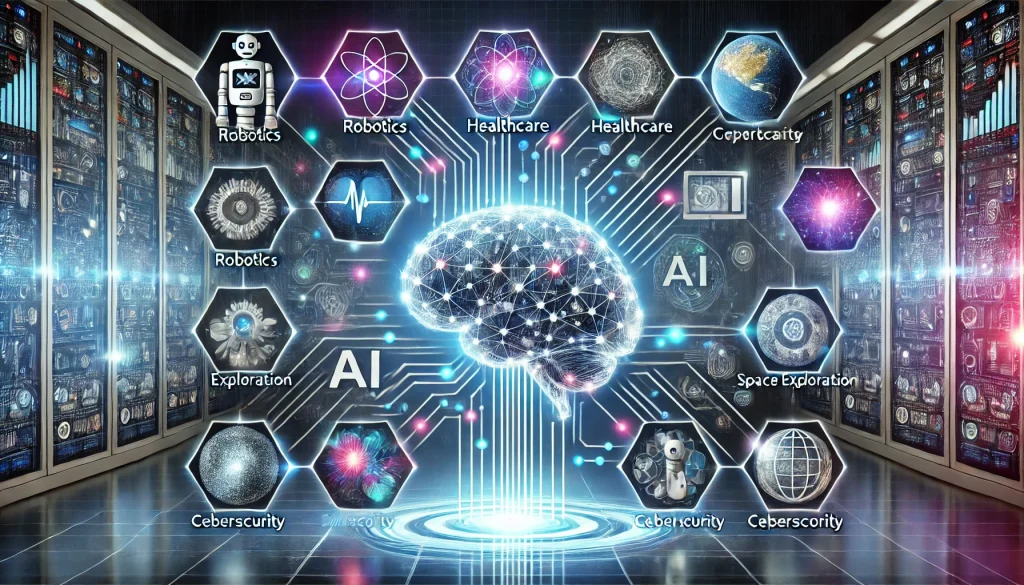
Applications & Capabilities
How Does It Work?
At its foundation, this AI model relies on deep learning techniques trained on vast and diverse datasets to recognize patterns in language, logic, and structure. Through repeated exposure to examples, it learns how words, ideas, and concepts relate to one another, allowing it to generate coherent and meaningful responses. Each prediction is shaped by probabilities refined over time, improving accuracy and fluency.
What sets it apart is its ability to adjust responses based on context and ongoing interaction rather than treating each prompt in isolation. By tracking conversational cues, intent, and prior exchanges, the model delivers answers that feel more relevant and tailored to the user’s needs. This adaptive behavior enables more natural dialogue, better problem-solving, and stronger alignment with real-world use cases.
Advantages & Limitations
| Pros | Cons |
|---|---|
| More accurate and insightful responses | Requires significant computational resources |
| Faster and more efficient processing | Ethical concerns over AI-generated content |
| Can handle complex, nuanced tasks | Still prone to occasional biases |
| Stronger multimodal capabilities | Higher costs for business adoption |
How Can You Use GPT-4.5?
1. Content Creation
From blog writing to ad copy, this AI-powered system enhances creativity while maintaining human-like fluency.
Example: A digital marketer leverages AI to generate compelling social media posts in seconds.
2. Coding & Software Development
Programmers can use it for debugging, script generation, and optimization suggestions, streamlining the development process.
Example: A developer stuck on a Python error receives immediate, step-by-step debugging assistance.
3. Customer Support Automation
Businesses integrate AI-driven chatbots to enhance customer service, providing real-time solutions with a human touch.
Example: An e-commerce platform reduces response times by using AI to answer FAQs effectively.
4. Educational Support
Students and educators alike benefit from AI-assisted tutoring, research assistance, and explanation of complex concepts.
Example: A university student struggling with calculus gets simplified explanations and step-by-step solutions.
5. Medical & Research Assistance
This AI model supports medical professionals by summarizing research, assisting in diagnoses, and analyzing trends in healthcare.
Example: A doctor quickly scans AI-generated summaries of recent studies on emerging treatments.
Conclusion
GPT-4.5 represents a major step forward rather than a minor upgrade, expanding what AI can do in writing, reasoning, and problem-solving while making interactions feel more natural and human.
As OpenAI’s largest model so far, it brings stronger performance in creative work, complex planning, and real-world applications, with growing public interest highlighted by discussion around the announcement and accompanying video.
With expected gains in memory, multimodal abilities, and adaptability, GPT-4.5 signals a shift toward deeper integration of AI into everyday tasks and marks a clear move toward the next stage of AI development.
FAQ
Is GPT-4.5 free to use?
While OpenAI offers limited free access, the full capabilities of GPT-4.5 are available through a subscription model.
How is GPT-4.5 different from GPT-4?
GPT-4.5 has better memory, faster response times, and improved creativity compared to GPT-4.
Can GPT-4.5 generate images?
Yes! It has enhanced multimodal capabilities, meaning it can interpret and create images alongside text.
Resources
- OpenAI. GPT-4.5 and the Future of AI Innovation
- MIT Technology Review. How Advanced AI Models Are Changing the Way We Work
- Harvard AI. Advances in Artificial Intelligence Research
- Stanford AI Lab. Foundations and Frontiers of Artificial Intelligence
- Alignment Forum. Perspectives on AI Alignment and Progress
