

SpaceX is one of the most influential private companies in the world today. From launching reusable rockets to deploying thousands of satellites and sending astronauts into orbit, the company has transformed the space industry. Yet one question continues to draw public interest: Who owns SpaceX?
As of today, Elon Musk remains the largest shareholder and controlling figure in SpaceX. His ownership stake is estimated at roughly 42% of equity, but his voting control is significantly higher due to a dual-class share structure, giving him decisive influence over strategic decisions, technology direction, and funding allocation. This arrangement allows Musk to maintain long-term focus on audacious projects like Starship and Starlink without quarterly public scrutiny.
What Is SpaceX and Why Ownership Matters
SpaceX, officially known as Space Exploration Technologies Corp., was founded in 2002 with a mission to reduce the cost of space travel and make life multiplanetary. Over the years, it has grown into a dominant force in commercial spaceflight, competing with and often surpassing legacy aerospace companies.
Ownership matters because SpaceX is not just another technology startup. It operates in a highly strategic industry involving national security, government contracts, and long-term scientific goals. Knowing who owns SpaceX helps explain why the company can take risks that public companies often avoid, such as investing billions into unproven technologies like fully reusable heavy-lift rockets.
Because SpaceX is privately owned, its shares are not traded on public stock exchanges. Instead, who owns SpaceX comes down to a combination of its founder, private investors, and employees.
Who Owns SpaceX? Elon Musk’s Central Role
When asking who owns SpaceX, the answer begins — and largely ends — with Elon Musk.
Founder, CEO, and Chief Decision-Maker
Elon Musk founded SpaceX using his own money after selling PayPal. From the beginning, he played a hands-on role in both engineering and strategy. Today, Musk serves as:
- Founder
- Chief Executive Officer (CEO)
- Chief Technical Officer (CTO)
This combination of roles is unusual for a company of SpaceX’s size and gives Musk direct influence over both technical direction and business decisions.
Elon Musk’s Ownership Stake
Elon Musk is the largest individual owner of SpaceX, holding a controlling stake in the company. While SpaceX does not publicly disclose exact ownership percentages, multiple credible reports indicate that Musk owns well over 40% of the company and controls a majority of the voting power.
This voting control is central to understanding who owns SpaceX, because it means Musk has final authority over decisions such as:
- Rocket development priorities
- Mars colonization plans
- Whether or not SpaceX should go public
So when people ask who owns SpaceX, Musk is not just the biggest shareholder — he is the person who ultimately controls the company.
Other Owners of SpaceX: Major Investors and Stakeholders
Although Elon Musk is the dominant owner, he is not the only one. A complete answer to who owns SpaceX also includes private investors, institutions, and employees.
Institutional and Venture Capital Investors
Over the years, SpaceX has raised billions of dollars through private funding rounds. These investments have helped the company scale operations, develop new rockets, and expand its satellite internet service, Starlink.
Some of the most notable SpaceX investors include:
- Alphabet (Google) – Invested heavily in SpaceX, particularly due to interest in Starlink’s global internet potential.
- Fidelity Investments – One of the largest institutional holders of SpaceX shares.
- Baillie Gifford – A long-term growth investor known for backing innovative technology companies.
- Founders Fund – A venture capital firm with early involvement in SpaceX.
These investors collectively own a significant portion of SpaceX, but none individually come close to Musk’s level of control. Their influence is typically limited to board participation and advisory input rather than operational authority.
Employee Ownership and Stock Compensation
Another important part of answering who owns SpaceX involves employees. SpaceX offers equity compensation to many of its engineers, executives, and senior staff. This means:
- Employees may own small shares of the company
- Stock options help attract top technical talent
- Long-term employees can benefit financially if the company’s valuation rises
Employee ownership does not translate into control, but it does represent a meaningful slice of SpaceX’s total equity.
Does the Government Own SpaceX?
A common misconception tied to who owns SpaceX is that NASA or the U.S. government has ownership. This is false.
The government does not own SpaceX. However, it is one of the company’s largest customers.
SpaceX has secured major contracts from:
- NASA (ISS resupply missions, astronaut transport, lunar lander projects)
- The U.S. Department of Defense (satellite launches and national security missions)
These contracts provide revenue and stability but do not grant ownership or control. SpaceX remains a private company owned by Musk and private investors.
How SpaceX Ownership Has Changed Over Time
In the early years, Elon Musk almost entirely owned SpaceX. As the company raised funds, ownership diluted slightly, but Musk preserved control. This historical context is crucial to understanding who owns SpaceX today.
Even as new investors joined, Musk structured deals to maintain voting dominance. That is why, despite dilution, who owns SpaceX has remained consistent for over two decades.
Early Years
In its early days, SpaceX was almost entirely owned by Elon Musk. He personally funded the company during its most difficult period, including the near-failure phase before its first successful Falcon 1 launch.
Later Funding Rounds
As SpaceX expanded, it raised capital through private funding rounds. Each round introduced new investors and diluted existing ownership slightly. However, dilution was offset by rapid increases in company valuation.
Despite these changes, Musk structured funding deals to preserve control. As a result, even though he owns a smaller percentage today than he did in 2002, his influence remains dominant.
Who Owns SpaceX Subsidiaries Like Starlink?
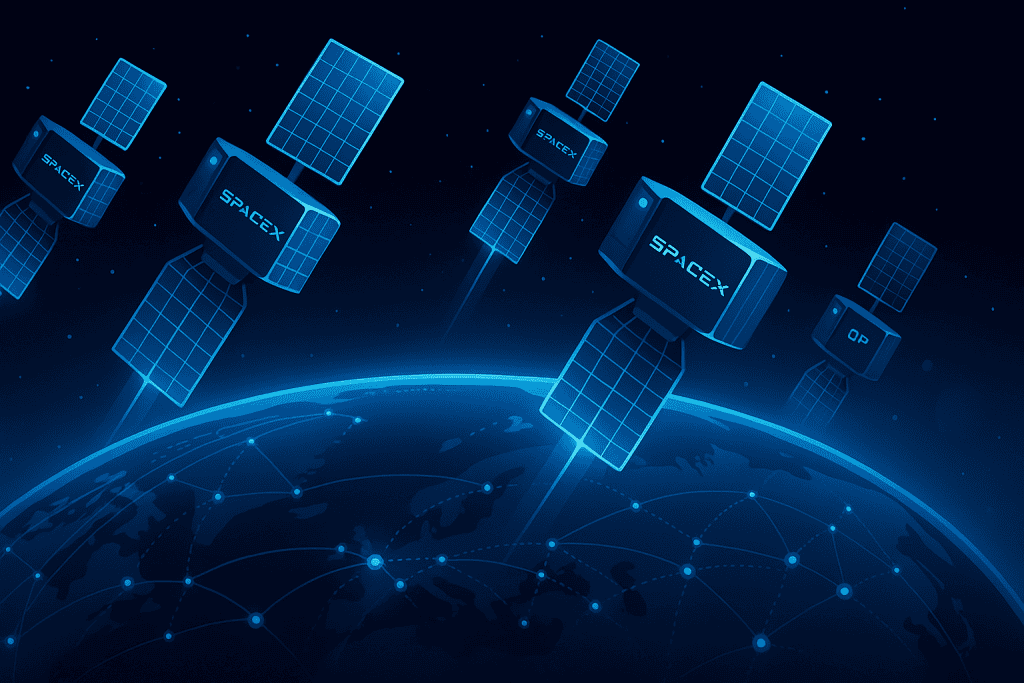
Starlink, SpaceX’s satellite internet division, is fully owned by SpaceX. That means ownership of Starlink ultimately traces back to the same owners:
- Elon Musk
- Private investors
- Employees with equity
There has been speculation that Starlink could be spun off into a separate public company in the future. If that happens, ownership structures would change — but as of now, Starlink remains part of SpaceX.
Will Ownership Change If SpaceX Goes Public?
One of the biggest unanswered questions surrounding who owns SpaceX is whether the company will eventually go public.
IPO Possibilities
There have been recurring reports that SpaceX is preparing for a potential IPO, possibly tied to Starlink rather than the entire company. If an IPO happens:
- Public investors would gain ownership
- Musk’s percentage ownership would likely decrease
- Musk would still retain control through voting shares
However, Elon Musk has repeatedly stated that SpaceX will remain private until its Mars ambitions are firmly established. That suggests any IPO is still a long-term possibility rather than an immediate plan.
Why SpaceX’s Ownership Structure Matters
The private, founder-focused ownership model is one of the reasons SpaceX can pursue high-risk, high-reward projects without the typical market pressures that come with being publicly listed. This structure allows for:
- Long-range planning free from quarterly earnings pressures
- Heavy investment in groundbreaking technologies like reusable rockets and orbital internet
- Strategic flexibility during funding rounds and secondary markets
- Retention of core talent through meaningful equity participation
This ownership approach — dominated by Musk’s vision and supported by strategic partners — has enabled SpaceX to become a leader in commercial spaceflight, satellite internet deployment, and next-generation launch systems.
Conclusion
To summarize clearly, SpaceX is a privately held company primarily owned and controlled by Elon Musk, who is its largest shareholder and decision-maker. While the company has raised capital from private and institutional investors, those investors hold minority stakes and do not have controlling power. In addition, SpaceX employees own shares through stock-based compensation programs, which helps align their interests with the company’s long-term mission and growth.
The U.S. government does not own SpaceX, and the company is not publicly traded, meaning the general public currently has no ownership stake. So when people ask who owns SpaceX, the most accurate answer is that SpaceX is a private company controlled by Elon Musk, supported by institutional investors, and structured to pursue long-term space exploration goals rather than short-term public market pressures.
Resources
- Barron’s. Tesla Stock Rises as SpaceX and xAI Fuel Investor Interest
- Built In. What Is SpaceX?
- SWOT Template. SpaceX Owners
- The Guardian. Elon Musk Is Taking SpaceX’s Minority Shareholders for a Ride
- We Do Your Group. From Humble Beginnings to Space Exploration: The Inspiring Story of Elon Musk and SpaceX