
In cybersecurity, few strategies are as practical and underrated as Network Segmentation. It may not sound flashy at first, but it plays a major role in keeping modern systems secure, organized, and resilient. As businesses rely on cloud platforms, connected devices, remote workers, and digital transactions, a single flat network becomes increasingly risky. When everything is connected to everything else, one mistake, one stolen password, or one infected device can create a path for attackers to move freely.
That is why Network Segmentation matters. It divides a larger network into smaller, controlled sections so organizations can decide who and what gets access to each area. This reduces unnecessary exposure and limits damage if an incident occurs. In a world shaped by ransomware, insider risk, and increasingly complex digital operations, understanding this concept is no longer optional. It is a smart, foundational defense that supports better security, stronger performance, and more confident business growth.
What is Network Segmentation
Network Segmentation is the cybersecurity practice of dividing a larger computer network into smaller, isolated sections to improve security, control traffic, and protect sensitive resources. Each segment can have its own access rules, monitoring policies, and security controls, making it harder for unauthorized users or malicious activity to spread across the environment.
You can think of it like dividing a large office building into badge-protected departments. Not everyone needs access to finance, HR, the server room, and executive offices. In the same way, Network Segmentation ensures that users, devices, and applications only reach the parts of the network they actually need. Related terms include microsegmentation, network partitioning, and security zoning, though each may vary slightly in scope and granularity.
Breaking Down Network Segmentation
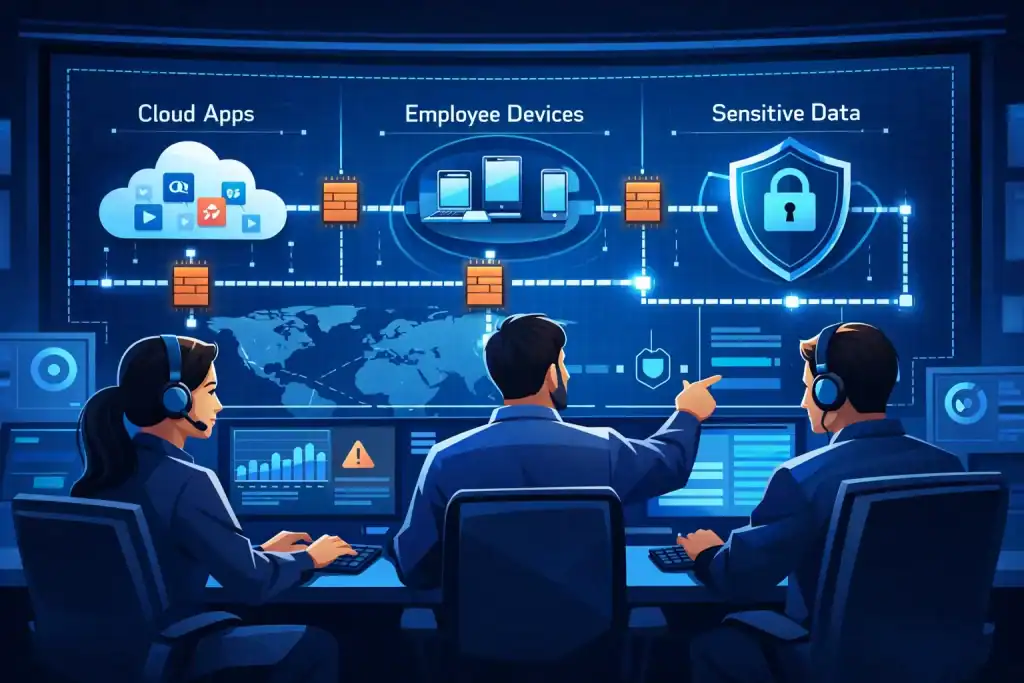
At its core, Network Segmentation is about reducing trust and increasing control. Instead of treating the network as one big open space, organizations divide it into smaller environments based on role, sensitivity, function, or risk level. This matters because cyber incidents rarely stay in one place unless there is something stopping them.
A segmented network often includes firewalls, virtual LANs, access control lists, identity-aware rules, and monitoring tools. Together, these components help define boundaries and inspect traffic moving between segments. A company may separate employee workstations from production servers, guest Wi-Fi from internal systems, or finance applications from general office tools. These boundaries make the environment easier to manage and far safer to defend.
One of the biggest advantages of Network Segmentation is limiting lateral movement. If an attacker compromises one endpoint, they should not be able to jump straight to critical databases or payment systems. Segmentation acts like internal security doors. Even if one door is breached, others remain locked.
It also supports the principle of least privilege. Employees in marketing usually do not need direct access to payroll infrastructure. Developers may need test environments but not customer billing records. By aligning access with actual job needs, organizations reduce the attack surface and simplify oversight.
There is also an operational benefit. Segments can reduce unnecessary broadcast traffic, improve performance, and make troubleshooting easier when designed properly. For example, a retailer might isolate its point-of-sale systems from its corporate email network. A hospital may place connected medical devices in a tightly controlled segment to reduce risk to patient care operations. A manufacturer can separate IT from operational technology to protect industrial processes from disruption.
In many ways, Network Segmentation reflects a more mature way of thinking about infrastructure. Rather than assuming users and devices are trustworthy because they are “inside” the network, it assumes access should be earned, verified, and limited. That mindset fits naturally with modern security strategies and helps organizations stay prepared as threats continue to evolve.
History of Network Segmentation
The idea behind Network Segmentation has existed for decades, though its purpose has changed over time. Early networks were often flat and built more for connectivity than security. As organizations expanded and cyberattacks became more damaging, businesses needed better internal boundaries. Firewalls and VLANs introduced more control in the 1990s, while zero trust and micro segmentation pushed the concept further in later years. Today, Network Segmentation is considered a key part of modern cyber defense because it helps organizations contain risk in increasingly complex environments.
| Time Period | Key Development |
|---|---|
| 1970s–1980s | Networks were mostly flat, with minimal internal isolation |
| 1990s | Firewalls and VLANs introduced structured traffic control |
| 2000s | Rising cybercrime pushed companies to strengthen internal defenses |
| 2010s | Zero trust models encouraged more granular access decisions |
| Today | Cloud, hybrid work, and microsegmentation expanded adoption |
Types of Network Segmentation

Physical Segmentation
This method uses separate physical infrastructure, such as distinct switches, routers, or cabling, to isolate critical systems. It is common in highly sensitive environments where strong separation is required.
Logical Segmentation
Logical segmentation creates boundaries through software and configuration rather than separate hardware. VLANs, subnets, and internal firewall rules are common examples. This is often the most practical model for businesses.
Microsegmentation
Microsegmentation takes a more detailed approach by controlling traffic at the workload, application, or device level. It is especially useful in cloud and virtualized environments where precision matters.
Cloud Segmentation
As organizations move services into the cloud, segmentation is applied to virtual networks, workloads, and applications. This allows teams to secure resources even when they are distributed across multiple platforms.
| Type | Description |
|---|---|
| Physical | Uses separate hardware for stronger isolation |
| Logical | Divides networks through software and policies |
| Microsegmentation | Applies highly granular controls to specific assets |
| Cloud | Protects virtual workloads and cloud-based services |
How does Network Segmentation work?
Network Segmentation works by identifying important systems, grouping them by purpose or sensitivity, and then controlling how traffic moves between those groups. Security teams first map assets such as databases, endpoints, servers, cloud apps, and user roles. After that, they create rules that define which connections are allowed and which should be blocked or inspected.
For example, a company might allow HR staff to access payroll software but prevent general employees from reaching that segment. A development server may communicate with a testing environment but not with production finance systems. Monitoring tools then watch for suspicious movement between segments. This makes abnormal behavior easier to detect and contain.
When implemented well, Network Segmentation turns a broad, exposed environment into a structured one where visibility, control, and response are much stronger.
Pros & Cons
Before adopting Network Segmentation, organizations should understand both the benefits and the challenges. It is highly effective, but it requires planning, maintenance, and a clear understanding of business workflows.
| Pros | Cons |
|---|---|
| Limits lateral movement by attackers | Can be complex to design |
| Protects sensitive assets more effectively | May require investment in tools and expertise |
| Supports compliance efforts | Poor planning can disrupt workflows |
| Improves visibility and access control | Ongoing maintenance is needed |
| Aligns with zero trust strategies | Over-segmentation can create inefficiencies |
Uses of Network Segmentation
Network Segmentation is widely used because different industries face different risks, yet all need stronger control over data and systems. In healthcare, hospitals use it to isolate clinical devices, patient databases, and administrative systems. That separation helps reduce exposure and supports privacy requirements. In finance, banks apply segmentation to protect payment systems, trading platforms, and customer records from unauthorized access.
Healthcare
A hospital may separate imaging machines, nurse stations, and electronic records so a problem in one area does not affect the rest of the environment. This is especially useful when legacy devices cannot support modern defenses.
Finance
Financial firms rely on Network Segmentation to isolate payment infrastructure and limit insider access to sensitive systems. It adds friction for attackers and improves audit readiness.
Manufacturing
Manufacturers often separate office networks from operational technology. This reduces the chance that malware from an employee laptop will disrupt machinery or production lines. It also helps protect critical infrastructure from targeted attacks.
Retail
Retailers use segmentation to keep point-of-sale systems apart from guest Wi-Fi, marketing tools, and back-office operations. If one area is compromised, payment-related systems remain better protected.
Education and Modern Business
Universities and growing businesses also benefit. Schools can separate student traffic from administrative systems, while modern companies can isolate cloud workloads, remote devices, and sensitive applications. This becomes even more important when dealing with Hacking, rising Cyber Threats, manipulated content like Deepfakes, routine maintenance such as Windows Update, and remote access tools like Express VPN. Used wisely, Network Segmentation improves resilience without sacrificing flexibility, making it one of the most practical defenses available to organizations today.
Resources
- Cisco. What is Network Segmentation?
- Comptia. What Is Network Segmentation and Why Does It Matter?
- Fortinet. Network Segmentation
- Paloalto Networks. What Is Network Segmentation?
- Vmware. What is network segmentation?