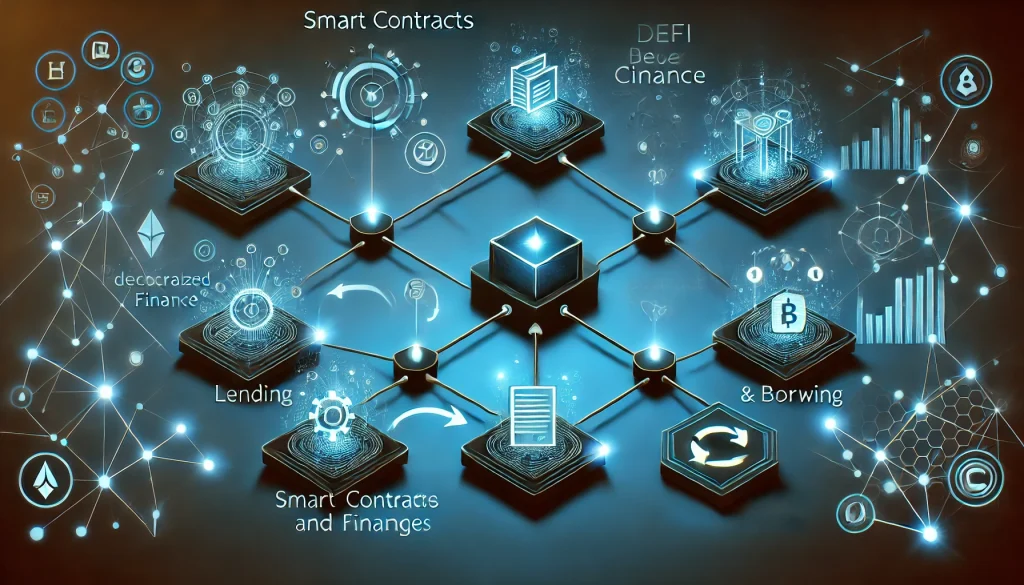

A few years ago, I sat in a crowded conference room listening to a fintech founder describe how one Smart Contract replaced three lawyers, two weeks of paperwork, and countless follow-up emails. I remember thinking, “That sounds dramatic.” But the more I learned, the more I realized it wasn’t hype. It was efficiency coded into reality.
In the world of Economic Analysis, a Smart Contract isn’t just a technical tool. It’s a shift in how agreements function inside our Economic System. Instead of relying on trust and manual enforcement, rules are written into code and executed automatically. Payments release themselves. Ownership transfers without delay. Conditions verify instantly.
For analysts, investors, and industry professionals, understanding how to build and evaluate a Smart Contract is becoming as essential as reading a balance sheet. Whether you’re designing automated revenue sharing, modeling risk during a market crash, or improving an investment plan, knowing how these contracts work gives you an edge.
Let’s walk through exactly how to create and analyze one, step by step.
Smart Contract Materials or Tools Needed
Before you write the Contract, you need the right setup. Think of it like preparing your kitchen before cooking. If the tools are missing, you’ll waste time.
At minimum, you’ll need a development environment, a blockchain platform, a wallet, and test funds. Most beginners use Ethereum because of its mature ecosystem and strong documentation.
Here’s a quick overview:
| Tool/Material | Purpose | Example |
|---|---|---|
| Blockchain Platform | Hosts the Smart Contract | Ethereum |
| Development Framework | Write and test code | Hardhat or Truffle |
| Programming Language | Code the contract | Solidity |
| Crypto Wallet | Deploy and interact | MetaMask |
| Test Network | Safe environment | Goerli Testnet |
You’ll also need basic programming knowledge and a clear understanding of the economic agreement you’re automating. That clarity matters more than advanced coding skills.
Smart Contract Instructions

Step 1: Define the Economic Objective
Before touching code, define what the Smart Contract should accomplish. Is it automating dividend distribution? Managing supply chain payments? Locking funds until performance targets are met?
Write the agreement in plain language first. For example: “If delivery is confirmed, release payment within 24 hours.” In Economic Analysis, clarity of incentives and outcomes is everything. If the logic is flawed in plain English, it will fail in code.
Sketch the flow of funds and responsibilities. Identify triggers and outcomes. Treat it like designing an automated policy.
Step 2: Set Up Your Development Environment
Install Node.js, then set up Hardhat or Truffle. Connect your wallet, such as MetaMask, to a test network.
This step feels technical, but it’s straightforward if you follow guides like FreeCodeCamp’s tutorial on writing and deploying your first contract.
Create a new project folder. Initialize your framework. Make sure your wallet holds test ETH. You’re building in a sandbox, so mistakes won’t cost real money.
Step 3: Write the Smart Contract Code
Now you translate your agreement into Solidity.
Define your contract. Set state variables. Create functions that trigger actions. For example, you might write a function that releases funds when a condition is true.
Keep it simple. Complexity increases risk. According to G2’s breakdown of contract fundamentals, most real-world use cases rely on clear conditional logic, not elaborate architecture.
Comment your code. Future you will thank present you.
Step 4: Test the Smart Contract Thoroughly
Testing is where many projects cut corners. Don’t.
Simulate different scenarios. What happens if someone sends incorrect input? What if funds are insufficient? What if timing conditions fail?
In Economic Analysis terms, you’re stress-testing the model, similar to evaluating trading strategies under volatile conditions. A Smart Contract must behave predictably across all scenarios.
Use automated testing scripts inside Hardhat. Run edge cases repeatedly.
Step 5: Deploy to a Test Network
Deploy your Smart Contract to a public testnet. This mirrors real blockchain conditions without financial risk.
Once deployed, interact with it using your wallet. Execute functions. Observe gas fees. Confirm that transactions finalize correctly.
GeeksforGeeks offers a clear explanation of how blockchain deployment works if you need background reading.
Watch the transaction logs carefully. Transparency is one of the biggest strengths of blockchain systems.
Step 6: Analyze Economic Impact
Now step back and evaluate the Smart Contract from an economic standpoint.
Does it reduce transaction costs? Does it remove intermediaries? Does it change risk allocation?
For example, in a market crash, automated liquidation clauses could trigger instantly. That’s powerful, but potentially dangerous if poorly designed.
According to Forbes Business Council insights, Smart Contract automation can streamline operations, reduce fraud, and improve transparency across industries.
Measure efficiency gains. Model potential failure scenarios. Consider regulatory implications. This is where technology meets policy.
Smart Contract Tips and Warnings

Writing a Smart Contract feels empowering. But code is unforgiving. Once deployed on a public blockchain, it cannot easily be changed.
First tip: Keep it simple. The more logic you add, the more attack surface you create.
Second: Audit everything. Even small mistakes can lock or lose funds permanently.
Third: Understand gas fees. During periods of network congestion, costs spike. This affects economic feasibility.
Here’s a quick reference table:
| Tip | Why It Matters |
|---|---|
| Keep logic minimal | Reduces security vulnerabilities |
| Test extreme scenarios | Prevents financial loss |
| Use reputable libraries | Avoids reinventing risky code |
| Document assumptions | Helps in Economic Analysis reviews |
| Consider regulation | Ensures compliance |
Common mistakes include copying code blindly, misunderstanding how blockchain timestamps work, and ignoring security vulnerabilities like reentrancy attacks.
LogRocket’s article on real-world applications shows how poorly designed automation can create unintended consequences.
Also, never treat Smart Contract deployment like picking the Best stocks to buy. It’s not speculation. It’s infrastructure.
Finally, remember that a Smart Contract operates within a broader Economic System. It doesn’t replace economics. It automates specific rules inside it.
Conclusion
Creating a Smart Contract isn’t just about writing code. It’s about translating economic logic into automated execution.
You start by defining the agreement clearly. Then you set up your environment, write concise code, test rigorously, and deploy carefully. After that, you analyze its real-world impact.
For professionals working in Economic Analysis, understanding this process offers a serious advantage. Whether designing a transparent revenue-sharing model, building automated compliance, or strengthening an investment plan, these tools are reshaping how agreements function.
Don’t be intimidated. Start small. Build a simple payment release contract. Test it. Break it. Improve it.
The future of digital agreements isn’t abstract. It’s programmable. And once you understand how a Smart Contract works, you’ll see economic systems differently.
FAQ
What is a smart contract in economic analysis?
A smart contract is a self-executing agreement with terms directly written into code. It automates economic transactions when predefined conditions are met, ensuring accuracy and transparency.
How can smart contracts benefit economic analysis?
They reduce the need for intermediaries, lower transaction costs, and ensure real-time data integrity, making them ideal for decentralized finance (DeFi) and other economic models.
What tools do I need to deploy a smart contract?
You’ll need Solidity, MetaMask, Ethereum Testnet, and Remix IDE to write, test, and deploy your smart contract effectively.
Resources
- FreeCodeCamp. How to Write and Deploy Your First Smart Contract.
- Forbes.
- G2. Smart Contracts: What They Are and How They Work.
- Geeks for Geeks. Smart Contracts in Blockchain.
- LogRocket. Examples and Applications of Smart Contracts.