
Cryptocurrency can sometimes feel like a world filled with strange words, complex systems, and fast-moving trends that are hard to follow. That is exactly why understanding terms like Root Coin matters. In the context of blockchain and digital assets, Root Coin refers to a token connected to The Root Network, a project designed to support digital ownership, interoperability, and connected web3 experiences. For beginners, the term may sound technical, but the idea behind it is easier to understand once it is broken into simple parts. Think of it like learning the name of a new tool before learning what it actually does. When people understand Root Coin, they gain a clearer picture of how tokens work inside modern blockchain ecosystems and why some coins are valued not just for trading, but for utility as well. In a space where confusion is common, knowing what Root Coin means can help readers feel more informed, more confident, and less overwhelmed.
What is Root Coin
Root Coin is the native digital token associated with The Root Network, a blockchain ecosystem built to support broader web3 experiences. In simple terms, it is a crypto asset that helps power activity within that environment while also functioning as a tradeable coin in the wider market. Some people may also refer to it as ROOT token, ROOT crypto, or the root network coin, but the meaning remains largely the same. It represents value, access, and utility within its connected network. For a beginner, the easiest way to understand Root Coin is to think of it as both a tool and an asset. It is a tool because it can support functions inside the ecosystem, and it is an asset because it can also be traded, monitored, and discussed like other cryptocurrencies.
Breaking Down Root Coin
The term Root Coin becomes much easier to understand when it is broken into its two parts. The word “root” usually suggests something foundational. In everyday life, roots are what hold a tree in place and help it grow. In technology, the word often points to something central or deeply connected to the core of a system. That makes the name feel fitting in a blockchain context, because Root Coin is linked to a broader network designed to support digital interaction and infrastructure.
The second part, “coin,” is more familiar. A coin is usually seen as a unit of value. In cryptocurrency, a coin can be bought, sold, stored, transferred, or used inside a digital ecosystem. When the two words come together, Root Coin can be understood as a foundational digital asset that belongs to a specific blockchain environment.
That sounds technical, but the concept is actually very human. Imagine entering a large theme park. At the gate, you are given a special pass that lets you enter rides, unlock attractions, and move more smoothly through the space. That pass also has value because people can buy it, sell it, or hold it for later. Root Coin works in a similar way inside its own ecosystem. It is not just a token with a price. It is also something tied to how people interact with the network itself.
This is where many readers start to see the difference between a random cryptocurrency and a utility-based token. A lot of coins are discussed mainly because of speculation, but Root Coin has a role that reaches beyond charts and hype. It exists within a system designed for participation, access, and digital engagement. That does not remove market risk, of course, but it gives the coin a layer of meaning that goes beyond trading.
Another helpful way to think about Root Coin is to picture it as a key. A key does not have much purpose when sitting alone on a table, but once it is connected to a door, a room, or a useful space, its value becomes obvious. Root Coin works like that key within its ecosystem. Its purpose becomes clearer when it is viewed in relation to the network, the services, and the blockchain functions it connects to.
History of Root Coin
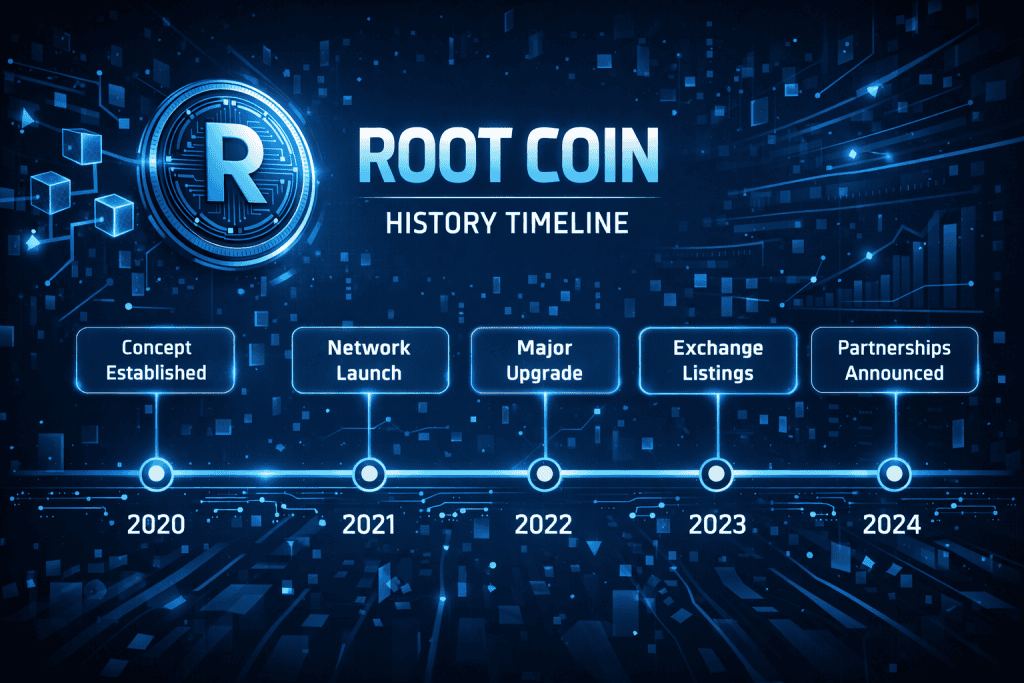
The history of Root Coin is closely linked to the rise of blockchain ecosystems that wanted to do more than simply process payments. As the crypto space matured, many projects began focusing on interoperability, digital identity, ownership, and user experience. The Root Network emerged in this broader movement, aiming to support connected digital environments rather than operate as an isolated blockchain. Root Coin developed as the native token within that ecosystem, giving users and observers a way to understand the network through a single core asset. Its history reflects a wider shift in crypto culture, where coins increasingly became tied to practical ecosystem roles instead of existing only as speculative instruments. In that sense, the story of Root Coin is part of the larger story of how web3 projects evolved from simple token launches into more layered and utility-driven platforms.
| Historical Aspect | Description |
|---|---|
| Origin | Connected to the development of The Root Network |
| Early Role | Designed to support activity within a broader blockchain ecosystem |
| Industry Context | Emerged during the shift toward utility-focused web3 projects |
| Market Identity | Recognized as both a functional token and a tradeable digital asset |
Types of Root Coin
Utility Root Coin
This type refers to Root Coin as a functional token used inside its network environment. In this form, the coin is understood as something that supports blockchain activity, access, and interaction. It is the version most closely tied to utility.
Trading Root Coin
This type reflects how Root Coin appears in the cryptocurrency market. Here, it is treated as a digital asset that can be tracked, bought, sold, and analyzed. This is the version most visible to investors and traders.
Ecosystem Root Coin
This type focuses on Root Coin as a symbol of participation within a larger digital system. In this sense, it is connected not just to value, but to engagement with services, applications, and web3 experiences built around the network.
| Type | Main Function |
|---|---|
| Utility Root Coin | Supports network activity and practical blockchain functions |
| Trading Root Coin | Operates as a market-facing cryptocurrency |
| Ecosystem Root Coin | Connects users to wider platform participation |
How does Root Coin work?
Root Coin works by acting as the main token within its blockchain ecosystem. In practical terms, it helps connect users, services, and digital functions inside the network. A token like this can serve as a medium for transactions, participation, or ecosystem support depending on how the platform is structured. The easiest way to understand it is to imagine fuel in a machine. The machine may be the larger blockchain environment, while Root Coin helps keep parts of that environment active and usable. It also works on another level, since people outside the ecosystem may treat it as an investment or tradeable asset. This means Root Coin has a dual nature. Inside the network, it can support utility and interaction. Outside the network, it can be followed for price, speculation, and market behavior. That blend of utility and visibility is one reason the coin stands out in modern crypto discussions.
Pros & Cons
Before exploring Root Coin in more depth, it helps to look at its strengths and limitations. Like many digital assets, it has promising qualities, but it also comes with uncertainty and risk.
| Pros | Cons |
|---|---|
| Connected to a broader blockchain ecosystem | Can be difficult for beginners to understand at first |
| Has practical utility beyond simple trading | May experience strong market volatility |
| Relevant to web3 and digital participation | Adoption depends on growth of the wider ecosystem |
| Can attract both users and investors | Crypto-related risk remains high overall |
Uses of Root Coin
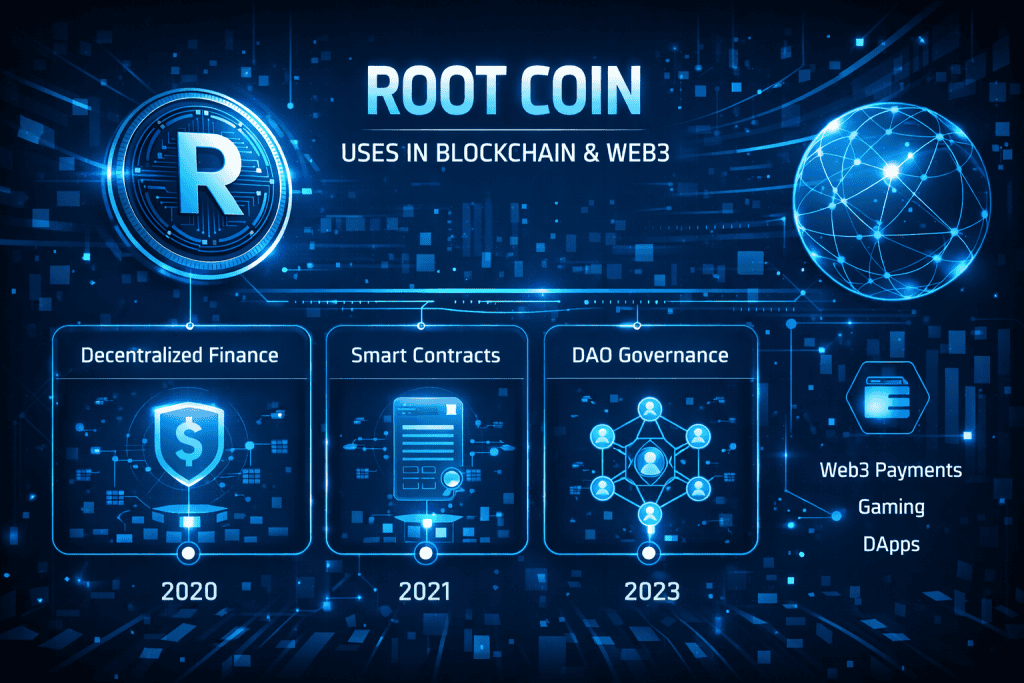
Root Coin is used in several practical ways within the blockchain ecosystem. While many people first notice it as a coin listed on market platforms, its role goes beyond trading alone. It is also linked to network activity, ecosystem participation, and broader web3 development. In real-world use, the term appears in discussions about digital assets, blockchain infrastructure, and connected online experiences. This makes Root Coin relevant not only to investors, but also to developers, researchers, and users trying to understand how token-based systems work in modern crypto environments. Depending on the setting, it may be viewed as a utility token, a tradeable asset, or a part of a larger digital framework. In industry-specific terms, it can be relevant in blockchain services, digital ownership models, interoperability systems, and metaverse-related applications. That broader usefulness gives the term more depth than it might seem to have at first glance.
Trading and Market Activity
One of the most common uses of Root Coin is in cryptocurrency trading. Traders and investors monitor market movement, volume, and sentiment to decide whether to buy, sell, or hold the asset. In this context, the coin is treated much like other crypto assets that gain attention through exchange listings and price charts. This is also where terms like root coin price often appear, since market participants want to understand performance and value changes over time.
Network Utility
Root Coin is also used as part of the network environment it belongs to. In practical terms, this means it can support blockchain activity and help facilitate interactions inside the ecosystem. Coins with this kind of role are often valued not just because they can be traded, but because they help power functions within a digital platform.
Ecosystem Participation
Another important use of Root Coin is ecosystem participation. In many blockchain projects, native tokens help connect users to services, applications, or experiences built around the network. In this setting, the coin can represent more than value alone. It can also reflect involvement in a growing digital environment where users engage with tools, assets, and communities.
Industry-Specific Applications
In industry-specific discussions, Root Coin may be connected to web3 infrastructure, digital ownership, interoperability, and metaverse-style systems. This gives it relevance in conversations about how blockchain can be used beyond finance. It is also why analysts sometimes explore ideas such as root coin price prediction, since the coin’s future is often discussed alongside the growth potential of its wider ecosystem.
Resources
- CoinGecko – The Root Network
- CoinMarketCap – The Root Network
- CoinSwitch – ROOT
- MEXC – ROOT Info
- 3Commas – The Root Network