
Let’s talk secrets — not the kind you whisper to a friend over coffee, but the ones you text, email, or share over your favorite messaging app. What if someone, somewhere, was reading them? In the world of cybersecurity, that’s not a far-fetched idea. Data can be intercepted mid-journey. That’s why end to end encryption is such a big deal.
Think of it as sealing your message in an armored truck. From the moment it leaves your device to the moment it reaches your friend’s phone, no one — not hackers, not companies, not even service providers — can crack it open. It’s the digital version of whispering in someone’s ear… through a tunnel only the two of you can access.
What is End to End Encryption?
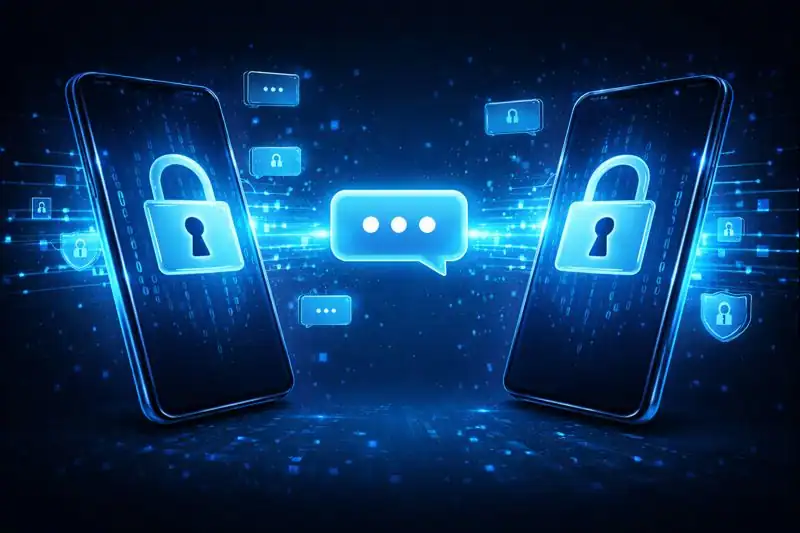
At its heart, end to end encryption is a method of protecting data so only the sender and the intended recipient can access it. Even if someone intercepts it during transmission, they’d just see gibberish — no spoilers, no secrets spilled.
You may hear it called secure messaging, peer-to-peer cryptography, or even device-level protection. Whatever the name, it all boils down to one concept: absolute privacy between endpoints.
Breaking Down End to End Encryption
Imagine sending a letter, but instead of putting it in a regular envelope, you place it in a locked steel box. Only the recipient has the key to open it. That’s how this system works. When you send a message, it’s scrambled on your device using a unique code and only unscrambled on your recipient’s device.
This method involves:
- Plaintext: Your readable message.
- Encryption Algorithm: The lock-maker.
- Public Key: Used to lock the message.
- Private Key: Held by the receiver to unlock it.
Apps like WhatsApp and Signal use this technique so even their servers can’t peek inside your messages. And that’s a good thing.
History of End to End Encryption
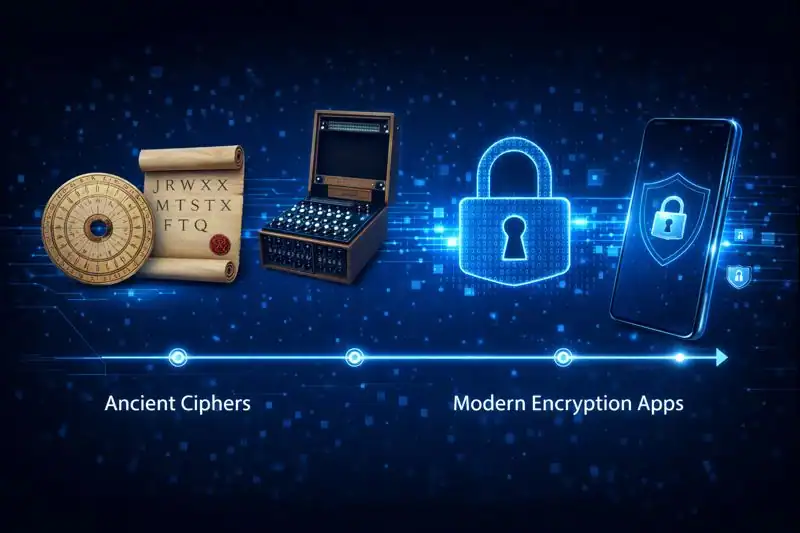
The roots of secure communication stretch back to ancient times, with early examples like the Caesar Cipher used by Roman generals to obscure messages. Over the centuries, secret writing systems evolved, culminating in complex machines like the Enigma during World War II. But it wasn’t until the 1970s that things truly changed, with the invention of public-key cryptography, laying the groundwork for what we now call end to end encryption.
The concept became publicly accessible in 1991 with the release of PGP (Pretty Good Privacy), giving ordinary users the power to secure their emails. Since then, fueled by rising concerns over cyber threats and surveillance, major tech platforms have adopted these secure methods to protect user privacy by default.
| Time Period | Milestone |
|---|---|
| Ancient Times | Caesar Cipher introduced in Roman Empire |
| World War II | Enigma machine used by Nazis; broken by Allied cryptanalysts |
| 1970s | Public-key cryptography developed (Diffie-Hellman, RSA) |
| 1991 | PGP released, popularizing secure digital communication |
| 2010s | Surge in adoption due to privacy awareness and global surveillance concerns |
| Present Day | Standard in messaging, cloud, and enterprise applications |
Types of End to End Encryption
Messaging-Based
The most familiar form. Used in platforms like WhatsApp, Signal, and iMessage, this variation locks down everything you say and send — photos, texts, even voice notes — so that only your conversation partner can access it.
File-Level
This type protects files on your device or in cloud storage. Even if someone gains physical access, without the decryption key, the files remain unintelligible. Google Drive, Dropbox, and others use versions of this to protect stored data.
Email-Based
Apps like ProtonMail use this to protect your emails from snooping. Only you and your recipient can read them, and not even the email service itself can decrypt the content.
How Does End to End Encryption Work?
Let’s break this down into something digestible. You begin with a message — say, “Let’s meet at 7.” Your messaging app scrambles that using the recipient’s public key. Once sent, it travels across the internet in a coded form. When it arrives, the recipient’s private key deciphers it and turns it back into readable text.
At no point during its journey is the message ever exposed in plain language. Not even your service provider can sneak a peek. It’s like mailing a safe with a combination only the receiver knows.
Pros & Cons
Before jumping in with both feet, it’s smart to weigh the good and the not-so-good. While this form of secure messaging is a game-changer, it’s not without complications.
| Pros | Cons |
|---|---|
| Keeps communication private and tamper-proof | Can’t recover lost messages without the decryption key |
| Shields data from hackers and surveillance | Makes monitoring criminal activity more difficult |
| Builds trust between users and platforms | Not all services fully support it |
| Essential for compliance in sensitive industries | Can’t be disabled for targeted law enforcement requests |
The key is to strike the right balance — ensuring privacy without compromising legal or ethical responsibilities.
Uses of End to End Encryption
Let’s take a closer look at how end to end encryption silently powers some of the most important parts of our digital lives. From the messages you send daily to critical operations at national levels, this technology is everywhere — guarding your information like an unseen bodyguard.
Personal Messaging
Whether you’re sending a heartfelt confession or just a goofy meme, end to end encryption ensures that only you and your recipient can read what’s shared. Apps like WhatsApp, Signal, and iMessage rely on this method so your private chats remain private — not even the app provider can see them. It’s your personal cone of silence in a noisy digital world.
Healthcare
In modern medicine, protecting patient privacy is just as important as treatment itself. End to end encryption is now fundamental in telemedicine platforms, digital health records, and online consultations. It’s the virtual equivalent of doctor-patient confidentiality — ensuring that medical conversations and files stay locked away from unwanted eyes, while also meeting strict compliance regulations like HIPAA.
Legal & Finance
For banks, law firms, and financial institutions, confidentiality isn’t optional — it’s everything. End to end encryption secures contracts, account details, and sensitive emails during transmission, preventing costly breaches. Clients and professionals alike benefit from the confidence that their private information is safe from hackers and unauthorized access.
Cloud Collaboration
As remote work grows, so does the need to secure team communication and document sharing. Platforms like Google Workspace and Office 365 now rely on end to end encryption to protect files and real-time edits. It ensures that strategic plans, product blueprints, and business documents remain accessible only to those who should see them — not lurking cyber intruders.
Government & National Security
Governments operate on trust, strategy, and secrecy — and end to end encryption is key to all three. High-level communications, intelligence sharing, and defense coordination depend on secure digital channels. Without it, diplomatic talks or military commands could fall into the wrong hands, turning a data leak into a potential international crisis.
Resources
- ProtonMail – What is End-to-End Encryption?
- Cloudflare – Encryption: How it works
- Signal – Technology overview
- EFF – Surveillance Self-Defense Guide
- Mozilla – Privacy and security with E2EE