
If you’ve ever paused a game or movie just to admire how light spills across a surface, you’ve already witnessed the impact of ray tracing. It’s one of those breakthroughs that quietly reshapes expectations. Suddenly, reflections look believable, shadows feel grounded, and scenes gain a sense of depth that feels almost tangible.
Within today’s technology trends, realism has become the benchmark. Audiences expect visuals that don’t just impress but convince. That demand has pushed graphics beyond shortcuts and approximations into something closer to how our eyes actually see the world. This is where ray tracing has found its moment, transforming digital imagery into something far more immersive and emotionally engaging.
What Is Ray Tracing?
So, what is it exactly? At its simplest, it’s a rendering technique that simulates how light behaves in the real world. Instead of guessing where highlights and shadows should fall, it calculates how light rays travel, bounce, and interact with objects in a scene.
You’ll often hear it described as physically accurate rendering or realistic light simulation. Both descriptions fit. By tracing the path of light from the viewer into a virtual environment, it produces images that feel natural rather than manufactured.
Breaking Down Ray Tracing
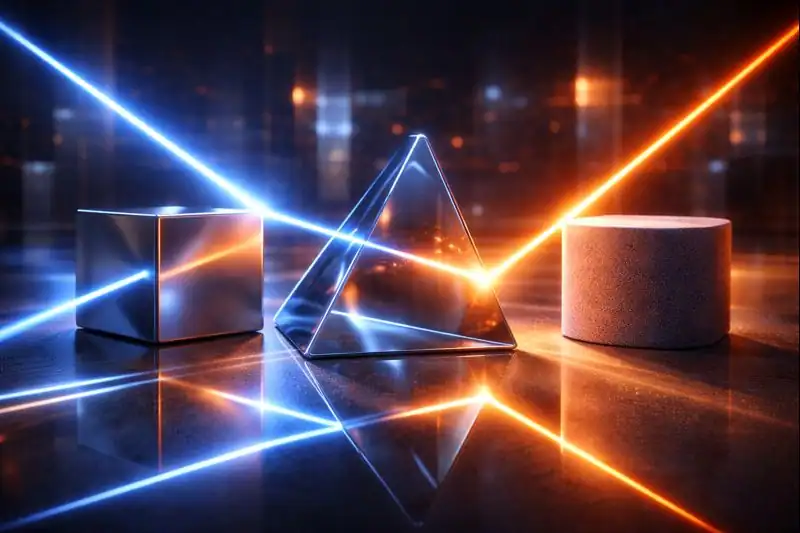
To really understand the concept, imagine standing in a room with a mirror, a window, and a glass table. Light enters through the window, reflects off the mirror, passes through the glass, and softly illuminates the walls. This method recreates that exact process digitally.
Each ray begins at the camera and travels into the scene. When it strikes an object, the system calculates how the surface reacts—whether it reflects light like metal, bends it like glass, or absorbs it like fabric. Those interactions define the final color and brightness of each pixel.
This approach allows it to handle complex effects—soft shadows, accurate reflections, and subtle lighting changes—that older methods struggle to replicate.
History of Ray Tracing
Although it feels modern, it has been around for decades. The idea emerged in academic research long before hardware could support it efficiently.
| Year | Milestone |
|---|---|
| 1969 | Early concepts of ray-based rendering introduced |
| 1980 | Recursive light reflections formalized |
| 1990s | Adopted by film studios for offline rendering |
| 2018 | Consumer GPUs enable real-time ray tracing |
| 2020s | Widespread use across games, design, and simulation |
What changed wasn’t the concept—it was computing power. Thanks to advanced technology, a technique once reserved for hours-long renders now operates in real time.
Types of Ray Tracing
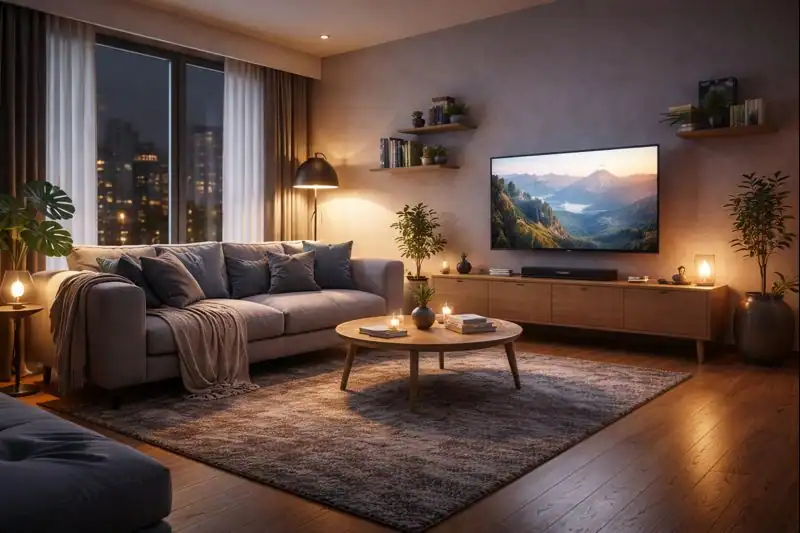
While the general idea of ray tracing involves simulating the behavior of light, there are several variations of the technique, each suited to different applications, performance levels, and artistic goals. Let’s take a closer look at the most prominent types of ray tracing being used today.
Whitted-Style
This is where it all began. Named after Turner Whitted, who formalized it in 1980, Whitted-style ray tracing was the first technique to introduce recursive reflections and refractions. When a ray hits a reflective surface, it spawns a new ray in the reflection direction. Similarly, transparent objects spawn rays that continue through the material. This allows for realistic mirror effects, glass transparency, and direct shadows.
Though relatively basic by today’s standards, Whitted-style ray tracing laid the foundation for everything that followed. It’s particularly effective in scenes where precision reflections—like mirrors, water, and windows—are key visual elements.
Path Tracing
Path tracing builds on the original concept by handling far more complex lighting behaviors. Instead of tracing a single path, this method simulates thousands of rays per pixel that scatter in different directions. These rays collect data from all over the scene, capturing indirect lighting, global illumination, and color bleeding.
Used in high-end render engines like Pixar’s RenderMan and Blender’s Cycles, path tracing is the go-to technique for film and cinematic rendering. It’s what gives animated environments that ultra-realistic softness and nuance—perfect for emotional storytelling and visual depth.
Distributed
While Whitted and path tracing focus on light-object interaction, distributed ray tracing introduces randomized sampling to simulate natural imperfections like motion blur, depth of field, soft shadows, and glossy surfaces.
Let’s say you’re simulating a racing car speeding past the camera. With distributed ray tracing, you can introduce motion blur that mimics the shutter speed of a real-world camera. This level of realism is crucial in cinematography and advertising where natural visual behavior makes a major difference.
Real-Time
This is the superstar of modern gaming and interactive design. Real-time ray tracing is all about delivering the realism of traditional methods—but fast enough for gameplay and dynamic scenes.
Enabled by powerful GPUs like NVIDIA’s RTX series and supported by engines like Unreal Engine and Unity, this approach lets developers simulate realistic lighting, shadows, and reflections during actual gameplay.
Hybrid
Real-time realism is amazing, but still too demanding for many devices. Enter hybrid ray tracing. This technique blends traditional rasterization (the old-school method of drawing pixels fast) with selective ray-based lighting effects.
For example, a game might use rasterization to render the environment but apply ray tracing to compute realistic reflections or soft shadows. This hybrid approach gives players the best of both worlds—speed and beauty.
Bidirectional Path Tracing
This advanced form sends rays from both the camera and the light sources, meeting in the middle. It’s particularly effective for scenes with complex light paths—like caustics (light focused through a curved glass) or small light sources bouncing off reflective objects.
Used in high-end design and film work, bidirectional ray tracing delivers physically accurate images that traditional methods can’t handle well. For example, it’s great for underwater scenes where light dances through rippling surfaces or rooms lit by a single candle reflected off polished metal.
The downside is complexity—it requires more calculations and setup—but the results are often visually stunning.
Ray Marching (Volumetric Ray Tracing)
While not strictly a form of ray tracing in the traditional sense, ray marching is often grouped within the same family. It’s used to simulate fog, smoke, fire, and other volumetric effects that don’t have clear surfaces.
Here, rays “march” step-by-step through a volume, gathering data along the way. This makes it ideal for visual effects where realism depends on subtle shifts in light and density—like clouds glowing at sunset or headlights cutting through fog.
Each type of ray tracing serves a specific purpose. Whether it’s creating cinematic shots, real-time gameplay immersion, or architectural visualizations, the flexibility of these techniques is a major reason what is ray tracing has become such an essential part of digital production.
How Does What Is Ray Tracing Work?
At a technical level, ray tracing follows a predictable sequence. Rays are emitted from the camera, intersect with objects, and generate secondary rays based on surface properties. These rays gather lighting information from the environment and return it to determine final pixel colors.
This process repeats millions of times per frame. While computationally expensive, it produces lighting that responds naturally to movement, materials, and environmental changes—something traditional methods can’t fully replicate.
Pros & Cons
Before adopting ray tracing, it’s important to understand both its strengths and limitations. Like many new inventions, it excels in some areas while demanding compromises in others.
| Pros | Cons |
|---|---|
| Highly realistic lighting | High hardware requirements |
| Accurate reflections and shadows | Increased power consumption |
| Ideal for film and visualization | Performance impact in real-time |
| Simplifies material realism | More complex setup |
Despite its challenges, ray tracing continues to gain traction as hardware improves and optimization techniques evolve.
Uses of What Is Ray Tracing
The influence of ray tracing extends far beyond entertainment. Its accuracy makes it valuable across multiple industries.
Video Games
Modern games use ray tracing to enhance immersion. Reflections respond dynamically, shadows soften naturally, and environments feel more alive, raising player engagement.
Film and Animation
Studios rely on ray tracing to achieve cinematic realism. It allows artists to focus on storytelling instead of manually faking lighting effects.
Architecture and Design
Architects use ray tracing to preview how sunlight interacts with spaces before construction begins, reducing guesswork and improving client confidence.
Virtual Reality
In immersive environments, lighting accuracy is critical. Ray tracing helps virtual spaces feel grounded, reducing visual discomfort and enhancing realism.
Product Visualization
From cars to consumer electronics, ray tracing enables brands to showcase products with studio-quality lighting before manufacturing, supporting innovation and smarter design decisions—even for concepts connected to IoT devices.
Resources
- NVIDIA – Introduction to Ray Tracing
- Epic Games – Ray Tracing in Unreal Engine
- Blender Foundation – Cycles Rendering Overview
- Autodesk – Visual Realism with Ray-Based Rendering
- CG Cookie – Understanding Light Simulation