
Technology has always pushed the boundaries of what’s possible — from computers to artificial intelligence to space exploration. But there’s one field where innovation is literally reshaping life itself: biotechnology.
In the ever-evolving landscape of technology trends, biotechnology stands out as one of the most transformative. It merges science and technology to engineer living systems, giving us new ways to heal, grow, and sustain the world. It’s not just about labs and microscopes anymore — it’s about life reimagined through data, DNA, and digital precision.
From editing genes to growing meat in laboratories, from developing biofuels to creating personalized medicine, biotechnology is no longer futuristic; it’s here, alive, and rapidly advancing. Let’s explore how this incredible discipline is redefining innovation, industry, and human potential.
What is Biotechnology?
Biotechnology is the application of science and technology to living organisms, cells, and biological systems to create useful products and solutions. In simple terms, it’s where biology meets engineering.
At its core, biotechnology uses the language of life — DNA — to solve problems in health, agriculture, and the environment. Scientists manipulate biological processes to create vaccines, produce sustainable materials, and even develop crops that can survive harsh climates.
Modern biotechnology goes beyond traditional genetic modification. It now incorporates artificial intelligence, data analytics, and nanotechnology to analyze biological data and accelerate discovery. This convergence of life sciences and digital innovation is making biotech one of the defining technology trends of the 21st century.
Breaking Down Biotechnology
To understand biotechnology’s impact, think of it as a three-part innovation engine: information, biology, and engineering.
The first part is information technology, which processes massive amounts of biological data through bioinformatics and machine learning. Algorithms now predict protein structures, simulate gene functions, and accelerate drug discovery.
The second part is biology, the foundation of biotech. DNA sequencing and CRISPR gene editing allow scientists to rewrite genetic codes, creating targeted therapies and more resilient crops.
The final part is engineering, which brings ideas to life. Using bioprocessing systems, synthetic biology, and automation, researchers can scale lab discoveries into real-world applications — from new antibiotics to biodegradable plastics.
Together, these components make It one of the most powerful drivers of modern innovation, blurring the line between natural and artificial systems.
This powerful fusion of disciplines doesn’t just advance science — it redefines creativity itself. When technology, biology, and engineering converge, we unlock possibilities that were once unimaginable: organs grown from stem cells, sustainable fuels made from algae, and digital twins of living systems used to test treatments before they ever touch a human body. Biotechnology is no longer confined to research labs; it’s becoming the heartbeat of global innovation, transforming how we heal, feed, and sustain the planet.
History of Biotechnology
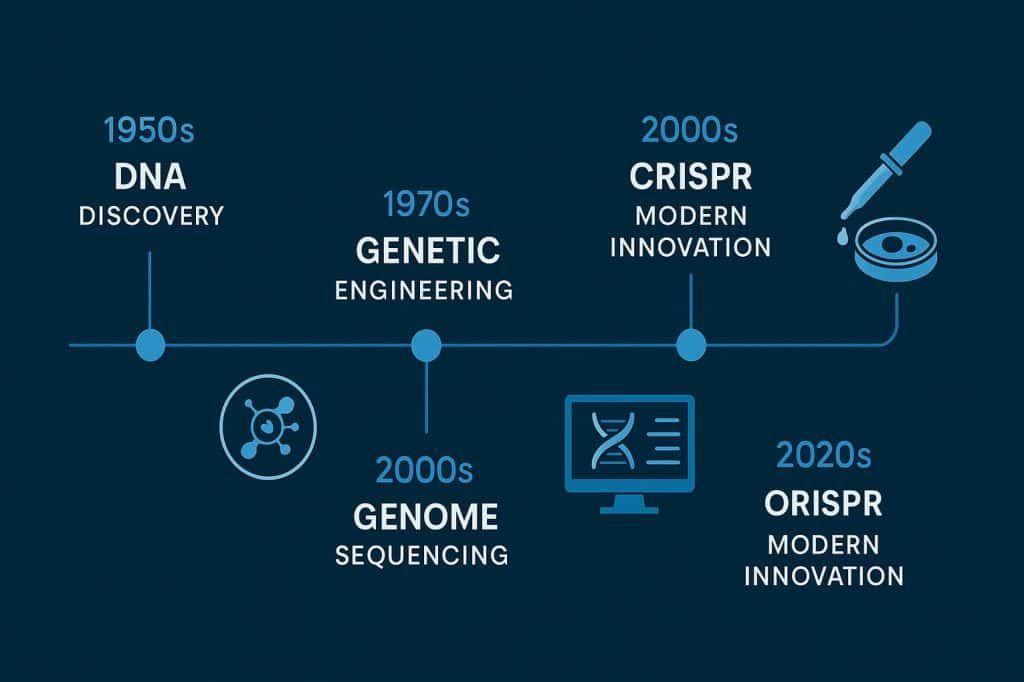
While biotechnology feels modern, its roots stretch deep into human history. Ancient civilizations used yeast for fermentation, producing bread, beer, and wine — early examples of biological manipulation. But true scientific biotechnology emerged in the 20th century.
In 1953, the discovery of DNA’s double helix unlocked the blueprint of life. By the 1970s, scientists had learned to splice genes, leading to the first genetically modified organism. In the 1980s, biotech companies began mass-producing insulin, marking the start of commercial bioengineering.
The 21st century brought a revolution. The Human Genome Project mapped the entire human DNA sequence, CRISPR technology made gene editing accessible, and AI-powered analytics transformed how we interpret genetic data.
| Era | Milestone | Impact |
|---|---|---|
| 1950s | Discovery of DNA | Laid the foundation for genetic engineering. |
| 1970s | Recombinant DNA Technology | Enabled gene splicing and GMOs. |
| 1980s | Biotechnology Industry Boom | Biotech firms begin large-scale applications. |
| 2000s | Human Genome Project | Revolutionized genomic research. |
| 2010s–2020s | CRISPR and Synthetic Biology | Democratized gene editing and biotech innovation. |
From decoding life to rewriting it, biotechnology’s journey is nothing short of revolutionary.
Types of Biotechnology
It is not a single discipline but a vibrant spectrum of scientific innovation often visualized as the “biotech rainbow.” Each color represents a different branch where biology meets technology, creating a powerful fusion that drives discovery and progress across multiple industries.
Red Biotechnology: Medicine and Healthcare
Red biotechnology focuses on advancing medical science through innovations like gene therapy, vaccine development, regenerative medicine, and stem cell research. It has revolutionized healthcare by turning biology into a healing tool, transforming genetic understanding into life-saving treatments. An example of this can be seen in the creation of mRNA vaccines, which were developed using genetic modification techniques to combat global health crises.
Green Biotechnology: Agriculture and Food Production
Green biotechnology applies biological science to agriculture, helping develop sustainable ways to feed the world. It focuses on creating genetically resilient crops that withstand pests, droughts, and diseases while enhancing soil fertility and yield. A practical example is drought-resistant corn, engineered to survive harsh conditions and improve food production even in challenging climates.
White Biotechnology: Industrial and Environmental Innovation
Also known as industrial biotechnology, white biotechnology uses microorganisms and enzymes to produce environmentally friendly materials, fuels, and chemicals. It replaces harmful industrial processes with cleaner, bio-based alternatives. A clear example of this is the production of biodegradable plastics from corn starch and the creation of bioethanol as a renewable energy source.
Blue Biotechnology: Marine and Aquatic Applications
Blue biotechnology explores marine ecosystems for valuable biological compounds and organisms. The ocean is a treasure trove of discovery, where scientists study marine bacteria, algae, and other life forms for use in pharmaceuticals, cosmetics, and renewable energy. For instance, certain algae species are cultivated to produce biofuel, reducing dependency on fossil fuels.
Gray Biotechnology: Environmental Protection
Gray biotechnology focuses on using biology to restore and protect the environment. It involves using microorganisms, plants, and enzymes to clean pollution, process waste, and recycle natural resources. Bioremediation — where bacteria are used to remove oil spills or toxic chemicals from soil and water — is one of the most powerful examples of this branch in action.
How Biotechnology Works
It operates at the molecular level. It starts with understanding genetic material — DNA and RNA — which serve as the blueprints for life. Scientists use sequencing technologies to read these blueprints, and tools like CRISPR to modify them.
Next, comes cellular engineering, where modified cells are grown and replicated in controlled environments. Bioreactors — large vessels that sustain life — become miniature ecosystems for innovation.
Finally, data-driven modeling helps test and refine results. Machine learning algorithms simulate biological reactions, reducing trial time and cost. This integration of biology and computation enables faster discoveries, safer products, and more efficient solutions.
In essence, It transforms knowledge of life into the power to redesign it — responsibly, ethically, and creatively.
Pros & Cons
Like any of the transformative technology, It brings enormous promise alongside ethical and environmental challenges.
| Pros | Cons |
|---|---|
| Enables medical breakthroughs and cures. | Raises ethical concerns around genetic editing. |
| Boosts agricultural productivity sustainably. | Potential misuse in bioengineering or biowarfare. |
| Reduces pollution through bio-based materials. | High development and research costs. |
| Advances renewable energy and sustainability. | Regulatory and safety hurdles slow progress. |
Despite these challenges, the benefits of It far outweigh the risks when guided by ethics, transparency, and responsible innovation.
Uses of Biotechnology
It reaches into nearly every industry, revolutionizing healthcare, agriculture, manufacturing, and environmental protection. Its influence extends from laboratories to everyday life, making it one of the most transformative forces in modern science.
Healthcare and Medicine
In healthcare, It has enabled the creation of personalized medicine, where treatments are customized based on an individual’s genetic profile. It powers modern breakthroughs such as immunotherapy, stem cell therapy, and precision drug design. For instance, CRISPR-Cas9 technology allows scientists to correct genetic mutations, offering hope for previously untreatable hereditary diseases.
Agriculture and Food Security
In agriculture, It contributes to food security and sustainability by developing genetically enhanced crops that are more resilient to environmental challenges. Biofertilizers and biopesticides reduce the need for chemical inputs, ensuring cleaner and safer farming practices. A great example is Golden Rice, genetically enriched with Vitamin A to combat malnutrition in developing regions.
Industrial and Manufacturing Innovation
In industrial applications, It transforms how materials and energy are produced. Microorganisms and biological catalysts are used to create biofuels, bioplastics, and bio-based chemicals that replace traditional petroleum products. The production of bioethanol for cleaner transportation is a leading example of industrial biotechnology improving global sustainability.
Environmental Conservation and Restoration
Biotechnology plays a critical role in environmental conservation through innovations that restore ecosystems and reduce pollution. Bioremediation uses microorganisms to degrade toxins and clean contaminated soil or water, while biofiltration systems naturally purify waste. This makes biotechnology a cornerstone in efforts to heal the planet and maintain ecological balance.
Emerging Technologies and Future Applications
The future of biotechnology lies in its integration with artificial intelligence, robotics, and nanotechnology. These technologies enhance the speed, accuracy, and scope of biological research, leading to smarter diagnostics, faster drug discovery, and even bioengineered solutions for space exploration. AI-powered analysis of biological data is already accelerating discoveries in genomics and precision medicine.
Resources
- Nature Biotechnology: Latest Biotechnology Research.
- MIT Technology Review: Biotech Trends in 2025.
- National Human Genome Research Institute: Understanding Genomics.
- World Economic Forum: The Future of Biotechnology.
- Forbes Tech Council: Emerging Biotech Innovations.